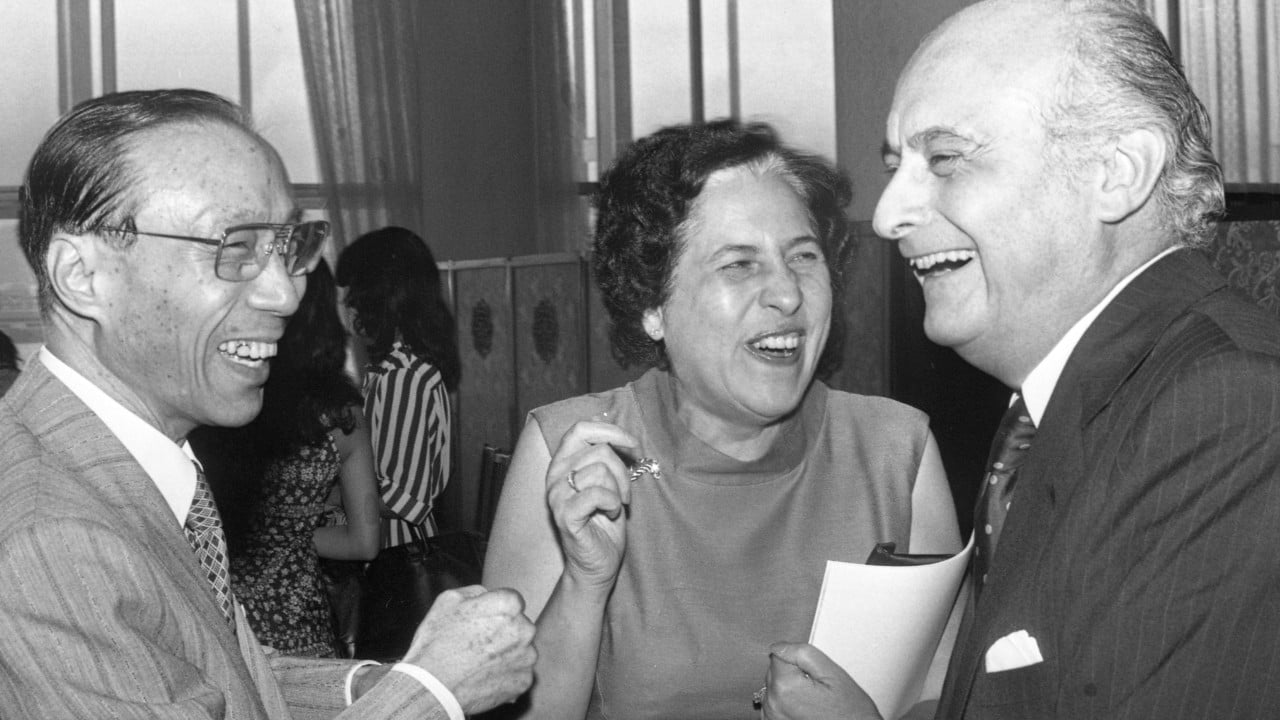
In the summer of 1977, a group of movie lovers gathered inside the City Hall building overlooking Victoria Harbour. They weren't there for a Hollywood blockbuster or a cheap local kung fu flick. They came to watch Roberto Rossellini’s historical drama Year One. It was the opening night of the very first Hong Kong International Film Festival in 1977, an event that completely flipped the script on how Asia consumed global cinema. Before this moment, if you wanted to see serious art house cinema in Hong Kong, you had to scrounge for screenings at private cine-clubs like Studio One, the Phoenix Club, or the Alliance Française. The arrival of a dedicated municipal film festival changed everything.
Most people assume the festival was a top-down colonial invention designed to impose Western culture on the territory. That's wrong. The actual origin story is much more practical and distinctly local. A man named Paul Yeung, who managed the City Hall venue, took a trip to the United Kingdom in 1975 and attended the London Film Festival. He saw how a curated, audience-driven event could connect local citizens with international art. He brought that blueprint back to Hong Kong. The Urban Council, which spent most of its time managing public parks, municipal libraries, and public swimming pools, took a gamble on funding a film event. It was basically public recreation money used to ignite a cinematic revolution.
The Raw Reality of the 1977 Hong Kong International Film Festival
The inaugural lineup was modest. The festival featured roughly 30 to 40 titles, a tiny fraction of the massive multi-week programs we see today. There were no flashy red carpets. No Hollywood celebrities flying in for yacht parties. No distribution markets for suits to cut million-dollar distribution deals. The entire event ran from June 27 to July 10, 1977, operating strictly as a programmer-driven sanctuary for pure cinema.
First Festival Snapshot (1977)
Screening Venue: City Hall
Opening Film: Year One (Directed by Roberto Rossellini)
Closing Film: A Touch of Zen (Directed by King Hu)
Total Selection: Around 30-40 films
Primary Organizer: Hong Kong Urban Council
Organizers modeled the festival after London, focusing entirely on rounding up the best international cinema and presenting it directly to the local public. Programmers actually stood up in front of the audiences to introduce the movies, explaining their choices and writing dense, educational catalog notes to help viewers decode complex foreign narratives.
The atmosphere inside City Hall was electric but completely unpretentious. Local film buffs mingled with expatriates in the lobby, arguing about Italian neorealism over cheap coffee. The festival closed with King Hu’s martial arts epic A Touch of Zen, a choice that perfectly bridged the gap between high art and Hong Kong’s homegrown cinematic muscle. It sent a clear message that local cinema deserved the same intellectual respect as European masterpieces.
Why the Urban Council Kept It Stripped Down
You might wonder why the early editions didn't try to copy Cannes or Venice by chasing star power. The answer comes down to local government bureaucracy and taxpayer accountability. Because the festival was funded by the Urban Council, it had to compete directly with public parks and public libraries for every single dollar. Spending public money on champagne receptions or flying in international starlets would have caused a massive public outcry.
The government viewed the 1977 Hong Kong International Film Festival as a form of cultural welfare. Following civil unrest and riots in the late 1960s, the colonial administration was desperate to build a stable, content middle class. Providing access to global culture was a strategic move to improve public morale and give a rising generation of locally born residents a sense of sophisticated civic identity.
This funding constraint turned out to be a massive blessing. It forced the festival to double down on strict cinephilia. It became a programmer’s paradise where artistic merit mattered far more than commercial viability.
Launching the Golden Age of Asian Cinema
While the first year leaned heavily on foreign imports to fill the local viewing deficit, it didn't take long for the tables to turn. The festival quickly evolved from a window looking out at the world into a massive megaphone broadcasting Asian talent back to the West.
By the late 1970s and early 1980s, a new generation of filmmakers who had studied abroad began returning to Hong Kong. They were armed with technical knowledge, influenced by Western pop culture, yet deeply attached to their local roots. The festival became the ultimate launching pad for this movement, which became known as the Hong Kong New Wave. Directors like Ann Hui, Tsui Hark, and Patrick Tam completely reinvented the rules of regional filmmaking.
The international film world took notice. Festival scouts and overseas critics realized that if they wanted to discover the most exciting, boundary-pushing cinema on the planet, they had to board a plane to Hong Kong. The festival became a critical bridge. When the festival screened Chen Kaige’s Yellow Earth in 1985, it marked the film's very first screening outside of mainland China. That single screening helped put mainland Chinese arthouse cinema on the global cultural map, proving that the groundwork laid back in 1977 had created an indispensable hub for regional discovery.
How to Explore This History Yourself Today
If you want to understand the roots of modern global cinema, you can't just look at Hollywood or Paris. You need to see how the collision of Eastern and Western styles in 1977 created the blueprint for modern film culture.
Start by digging into the programming archives of the Hong Kong International Film Festival Society. The original booking folders and catalog notes from the late 1970s are preserved by institutions like the Asia Art Archive and the Hong Kong Film Archive. Reading through those early materials shows you exactly how programmers translated complex foreign film movements for a fresh, hungry local audience.
Next, track down the foundational films that defined the festival's early eras. Watch Rossellini's Year One to understand the exact flavor of European cinema that opened the festival, then immediately contrast it with King Hu's A Touch of Zen. Move directly into the early works of the Hong Kong New Wave, specifically Ann Hui’s The Secret or Tsui Hark’s The Butterfly Murders. You'll see exactly how the energy of that cramped, coffee-fueled City Hall lobby in 1977 eventually transformed global cinema, leaving an undeniable mark on everything from the action choreography of Western blockbusters to the style of contemporary arthouse classics.