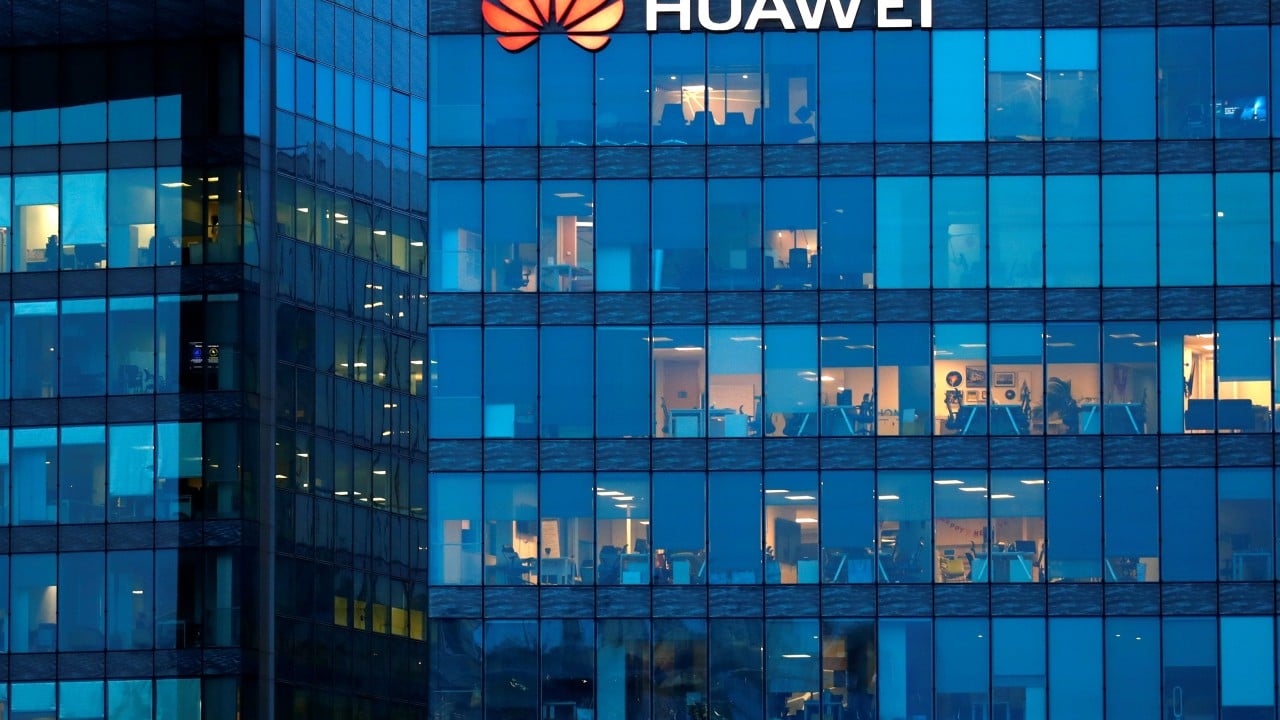
The headlines are screaming about a bloodbath. A US$430 billion bloodbath, to be precise. That is the figure being tossed around by industry lobbyists and "concerned" analysts regarding the European Union's move to purge Chinese vendors like Huawei and ZTE from its 5G infrastructure. They want you to see a fiscal crater. They want you to see a continent shooting its own digital foot.
They are wrong. Not just slightly off on the math, but fundamentally wrong about what "cost" actually means in a world where hardware is no longer just hardware.
The $430 billion figure is a ghost. It is a fabricated bogeyman designed by incumbent carriers to protect their margins and stall inevitable modernization. If you’re looking at the price tag of ripping and replacing gear, you’re staring at the wrong side of the ledger. The real cost is the price of remaining a digital vassal state.
The Myth of the "Cheap" Chinese Network
The argument for keeping Chinese kit usually boils down to two points: it’s cheaper and it’s already there. This is the logic of a man who refuses to replace a leaking roof because the buckets to catch the water only cost five dollars.
When we talk about the "cost" of banning Huawei, we are usually citing reports funded by the very telecommunications giants who signed the original contracts. They cite capital expenditure (CAPEX) increases and delayed rollouts. They ignore the massive, hidden technical debt inherent in vendor lock-in.
Huawei doesn't just sell you a radio; they sell you an ecosystem that is intentionally difficult to leave. This is "black box" networking. You cannot easily swap out a single component for a superior Swedish or Finnish alternative. You are married to the roadmap of a company that answers to a foreign government with an explicitly stated goal of technological hegemony.
I’ve sat in the rooms where these deals are made. The initial discount is a drug. It gets the project approved by a CFO who won’t be at the company in five years when the maintenance fees skyrocket and the "proprietary extensions" make it impossible to upgrade to Open RAN standards without a total teardown.
The Sovereignty Tax is a Bargain
Let’s address the $430 billion elephant. Even if that number were accurate—which it isn't, as it conflates routine maintenance with "forced" replacement—it represents a tiny fraction of the EU’s GDP over the next decade.
In the world of high-stakes infrastructure, "cheap" is the most expensive word in the dictionary.
- Security is an Operating Expense: If your network isn't trusted, your digital economy is built on sand. How do you quantify the cost of a backdoor in a power grid or a financial clearinghouse? You don’t find that in a McKinsey report on 5G rollout speeds.
- The Open RAN Revolution: By banning monolithic Chinese suppliers, Europe is forced to move toward Open Radio Access Networks (Open RAN). This allows for a mix-and-match approach where software and hardware are decoupled. It breaks the monopoly of the "Big Three" (Huawei, Ericsson, Nokia) and allows smaller, more innovative startups to compete.
- Intellectual Property Flight: When you buy into the Huawei ecosystem, you aren't just buying gear; you are funding the R&D of a competitor that has spent decades aggressively targeting European industrial secrets. You are paying for the rope they will use to hang your manufacturing sector.
Dismantling the "Delayed Rollout" Scare
The most effective weapon in the lobbyist's arsenal is the "we will fall behind" argument. They claim that if we ban Chinese suppliers, 5G will take years longer to reach rural communities.
This is a classic false choice. The delay isn't caused by a lack of hardware; it’s caused by bureaucratic inertia and the fact that European carriers have spent years under-investing in fiber backhaul while over-leveraging themselves to buy spectrum.
Blaming the Huawei ban for slow 5G is like blaming the lack of a specific brand of tires for why your car won't start when the engine is missing.
Actually, the "delay" provides a strategic window. 5G, in its current state, is largely a marketing gimmick for consumer handsets. The real "Industrial 5G"—the low-latency, massive machine-type communication—is still maturing. Rushing to blanket the continent in gear that is fundamentally compromised just to hit an arbitrary 2027 deadline is the height of strategic illiteracy.
Why the $430 Billion is Actually an Investment
If Europe spends $430 billion (it won't, but let's play along), where does that money go? It doesn't disappear into a black hole. It goes to:
- Ericsson (Sweden)
- Nokia (Finland)
- Software integrators in Germany, France, and Poland
This is a massive internal transfer of wealth that builds a European industrial base. It’s a stimulus package for the only sector that can prevent Europe from becoming a mere museum between the tech hubs of Silicon Valley and Shenzhen.
Investing in your own security and your own companies isn't a "cost." It’s an insurance premium. And in a world where the geopolitical climate is rapidly cooling into a New Cold War, you’d be a fool to let your opponent hold the keys to your communication lines.
The Counter-Intuitive Truth: We Need to Pay More
The mistake the EU is making isn't the ban. It’s the hesitation.
By dragging out the process with "high-risk vendor" designations and "recommendations" rather than hard bans, they are creating the very uncertainty that drives up costs. Carriers are hedging their bets, maintaining two supply chains, and waiting for the political winds to shift.
If you want to lower the cost, you make the ban absolute and immediate.
This creates a massive, predictable market for alternatives. It drives down the price of Ericsson and Nokia gear through volume. It incentivizes the rapid development of the Open RAN ecosystem.
The Hidden Cost of "Business as Usual"
Let's do a thought experiment. Imagine it is 2032. Europe decided the $430 billion was too high. They kept the Chinese gear to save a few billion in the short term. A geopolitical crisis erupts over Taiwan. Suddenly, the "kill switches" embedded in the firmware—which many "experts" swore didn't exist or wouldn't be used—are activated. Or, more subtly, the software updates stop. The network begins to degrade. The proprietary interfaces mean no one else can fix it.
The entire European economy grinds to a halt because it chose the "discount" option.
What is the cost of a continent-wide blackout? What is the cost of losing the ability to communicate securely during a period of hybrid warfare? It’s a hell of a lot more than $430 billion.
The Carriers are Crying Wolf
The telecommunications industry is famous for its "the sky is falling" rhetoric whenever regulation threatens their quarterly dividends. They fought against roaming fee caps. They fought against net neutrality. They are fighting this.
They aren't protecting the consumer. They are protecting the path of least resistance.
Integrating new vendors is hard work. It requires sophisticated engineering and a rethink of network architecture. It’s much easier to just keep buying from the guys who give you the best financing and the most "all-in-one" solutions.
We should stop listening to the companies whose primary expertise is extracting rent from 20-year-old copper wires and start listening to the security professionals who actually understand the vulnerabilities of modern telecommunications.
This Isn't About Trade; It's About Survival
The "market" for 5G gear is not a free market. It is a subsidized battlefield. Huawei is not a "private company" in any sense that a Westerner would recognize. It is an arm of the state, backed by the bottomless pockets of the Chinese banking system.
When they underbid Ericsson or Nokia by 30%, they aren't being "more efficient." They are executing a long-term strategy to bankrupt the last remaining Western competitors. Once they are the only game in town, do you think the prices will stay low? Do you think the "cost" will still be $430 billion?
By paying the "sovereignty tax" now, Europe ensures it has a choice in the future.
Stop looking at the price of the hardware. Start looking at the value of the independence.
Rip it out. Replace it. And stop whining about the bill.
The alternative is a future where you don't even own the airwaves you're paying for.
Drop the buckets. Fix the roof. No matter what the contractor says about the price of shingles.