The whiteboard marker was black, cheap, and nearly out of ink.
In the belly of SoFi Stadium, hours after the screaming stopped, the silence was absolute. The air-conditioned chill smelled faintly of deep heat, spilled isotonic drinks, and the heavy, damp exhaust of twenty-two men who had just run themselves into the earth. Belgium, one of Europe’s most lethal footballing machines, had spent ninety minutes trying to break them. They failed. A grueling 0-0 stalemate.
But the real story wasn't on the scoreboard. It wasn't even in the stadium bowl, where thousands of local Iranian-Americans had created a wall of sound so intense it felt like Tehran on the Pacific.
The story was written on a scrap of paper left on a locker room table, weighted down by a discarded roll of sock tape. Seventy-four words. Handwritten.
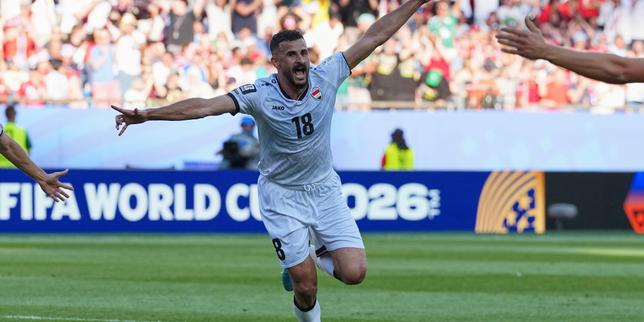
To understand why those words matter, you have to look at the mud on Alireza Beiranvand’s boots. The 33-year-old goalkeeper had spent the evening playing as if his life depended on it, because in a way, the collective psyche of his home country did. He made seven crucial saves. Four times he threw his frame parallel to the grass, fingertipping certain goals past the post. When the referee finally blew the whistle, confirming that Iran had survived, the players did not celebrate with the wild abandon of a team that had won a trophy. They embraced with a quiet, fierce exhaustion.
Then, they packed their bags. They had to. By law.
Consider the reality of Team Melli’s tournament. While other World Cup squads luxury-bus from five-star resorts to pristine training complexes, the Iranian national team lives a bifurcated existence. Due to severe diplomatic friction and stringent visa caps, the United States immigration authorities decreed the team could not remain on American soil for more than 48 hours at a time.
Their solution? A makeshift camp in Tijuana, Mexico.
Before every match, they commute across the international border. They pass through checkpoints, present documentation, and fly into California under a ticking clock. Several key assistant coaches and technical staff members could not even get visas to cross; they remain stranded on the Mexican side of the fence, analyzing game tape from hotel rooms. Winger Mehdi Torabi had to sprint to a consulate in Tijuana just days ago to renew a single-entry permit that expired after their opening 2-2 draw with New Zealand.
Coach Amir Ghalenoei did not mince words after the final whistle. He called his squad the most oppressed team in the tournament. He spoke of playing under the worst possible conditions.
Yet, before they boarded the bus back to the border, they chose not to leave anger behind. They left a message.
"From the ancient Persia of thousands of years ago to the civilized Iran of today, the spirit of Iran remains alive and steadfast," the note began, written in a steady hand. "Thank you, Los Angeles, for your hospitality. We came to Los Angeles with pride, competed with honor, and leave with dignity."
The text carried two heavy, specific footnotes: the hashtags #168 and #Minab. They are numbers that haunt this team. It is a direct reference to the tragic bombing of a girls' school in the city of Minab during the outbreak of hostiles earlier this year—a catastrophe that claimed 168 young lives. Every player wears that number on a small badge pinned to their official travel suits. They carry the dead across the border with them.
The stadium they left behind in Inglewood sits in a county that houses the largest concentration of Iranians outside of Iran. It is a complex, beautiful, fractured diaspora. Before the match, when the stadium speakers blared the official Iranian anthem, a significant portion of the crowd erupted into boos, a reflection of deep-seated political rifts that have spanned decades. Yet, the moment the ball was kicked, those divisions melted into a unified, roaring engine of support. For 180 minutes across two matches, Los Angeles became a home away from home for men who officially had no home in the country.
The note concluded with a line that felt less like a standard post-match courtesy and more like a desperate plea sent out from an island in a storm: "May peace, respect and friendship prevail among all nations."
As the cleaning crews entered the SoFi Stadium locker room to sweep up the discarded tape and empty plastic bottles, the paper was gathered by team officials and shared with the world.
With two points from two matches, Iran now travels north to Seattle, where a date with Egypt awaits them on June 27. A win secures a historic spot in the knockout rounds. They will fly in, they will run until their lungs burn, and they will be forced to leave immediately after. They will carry their badges, their survival tactics, and their exhaustion back to Tijuana. But in the concrete corridors of Los Angeles, the ink from a cheap marker remains, reminding anyone who passes through that sports can never truly be separated from the human souls who play them.