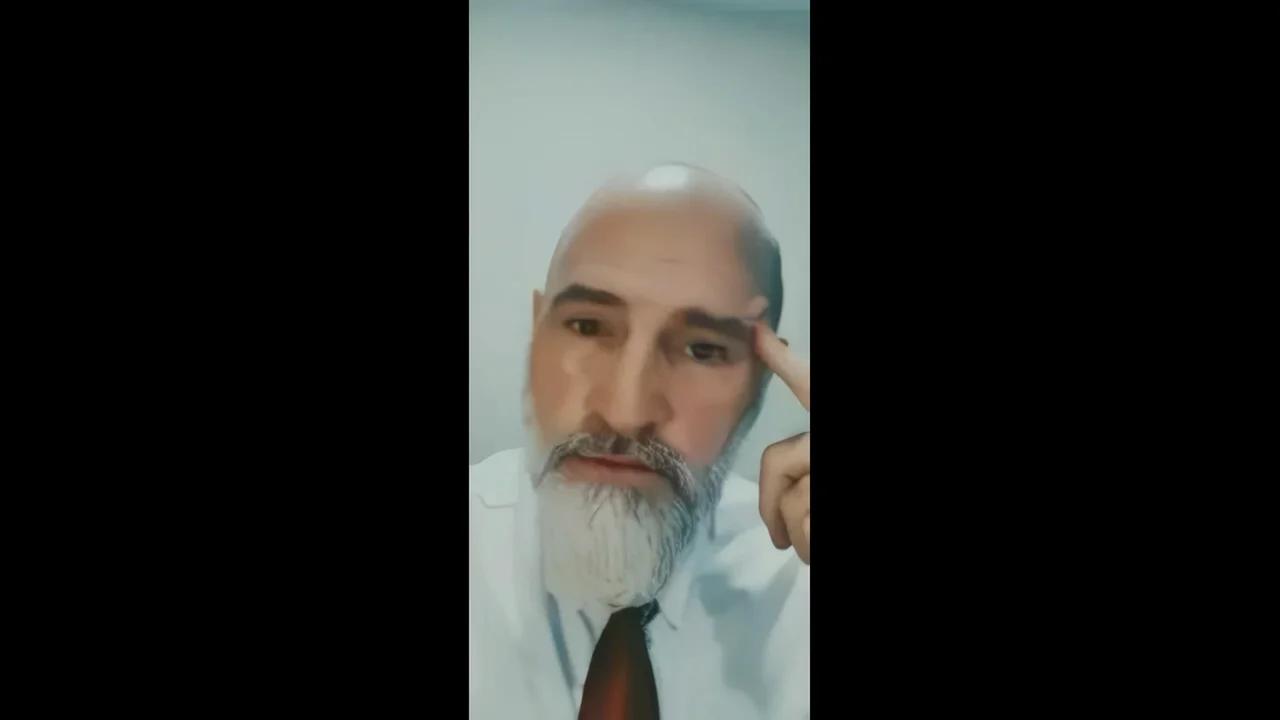
You've probably seen them. The profile pictures of "Patriot Janine" or "Real American Mike" that look just a little too perfect. Their skin is unnervingly smooth. Their eyes have a strange, glassy sheen. They aren't real people. They’re part of a massive surge of fake pro-Trump avatars swarming social media platforms, and they’re changing how we talk about politics online.
This isn't just about a few lonely trolls in a basement. It's a coordinated effort to manufacture consensus. When you see hundreds of accounts all nodding in agreement with a specific policy or candidate, your brain naturally thinks, "Wow, everyone must feel this way." It’s a psychological trick called social proof, and AI is making it cheaper and easier than ever to pull off.
The Ghost in the Machine
Recent investigations have uncovered a sprawling network of accounts using AI-generated faces to blend in with genuine voters. These aren't the clunky bots of 2016 that spoke in broken English. These are sophisticated personas. They post about their "families," share recipes, and then—right on cue—drop a political takes that perfectly align with the latest campaign talking points.
What makes this wave different is the sheer scale. In the past, creating a fake persona required stealing a real person's photo. That’s risky because people eventually find their own faces being used for propaganda and report it. AI-generated faces don't exist in the real world. There’s no "original" person to complain. You can spin up a thousand unique, realistic faces in an afternoon.
Spotting the Fake in a Sea of Slop
Despite the tech getting better, these bots still have "tells." If you look closely at these pro-Trump avatars, you’ll notice patterns that give them away. It's often in the background or the small details that the AI hasn't quite mastered yet.
- Earring Chaos: AI often struggles with symmetry. Look at the ears. One might have a hoop earring while the other has a stud, or the earring might just melt into the earlobe.
- The Uncanny Background: The faces are clear, but the background looks like a psychedelic blur. You'll see fences that turn into trees or windows that don't have frames.
- The Middle Eye: Older AI models always placed the eyes in the exact same spot in every photo. If you overlay ten of these profile pictures, the eyes would align perfectly.
- The Teeth Nightmare: Check the mouth. Sometimes there are too many teeth, or the teeth are perfectly flat like a white bar.
I've spent hours scrolling through these networks. Honestly, it’s exhausting. You start to feel like you’re in a digital version of The Truman Show. Everything looks real until you poke at the edges and realize the sky is just painted canvas.
Why This Slopaganda Actually Works
You might think, "I'd never be fooled by a fake photo." But the goal isn't to trick you into thinking "Janine" is your neighbor. The goal is to saturate the environment.
When a post gets 5,000 likes and 2,000 comments from these accounts, it triggers the platform's algorithms. The AI on X (formerly Twitter) or Facebook sees the engagement and thinks, "This is a popular topic!" Then, it shows that post to real people. The fake accounts are just the fuel. The real fire happens when actual voters start arguing with the bots or sharing their content.
It’s about making an ideology seem more popular than it is. If you feel like your side is losing by a landslide because "everyone" online is saying so, you might be less likely to show up and vote. It’s a soft form of voter suppression disguised as enthusiasm.
The Platforms are Failing the Test
Let’s be real: social media companies aren't doing enough. They talk a big game about "coordinated inauthentic behavior," but they’re playing a game of whack-a-mole they can’t win. For every network Facebook shuts down, three more pop up on fringe sites like Truth Social or Gab and then bleed back into the mainstream.
Worse, some platforms have basically stopped trying. Since the 2024 election cycle kicked into high gear, moderation teams have been gutted. The result is a digital Wild West where a single person with a decent GPU can simulate the "will of the people" from their bedroom.
How to Protect Your Sanity
You don't need to be a forensic scientist to navigate this. You just need to be a skeptic.
- Check the Timeline: If an account was created two months ago and has 10,000 posts all about one candidate, it’s a bot. Real people have hobbies. They post about their dogs, their sports teams, or how much they hate their commute.
- Reverse Image Search: It doesn't always work with AI, but it’s a good first step. If the photo shows up on a stock image site or in a different context, you’ve got a fake.
- Engage with Intention: Stop arguing with people who have 8-digit numbers in their usernames. You aren't changing a mind; you’re just giving an algorithm the engagement it craves.
Don't let the "slop" dictate your mood or your vote. The internet is increasingly becoming a hall of mirrors, but the real world still exists outside your screen. Verify your sources, look for the weird earrings, and remember that a thousand likes don't equal a thousand truths.
Stay sharp. The avatars are only getting more convincing.