China is currently in the middle of a massive, high-stakes gamble. It’s not just about building better chatbots or faster chips. It’s a society-wide push to automate everything from factory floors to eldercare. The government calls it "AI Plus," but let’s be real. It’s a risky social experiment designed to fix a demographic crisis that’s already knocking at the door.
You've probably heard the stats. China is aging faster than almost any country in history. By 2035, the "silver economy" is expected to hit 19 trillion yuan (about $2.7 trillion). That’s nearly 30% of their total consumption. But there’s a catch. While the population gets older, the workforce is shrinking. The math doesn't add up unless machines start doing the heavy lifting.
Why the Automation Push is a Survival Tactic
For years, the Western narrative was that China’s AI push was about surveillance and global dominance. While those are factors, the internal pressure is actually much more desperate. They aren't just automating because they can. They're doing it because they have to.
The working-age population is projected to contract by 25% over the next 25 years. If you don't have enough people to weld cars or take care of the elderly, your economy stalls. AI and robotics are being positioned as the ultimate "fix" for this labor shortage.
But here is where the "risky social experiment" part comes in. At the exact same moment they’re rushing to automate, they’re facing a youth unemployment crisis. In 2026, a record 12.7 million university graduates are entering the market. That’s more than the entire population of Belgium.
Think about the tension there. You have a government subsidizing robots to replace workers, while millions of young, educated people are desperately looking for work. It’s a paradox that could easily backfire if the transition isn't perfect.
The Gap Between High-Tech Dreams and Reality
Don't let the shiny humanoid robot demos fool you. There’s a massive gap between what the Ministry of Industry and Information Technology (MIIT) wants and what’s actually happening on the ground.
- The Talent Mismatch: China has a shortage of high-end AI talent. McKinsey projects a gap of 4 million AI professionals by 2030. Universities are churning out graduates, but many lack the specific interdisciplinary skills—like combining AI with mechanical engineering—that the "new" economy needs.
- The Compute Problem: The US still controls roughly 75% of global AI computing power. China sits at about 15%. Export bans on high-end chips like NVIDIA’s H100s mean Chinese companies are fighting with one hand tied behind their backs. They’re getting creative with software, like the DeepSeek model that shocked the world in 2025, but you can’t fully automate a superpower on "efficient" algorithms alone.
- Data Silos: Despite having a massive population, data isn't always shared effectively across industries. Bureaucracy and security concerns often keep the best data locked away in silos, slowing down the training of the very models meant to save the economy.
The Silver Economy and the Rise of Care-Bots
One of the most fascinating—and eerie—parts of this experiment is how it's being applied to the elderly. Since there aren't enough young people to staff nursing homes, China is leaning into "embodied AI."
We’re seeing the rollout of 14 new measures specifically to boost the silver economy. This includes:
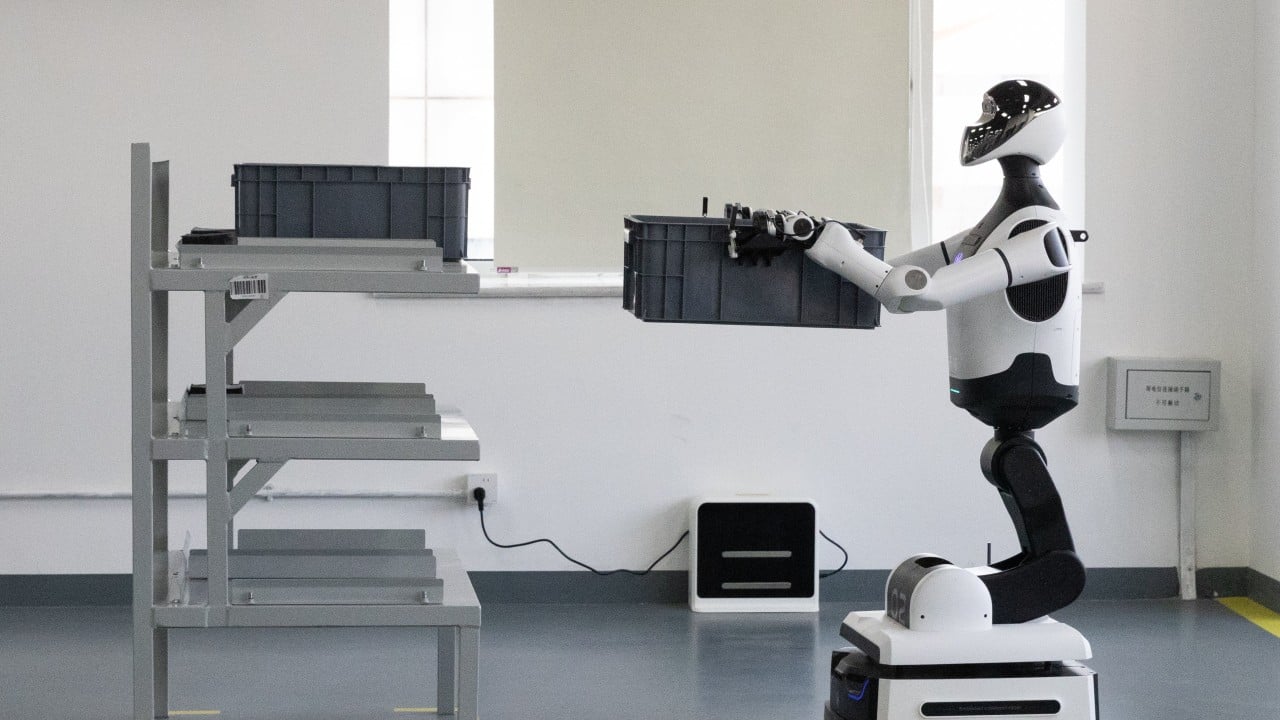
- Humanoid Caregivers: Companies like PaXini Tech are developing robots that can lift seniors from beds to wheelchairs or help with walking.
- AI Companions: Voice-based chatbots are being used for emotional comfort and memory training to combat dementia.
- Smart Infrastructure: AI-powered buses that automatically adjust boarding steps for seniors are already being tested in pilot cities.
It sounds like sci-fi, but it’s a necessary response to a world where 300 million people are over the age of 60. The risk? We don't really know the long-term psychological impact of replacing human care with "efficient" machine care. It’s a social gamble with the country’s most vulnerable population.
The 15th Five-Year Plan and the "Employment First" Policy
The government isn't blind to the risks. The 15th Five-Year Plan (2026-2030) explicitly calls for "forward-looking plans" to manage this. Minister of Human Resources Wang Xiaoping has been vocal about an "employment first" strategy. They’re trying to use AI to actually create jobs, not just kill them.
They’ve identified 72 new occupations in the last few years, 20 of which are tied directly to AI. We're talking about roles like "dispatch algorithm engineers" and "intelligent connected vehicle testers." The bet is that for every welder replaced by a robot, a new job will open up in "robot maintenance" or "data labeling."
But honestly, that’s a lot easier to say in a press conference than to execute in a factory town in Guangdong. Moving 10 million people a year from traditional labor into "modern services" requires a training infrastructure that doesn't fully exist yet.
What This Means for Global Markets
If China pulls this off, they’ll have the first fully automated, aging-resilient economy in the world. They’ll be able to produce goods at a lower cost than anyone else, even with a shrinking workforce.
If they fail? They’re looking at a "vicious cycle" of weak demand and social unrest. When machines replace workers, those workers stop spending. If they stop spending, the economy deflates. That’s the "social experiment" the rest of the world is watching.
It's a delicate balance. The state is pouring 60 billion yuan into an AI industry investment fund while simultaneously trying to subsidize 10 million training opportunities for people whose jobs are at risk. It’s a massive reallocation of capital and human potential.
Don't Wait for the Results
You can't afford to just sit back and watch this play out. Whether you’re a business owner or a professional, the ripple effects are coming for you too.
- Evaluate your exposure: If your business relies on tasks that can be automated, look at how Chinese firms are doing it. They’re usually the first to test the "fail fast" approach at scale.
- Invest in "Human-Centric" Skills: The jobs least likely to be automated in China’s own roadmap are those requiring high-level creativity, ethics, and complex human management.
- Watch the Silver Tech: If you're in healthcare or tech, the innovations coming out of China’s "silver economy" will likely set the global standard for geriatric care in the next decade.
Start looking at AI not as a tool for your current job, but as the foundation of your next one. The transition is happening faster than the data suggests. Get ahead of the curve by identifying which AI-augmented roles are emerging in your industry today.