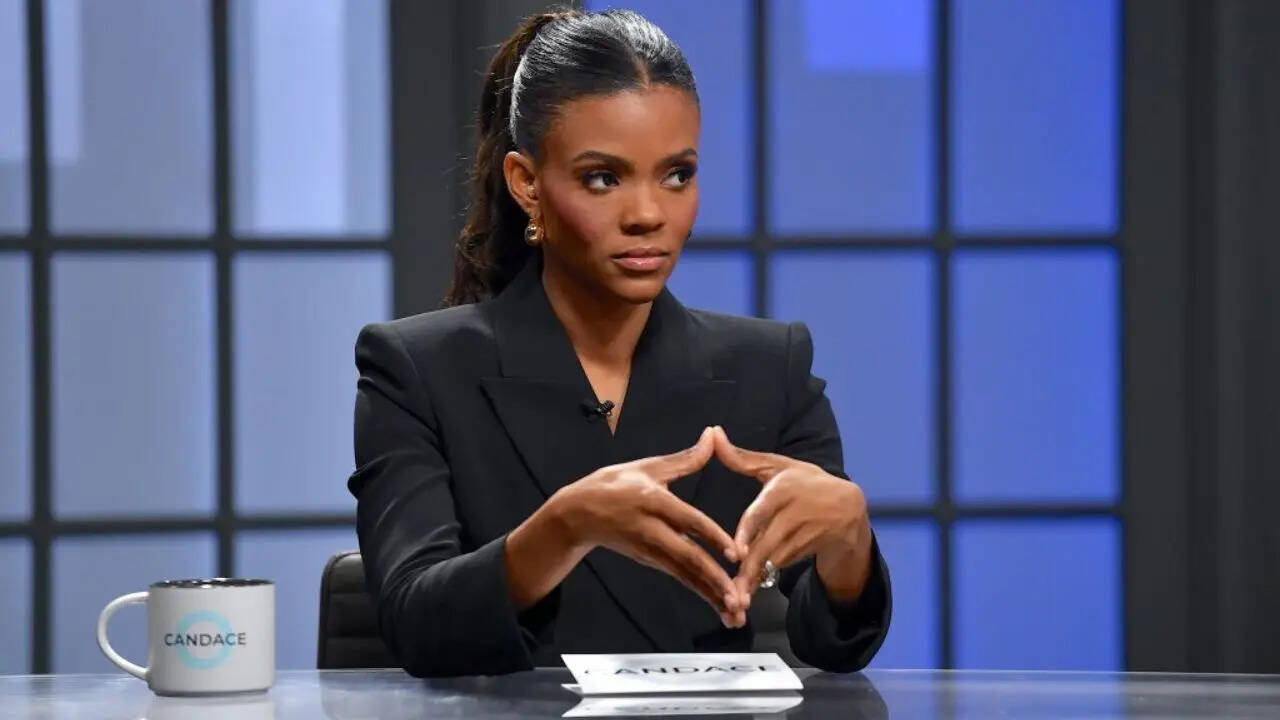
The rapid integration of generative artificial intelligence into digital media production has created a high-velocity feedback loop where the speed of content creation outpaces the capacity for ethical oversight. This breakdown is exemplified by the recent controversy surrounding Candace Owens and the digital manipulation of Erika Kirk’s likeness. By utilizing a synthetic image depicting an act of violence—specifically, a firearm held to a subject's neck—the production team triggered a predictable sequence of viral outrage, platform-driven reach, and subsequent "quiet" correction. This cycle serves as a case study in the optimization of the "Outrage Economy," where the friction between AI capabilities and legacy editorial norms creates a new, volatile form of engagement.
The Architecture of the Synthetic Thumbnail
The utility of a thumbnail in the digital attention market is measured by its Click-Through Rate (CTR). In high-competition environments like YouTube or Rumble, creators often push the boundaries of visual fidelity to capture a wandering audience. The shift from traditional graphic design to AI-generated imagery has removed the physical and temporal barriers to creating extreme scenarios.
The original image featuring Erika Kirk and Charlie Kirk (or likenesses thereof) was not merely a stylistic choice; it was a calculated application of High-Intensity Negative Valence. In psychological terms, the brain prioritizes threats. An image of a weapon directed at a human neck bypasses the rational filter and triggers a lizard-brain response. When this is applied to public figures, the "Uncanny Valley" effect—where an image is almost human but slightly distorted—adds a layer of cognitive dissonance that further spikes engagement.
The Mechanics of Semantic Drift
The decision to "quietly edit" the thumbnail after the initial surge of viewership highlights a tactical shift in digital reputation management. This is a three-stage process:
- Shock Launch: Deployment of high-friction, potentially policy-violating imagery to secure the first 48 hours of maximum reach.
- Absorption of Outrage: Monitoring the ratio of engagement to platform risk. If the backlash threatens monetization or account standing, the assets are modified.
- The Stealth Pivot: Replacing the image with a sanitized version. This allows the creator to retain the views generated by the controversy while technically complying with platform safety guidelines after the primary damage is done.
This "edit-after-impact" strategy creates a permanent record of the video with a lower-risk visual, effectively rewriting the history of the content’s distribution.
The Algorithmic Incentive for Hyper-Real Violence
Platforms utilize algorithms designed to maximize "Watch Time" and "Engagement Rate." These systems are generally agnostic to the moral quality of the engagement. A comment section filled with condemnation weighs exactly the same as one filled with praise in the eyes of a recommendation engine.
The use of AI-generated violent imagery creates a specific bottleneck for platform moderators. Traditional "harm" filters are trained on real-world photography. Synthetic images that depict a gun to a neck may initially bypass automated safety layers because they lack the metadata of a real photograph and may use stylistic filters—like those found in Midjourney or DALL-E—to mask the severity of the depiction. This creates a Safety Latency Window: the time between the upload of a provocative AI image and its manual review by a human moderator. During this window, the content creator captures the lion's share of the available audience.
The Cost-Benefit Analysis of Synthetic Misrepresentation
Content creators operating at the scale of Owens’ network function as mid-sized media firms. The decision-making process for a thumbnail follows a clear cost function:
- Potential Gain: Millions of additional impressions, surge in subscriber growth, and dominance of the news cycle.
- Operational Cost: Negligible. AI generation costs fractions of a cent and seconds of labor.
- Reputational Risk: High, but often offset by the "Echo Chamber Effect." For a polarized audience, the "outrage" of the opposition validates the creator’s perceived boldness.
- Legal Liability: Currently ambiguous. While the use of a likeness without consent (Right of Publicity) is a civil matter, the depiction of a violent act via AI sits in a gray area of "transformative use" and "satire."
The "Quiet Edit" is the mechanism used to mitigate the legal and platform risks once the Potential Gain has been realized.
The Institutional Failure of Editorial Oversight
The controversy is a symptom of the "Lean Content" model, where the barrier between ideation and publication is stripped away. In a traditional newsroom, an image of a woman pointing a gun at a man’s neck would pass through multiple layers: a photo editor, a legal department, and an editor-in-chief. Each of these layers introduces Ethical Friction.
In the current creator-led model, this friction is viewed as a defect. The "Candace Owens" brand, like many others in the independent space, prioritizes speed and raw impact. This results in a "Post-Truth Aesthetic" where the accuracy or appropriateness of a visual is secondary to its ability to stop a scroll. The subsequent editing of the thumbnail isn't a sign of regret; it is a sign of a completed transaction. The attention was bought with a provocative image, and the image was then returned for a "refund" in the form of a safer thumbnail to avoid long-term penalties.
Quantifying the Impact on Public Discourse
The second-order effect of this tactic is the Devaluation of Visual Evidence. When high-profile commentators use AI to create fake, violent scenarios involving real people, it trains the public to treat all imagery as potentially fraudulent. This leads to "Liar’s Dividend," a concept where real evidence can be dismissed as "just AI" because the public has become accustomed to synthetic fabrications in their daily feeds.
Furthermore, the specific targeting of Erika Kirk—a figure often discussed within the context of internal "culture war" dynamics—suggests that AI is being used to weaponize internal community grievances. By visualizing a metaphorical conflict (a "feud") as a literal, violent one, the creator collapses the space between hyperbole and threat.
The Technical Bottleneck of Likeness Protection
The Erika Kirk thumbnail incident underscores the lack of robust "Digital Body Integrity" laws. Current technology allows anyone to prompt an AI to put a public figure in a compromising or violent situation. The "defenses" against this are currently reactive rather than proactive.
- Watermarking: Most AI generators have internal watermarking, but these are easily cropped or edited out.
- Platform Hashing: YouTube and X (formerly Twitter) use "Content ID" style systems for video, but static AI images are harder to track across different accounts and re-posts.
- Verification Tiers: The removal of "Legacy Verification" on platforms has made it harder for users to distinguish between authorized content and deepfake-driven misinformation.
Strategic Realignment of Content Distribution
For media entities watching this play out, the lesson is not to avoid AI, but to recognize that AI-generated imagery now carries a "Controversy Premium." If a brand uses AI to depict violence, they are essentially shorting their own long-term credibility for a short-term spike in CTR.
The structural prose of this development suggests a bifurcation in the market. On one side, we see creators who utilize "Aggressive AI Deployment," where the goal is to trigger the algorithm at any cost, including the use of synthetic violence. On the other, we will see the rise of "Verified Authentic Media," where the absence of AI manipulation becomes a luxury feature.
The "Quiet Edit" performed by Owens’ team is a tacit admission that the "Aggressive" model has limits. However, until platforms implement a Strict Liability Framework for AI-generated depictions of violence—where the penalty is applied regardless of whether the image was later edited—creators will continue to treat the "Outrage Economy" as a standard operational procedure.
The strategic play for competing creators is to occupy the "Trust Gap." As the market becomes saturated with synthetic, low-trust imagery, the long-term value of verifiable, human-curated content will increase. The goal is to build a "High-Fidelity Moat"—a brand identity where the audience knows that what they see has not been hallucinated by a prompt-engineer looking for a quick hit of dopamine-driven clicks.
Move toward a "Verifiable Origin" protocol. Implement public-facing metadata for all promotional assets to distinguish between illustrative AI and factual photography. This transparency acts as a hedge against the inevitable regulatory crackdown on synthetic likenesses that will follow high-profile incidents of this nature. Any organization that relies on "Quiet Edits" to manage its ethical footprint is essentially building its house on an algorithmic fault line. Establish the "Authenticity Standard" now to capture the audience that is currently being alienated by the hyper-synthetic churn of the current influencer landscape.