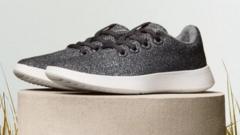
Wall Street loves a comeback story, especially one involving a buzzword. When Allbirds announced its shift from sustainable sneakers to an "AI-driven retail ecosystem," the stock market reacted with the Pavlovian enthusiasm of a Golden Retriever at a whistle factory. Shares jumped. Analysts scribbled notes about "digital transformation" and "tech-enabled scalability."
They are all wrong.
What we are witnessing isn't a pivot. It is an admission of failure masquerading as innovation. Allbirds is a footwear brand that stopped being able to sell shoes, so it decided to sell a dream to investors who still believe that adding a neural network to a logistics chain magically fixes a broken brand identity.
I’ve spent fifteen years watching consumer brands burn through venture capital. I’ve seen the "direct-to-consumer" darlings of 2015 try to reinvent themselves as software-as-a-service providers once their customer acquisition costs (CAC) surpassed their lifetime value (LTV). It never works. You cannot code your way out of a product problem.
The Myth of the Software Savior
The prevailing narrative suggests that Allbirds’ new AI suite will optimize inventory, predict trends, and create a "frictionless" shopping experience. This assumes the problem was the plumbing. It wasn't. The problem was the sink.
Allbirds rose to fame on the back of the "Silicon Valley Uniform." They were the wool runners for people who wanted to look like they cared about the planet while walking between meetings at Google. But fashion is a fickle beast. Sustainability is no longer a unique selling proposition; it’s the baseline. Once the novelty of the "merino wool shoe" wore off, the brand was left with a product that looked increasingly like a medical slipper.
When a retail brand "pivots to AI," they aren't actually building a better product. They are building a better spreadsheet.
Inventory optimization is great for Walmart. It’s essential for Amazon. But for a premium lifestyle brand? Efficiency is a secondary concern to desire. People don't buy Nikes because the logistics were optimized by a machine learning model. They buy them because of the brand equity built over decades of cultural relevance. Allbirds is trying to substitute culture with computation.
The Unit Economics of Desperation
Let’s look at the math that the bullish analysts are ignoring. To build a proprietary AI infrastructure that actually provides a competitive advantage, you need two things: massive amounts of clean data and top-tier engineering talent.
Allbirds has neither.
- The Data Gap: Allbirds is a niche player. Compared to giants like Inditex (Zara) or Nike, their dataset is a puddle. AI models thrive on volume. Trying to out-predict the market using a fraction of the industry's data is like trying to forecast the weather for the entire planet by looking out your kitchen window.
- The Talent Drain: Why would a world-class AI researcher work at a struggling shoe company in San Francisco when they could go to OpenAI, Anthropic, or even a well-funded robotics startup? They wouldn't. Allbirds is likely overpaying for "consultative" AI—off-the-shelf solutions rebranded as proprietary breakthroughs to soothe the board of directors.
Imagine a scenario where a local bakery realizes it’s losing money on croissants. Instead of fixing the recipe, it announces it’s becoming a "data-driven gluten-optimization platform." The stock might tick up for a week, but the bread still tastes like cardboard. That is the Allbirds trajectory.
The "Tech Company" Delusion
This is the classic "WeWork" trap. If you tell investors you are a real estate company, they value you at a multiple of your rent. If you tell them you are a "tech-enabled physical social network," they value you like a software giant.
Allbirds is desperately trying to change its valuation multiple. Physical products have thin margins, high shipping costs, and the physical reality of returns. Software has 90% margins and scales at the click of a button. By calling themselves an AI company, they are attempting a financial alchemy that ignores the laws of business physics.
They are still making shoes. They still have warehouses. They still have physical stores with leases. Calling the backend "AI" doesn't change the fact that they are in a low-margin, high-competition commodity market.
The High Cost of the Wrong Solution
The most dangerous part of this pivot is the opportunity cost. Every dollar spent on an "AI-driven recommendation engine" is a dollar not spent on product design, material innovation, or marketing that actually resonates with a younger demographic that currently views the brand as "something my dad wears to the airport."
Sustainable materials were the soul of the company. In their rush to be a tech firm, they are hollowing out that soul. We’ve seen this play out before:
- Peloton thought it was a media company; it’s a bike company that over-hired.
- Casper thought it was a sleep-science company; it’s a mattress company with a marketing problem.
- Allbirds thinks it’s an AI company; it’s a shoe company that lost its cool.
Stop Asking if the AI Works
The question shouldn't be "Is the AI effective?" The question should be "Does anyone care?"
If you have a boring product, the most efficient logistics in the world will only help you go out of business faster. AI can tell you that orange sneakers are trending in Berlin, but if your brand doesn't have the cultural permission to sell orange sneakers in Berlin, the data is useless.
The "lazy consensus" says that digital transformation is the only way for legacy retail to survive. The truth is that digital transformation is a commodity. You can buy it from Salesforce, Microsoft, or a dozen startups. It’s no longer a moat.
The only real moat in 2026 is brand obsession. You cannot automate obsession. You cannot "optimize" your way into someone's heart.
The Brutal Reality of the Pivot
Most "pivots" are actually just expensive ways to delay a bankruptcy filing. They allow management to reset the clock, issue new press releases, and perhaps cash out a few more stock options before the inevitable.
If Allbirds wanted to save themselves, they wouldn't be hiring data scientists. They would be hiring the most aggressive, controversial designers in the world to make their shoes something people actually want to wear again. They would be doubling down on the physical, tactile nature of their product—the very thing that AI cannot replicate.
Instead, they’ve chosen the path of least resistance: chasing the current venture capital trend. It’s a strategy born of boardrooms, not workshops. It’s defensive, not offensive.
The share price "soaring" isn't a sign of health. It’s the twitching of a corpse being hit with a defibrillator. It looks like life, but the heart stopped beating a long time ago.
If you’re holding the stock because you think Allbirds is the next Nvidia of footwear, you aren't an investor. You're a tourist. Sell before the market remembers that you can't wear an algorithm.