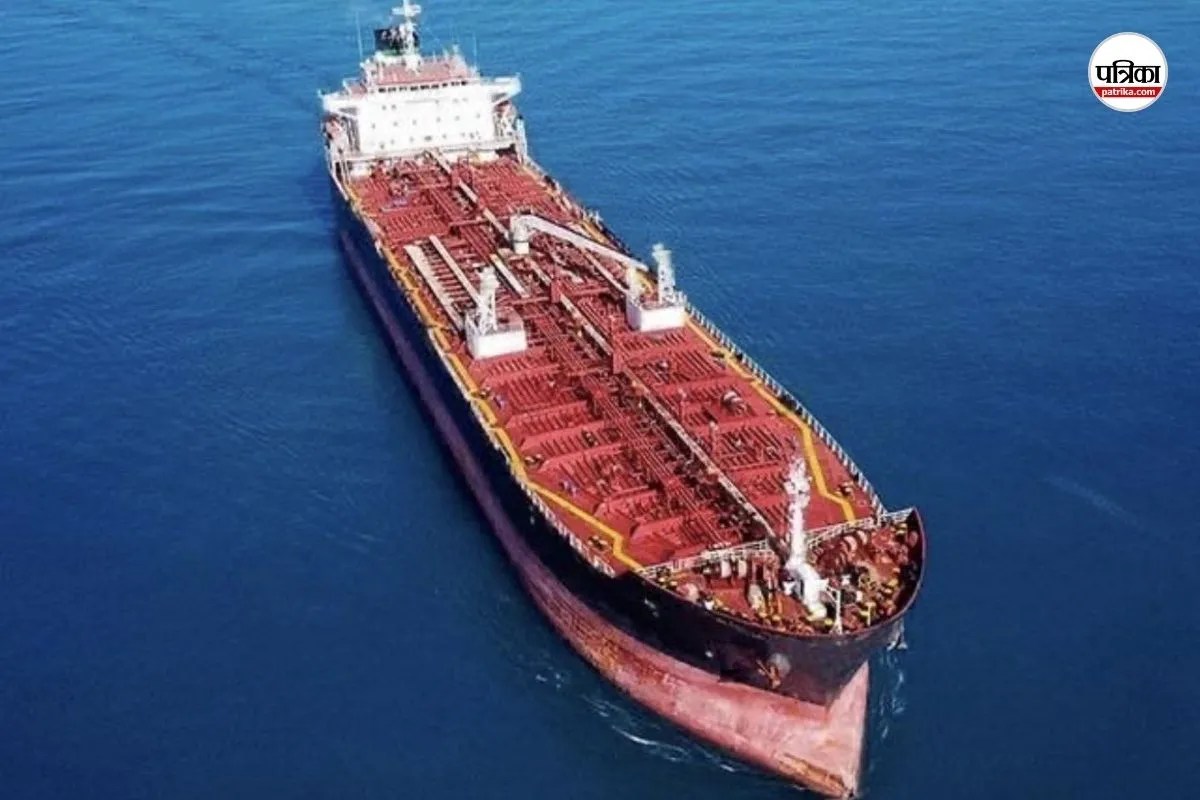
The headlines are screaming with predictable, knee-jerk triumphalism. Washington greenlights a missile strike on an Iranian-linked oil tanker, and the mainstream media immediately rolls out the standard script: America takes decisive action. The West draws a hard line. Iran gets squeezed.
It is a comforting narrative for anyone who views global geopolitics as a simplistic action movie. It is also entirely wrong.
Firing multi-million-dollar missiles at rusty hulls in international waters is not a demonstration of strategic dominance. It is the military equivalent of a temper tantrum. It proves that the West has run out of economic and diplomatic cards to play. When you look past the explosive footage and analyze the cold, hard mechanics of global energy logistics and shadow finance, this "major action" reveals a crumbling sanctions apparatus and an empire running on fumes.
The Great Sanctions Illusion
For over a decade, the consensus among Western foreign policy elites has been that financial sanctions can isolate a major energy producer out of existence. I have spent years tracking maritime trade flows and illicit finance networks, and I can tell you that this theory died a long time ago.
When the US ramps up sanctions, the oil does not magically stay in the ground. It just changes paperwork.
Iran has spent years mastering the art of the "Ghost Fleet"—a massive, decentralized network of aging, privately owned tankers that operate completely outside the Western maritime infrastructure. These ships do not use Western insurance (like the International Group of P&I Clubs). They do not fly Western flags. They turn off their Automatic Identification Systems (AIS) in the middle of the ocean, engage in ship-to-ship (STS) transfers in the dark, and blend their crude with other origins until it becomes legally untraceable.
By resorting to kinetic military strikes against these vessels, the US is openly admitting a harsh truth: The Treasury Department has lost control of the economic lever.
If sanctions were actually working, there would be no tankers to shoot at. The fact that these vessels are fully loaded and sailing through heavily monitored chokepoints proves that the shadow market is thriving, highly profitable, and completely indifferent to Washington’s blacklists.
The Asymmetrical Mathematics of Modern Warfare
Let us break down the brutal economics of this military engagement.
+--------------------------+-----------------------------------+
| Western Weapon Cost      | $2,000,000+ (Tomahawk / SM-2)     |
+--------------------------+-----------------------------------+
| Shadow Fleet Asset Cost  | $15,000,000 (Fully depreciated)   |
+--------------------------+-----------------------------------+
| Net Strategic Result     | Supply diversion, higher premium  |
+--------------------------+-----------------------------------+
The US military is using highly sophisticated, incredibly expensive precision munitions to target depreciated assets that the owners consider entirely expendable. A 20-year-old Suezmax tanker purchased via a shell company in Dubai or Marshall Islands has often paid for itself within three or four successful shadow voyages. If it gets hit, the loss is already priced into the cost of doing business.
Worse, every missile fired by a Western warship depletes an already strained domestic defense manufacturing base. You cannot replace an advanced surface-to-air or land-attack missile in three days. It takes months, sometimes years, due to supply chain bottlenecks and specialized component shortages. Iran and its proxies are playing a game of attrition, using cheap drones, sea mines, and asymmetrical tactics to force the West to burn through its premium arsenal.
Celebrating a missile strike on a tanker is like celebrating using a gold-plated sledgehammer to kill a fly. The fly might die, but you just ruined your hammer, and there are ten more flies entering the room.
Why Higher Oil Premiums Hurt the West More Than Tehran
The lazy assumption is that disrupting Iranian oil transport hurts Iran's bottom line. Let's look at the actual market mechanics.
When military tension spikes in the Persian Gulf or the Red Sea, global shipping insurance premiums skyrocket. Freight rates surge. The price of Brent crude moves upward to price in the geopolitical risk.
Now, ask yourself: Who actually benefits from a higher global price of oil?
- Iran sells its crude at a discount to independent refineries in Asia (predominantly China). If the global benchmark rises, Iran’s discounted price still goes up in absolute terms. They make more money per barrel on the volume that gets through.
- The American Consumer gets hit directly at the gas pump, refueling domestic inflation and complicating monetary policy.
- European Economies, already reeling from structural energy crises, face higher input costs across their entire industrial sectors.
By turning the shipping lanes into an active kinetic zone, Western intervention directly subsidizes the very adversaries it aims to penalize. It provides Russia, Venezuela, and Iran with a higher price floor for their illicit exports while penalizing domestic voters in Western democracies. It is geopolitical malpractice on a grand scale.
Dismantling the Mainstream Narrative
The public is constantly fed flawed premises about maritime security and economic warfare. Let's tackle the most common questions with some brutal honesty.
Doesn't international law require the US to protect freedom of navigation?
Freedom of navigation is a selective luxury, not a universal principle. When the US strikes a tanker, it is actively disrupting navigation to enforce its own unilateral domestic sanctions—sanctions that much of the world outside of Europe does not recognize. This hypocrisy is not lost on the Global South. It actively accelerates the de-dollarization movement, pushing countries to develop alternative financial clearing systems that the US cannot touch or monitor.
Can't the US just blockade Iranian ports entirely?
A total naval blockade is an act of war that would instantly push oil past $150 a barrel and trigger a global economic depression. The US economy cannot survive the fallout of its own total enforcement. Therefore, Washington settles for these sporadic, performative strikes to project strength to a domestic audience while praying that the situation does not escalate into a systemic supply shock.
Won't this deter shipping companies from carrying Iranian crude?
It deters legitimate, law-abiding Western shipping companies that were never going to carry Iranian crude anyway. It does absolutely nothing to deter the dark operators. The premium for moving sanctioned oil rises, which attracts even more aggressive, risk-tolerant actors into the shadow fleet ecosystem.
The Dark Reality of the Shadow Fleet
The real danger here isn't the geopolitical posturing; it is the looming environmental disaster that the West is actively provoking.
The shadow fleet operates without standard regulatory oversight. These ships frequently perform mid-ocean oil transfers with their transponders turned off, using sub-standard equipment and skeletal crews. They do not have access to premier salvage tugs or environmental cleanup response networks.
When a Western missile punctures the hull of a shadow tanker, it does not stop the flow of illicit oil globally. It creates an imminent risk of a massive ecological catastrophe in critical waterways. A catastrophic oil spill in the Bab el-Mandeb or the Strait of Hormuz would shut down international shipping for weeks, crippling global supply chains far more effectively than any state-sponsored blockade ever could.
We are treating a highly sophisticated economic evasion problem with kinetic military tools. It is a fundamental misdiagnosis of the disease.
The Strategic Pivot Nobody Wants to Admit
If the goal is truly to neutralize the influence of adversarial energy states, firing missiles at sea is the least effective method available.
The only way to dismantle a shadow market is to destroy its economic viability. This requires structural changes at home: massive, uncompromising deregulation of domestic energy production, aggressive expansion of nuclear and alternative energy infrastructure to permanently crush global demand baselines, and a total overhaul of maritime law enforcement focused on port-state control rather than blue-water missile exchanges.
But those solutions require long-term strategic vision, political capital, and structural sacrifice. They do not offer the instant gratification of a grainy camera feed showing an explosion at sea.
So instead, Washington will keep choosing the performative route. They will fire more multi-million-dollar missiles at rusting, insured hulls. The media will continue to cheer it on as a "bold action." And the shadow fleet will keep sailing, laughing all the way to foreign banks, while the West dilutes its power one expensive explosion at a time.