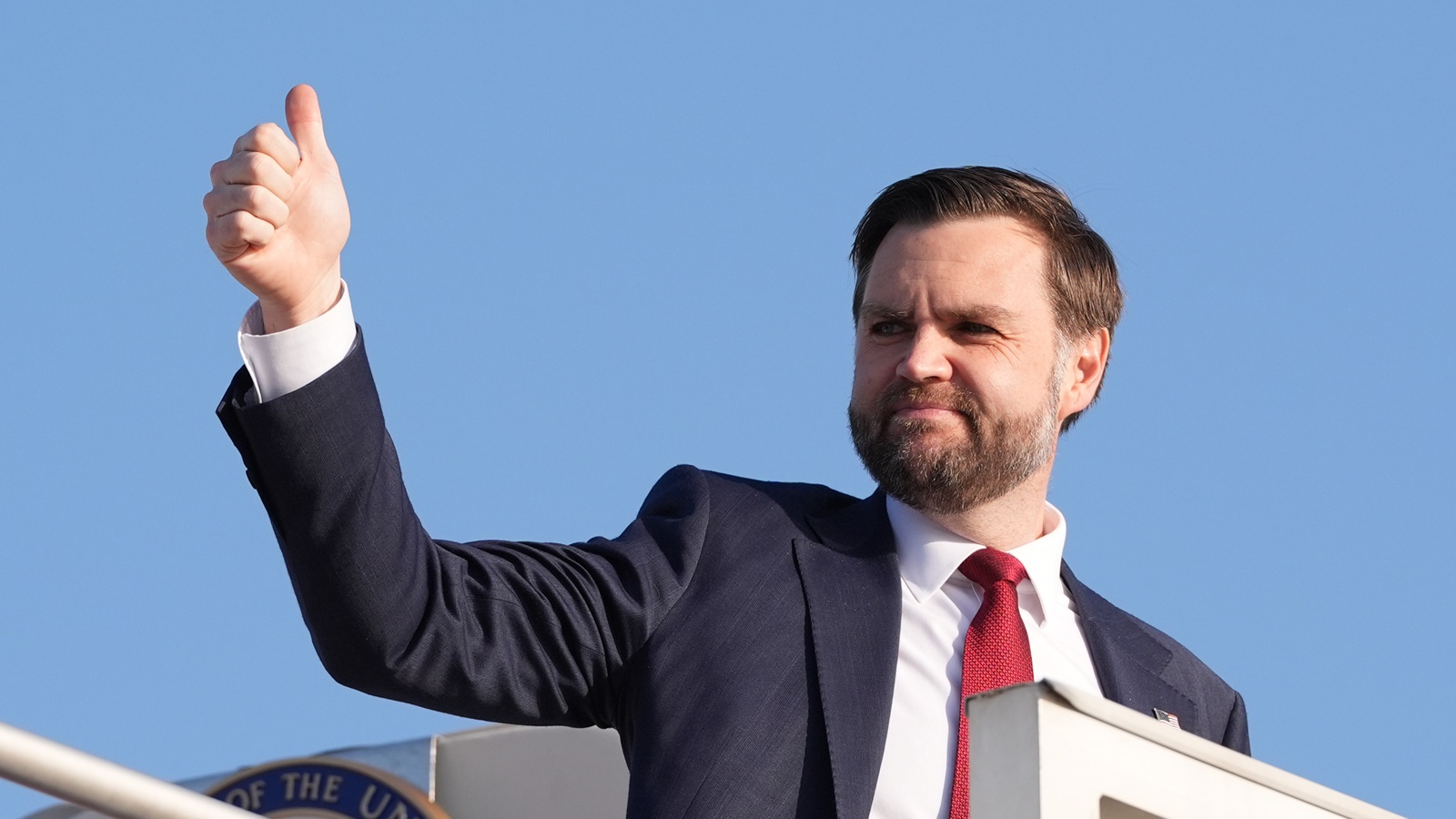
The political establishment loves a comforting narrative, especially when it involves Middle Eastern geopolitics. A prominent thesis currently circulating through Washington corridors—most notably echoed by figures like JD Vance—suggests that the United States sits in an enviable, bulletproof position regarding Iran. The argument goes like this: whether Iran backs down under pressure or escalates into a hot conflict, the U.S. wins "either way." If they back down, American hegemony is restored. If they fight, the U.S. military machine decisively crushes them.
This is a profound misunderstanding of modern asymmetric warfare. It is a comforting bedtime story told by bureaucrats who still view the world through the lens of 1991 Desert Storm logistics.
The belief that a superpower wins by default in a chaotic, multi-theater escalation is not just arrogant. It is factually wrong.
The Illusion of the Zero-Sum Victory
To understand why the "win either way" premise fails, you have to look at the math of modern attrition. For decades, Western military strategy has relied on overwhelming technological superiority. But technological superiority does not guarantee strategic victory when the cost-to-benefit ratio is inverted.
Imagine a scenario where a state actor utilizes thousands of low-cost, loitering munitions—drones that cost roughly $20,000 each to manufacture. To intercept these, a carrier strike group must deploy air defense missiles costing between $1 million and $4 million per shot. You do not need a degree in economics to see how that math ends.
Drone Cost: $20,000
Interceptor Missile Cost: $2,000,000
Cost Ratio: 1:100 against the superpower
I have spent years analyzing supply chain vulnerabilities and defense logistics. The reality on the ground is brutal. A nation does not win a conflict simply because its flag remains flying over a charred landscape. True victory requires achieving specific political and economic objectives. If an escalation results in the closing of the Strait of Hormuz—through which roughly 20% of the world's petroleum passes—global energy markets face immediate paralysis.
A spike in oil prices to $150 or $200 a barrel is not a win for the American consumer. It is a catastrophic economic tax that triggers domestic inflation, spikes interest rates, and destabilizes Western financial markets. If the price of "winning" a confrontation is a domestic recession, you have actually lost.
Dismantling the "People Also Ask" Assumptions
The public discourse surrounding this issue is warped by flawed premises. Let us dismantle the questions people routinely ask about this standoff.
Can the US easily destroy Iran's nuclear capabilities?
This question assumes that military capability is purely a function of target coordinates and payload capacity. The reality is that decades of observation have taught regional powers how to harden assets. Iran's primary nuclear facilities, such as Fordow, are buried deep inside mountains under layers of reinforced concrete.
Conventional airstrikes cannot simply erase these facilities. A permanent neutralization would require sustained, long-term bombardment or boots on the ground. Anyone claiming this can be settled via a swift, clean surgical strike is selling a fantasy. The Pentagon's own historical war games—such as the famous Millennium Challenge 2002—routinely demonstrate that red-team adversaries using unconventional, asymmetric tactics can inflict devastating losses on American naval forces in confined waters like the Persian Gulf.
Will regional allies shoulder the burden of escalation?
The conventional wisdom says that American allies in the Gulf will eagerly cheer on an aggressive stance against Tehran. This completely misreads their current diplomatic pivots. Nations like Saudi Arabia and the United Arab Emirates have spent the last few years actively de-escalating tensions and normalizing relations with Iran through Chinese-mediated talks.
Why? Because they know they sit on the front lines. They remember the 2019 drone attacks on Saudi Aramco's Abqaiq facilities, which temporarily knocked out half of the kingdom's oil production. Our allies have realized that relying on a fickle Washington security umbrella is a bad gamble. They are choosing economic stability over American-led ideological crusades.
The Brutal Truth About Deterrence
True deterrence requires credibility and clarity. The current American posture offers neither. By signaling that we are comfortable with "either outcome," we signal to our adversaries that we do not fully grasp the consequences of instability.
The contrarian reality is that a cornered adversary is the most dangerous kind. When an regime faces total economic strangulation with no diplomatic off-ramp, its incentive to maintain regional stability drops to zero. If Tehran believes that Washington views a war as a win-win scenario, the incentive for diplomatic compromise vanishes entirely.
There are real risks to admitting this. Acknowledging that the U.S. cannot dictate terms flawlessly across the globe sounds like defeatism to the untrained ear. It forces policymakers to make difficult, uncomfortable compromises. It means accepting that some regional realities cannot be fixed by a carrier strike group. But ignoring these constraints is how empires overextend and collapse.
Stop viewing global conflict through the simplistic lens of a scoreboard. A war of attrition in the Middle East has no winners. The only way for the United States to actually win is to avoid playing a rigged game designed by adversaries who thrive in chaos.