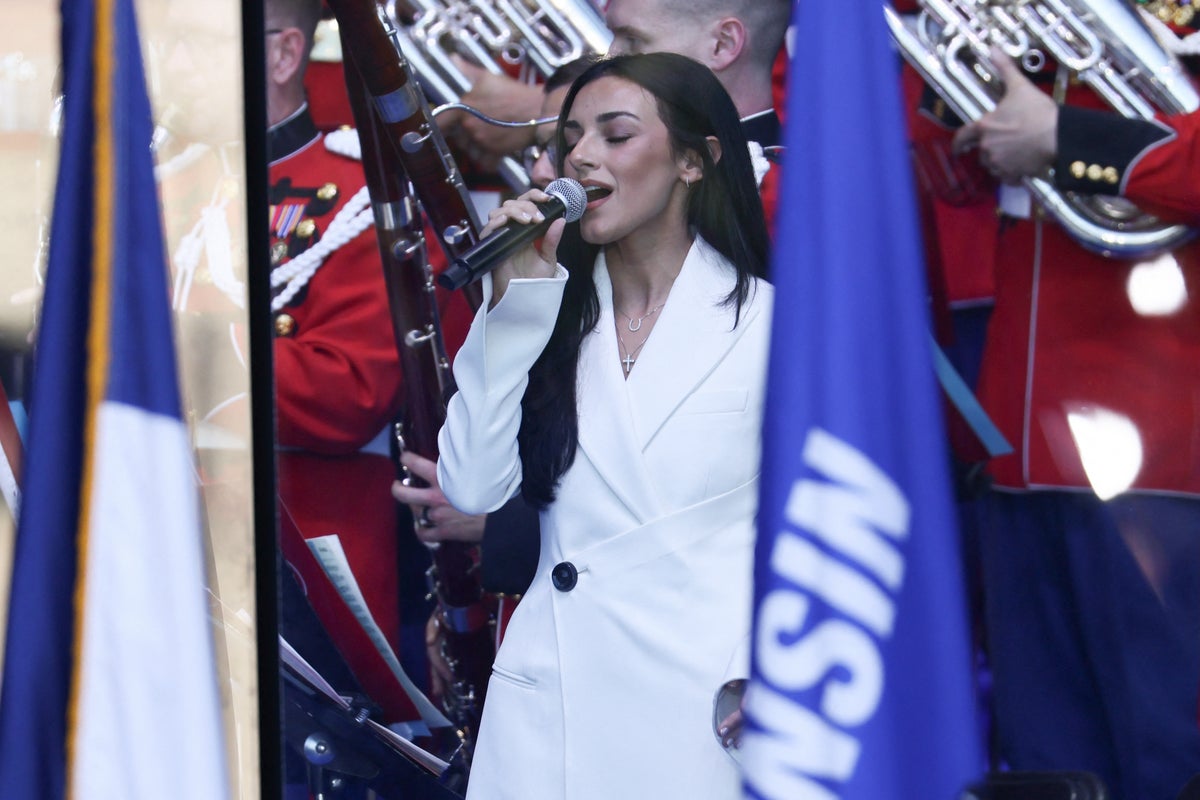
The intersection of state-sponsored events, public funding, and artistic curation provides a transparent case study in economic transactionalism. When a cultural asset is deployed within a hyper-politicized ecosystem, standard metrics of commercial viability collapse. The recent performance of country singer Alexis Wilkins at the Freedom 250 event on the National Mall—marking the initial phase of the Great American State Fair—is not merely a flashpoint for social media criticism. Instead, it serves as a quantifiable demonstration of how institutional booking functions when market-driven supply lines fracture.
To analyze this event strictly through the lens of viral public critique is to miss the underlying structural mechanics. The core issue lies in the operational divergence between an artist's open-market valuation and their institutional utility within a distressed booking landscape. When traditional commercial entities retract their participation, the resulting talent vacuum forces a reliance on alternative, non-market selection criteria.
The Talent Acquisition Bottleneck: Supply-Side Contraction
The booking architecture of Freedom 250 was originally designed around mainstream commercial draw. Initial scheduling included prominent legacy acts across multiple genres, such as Martina McBride, The Commodores, and Bret Michaels. The operational strategy relied on these high-recognition assets to validate an event backed by an $80 million public-private funding structure managed via Freedom 250.
The systemic failure of this primary strategy occurred due to non-economic variables. As the political risk profile of the event escalated, primary artists executed unilateral exit clauses to protect their broader commercial distribution networks. This created an immediate supply-side contraction.
[Mainstream Artists Exit] -> [Talent Vacuum] -> [Non-Market Selection (Wilkins)]
When mainstream distribution channels close due to brand-safety concerns, an event organizer faces a strict optimization problem. They must secure a replacement who satisfies two distinct constraints:
- Ideological Alignment: The performer must be willing to absorb the associated political externalities that drove away market-rate talent.
- Immediate Availability: The asset must be deployable on short notice without requiring complex multi-party corporate clearance.
The selection of Wilkins—noted publicly as the partner of FBI Director Kash Patel—satisfies these non-market constraints perfectly. On pure commercial metrics, Wilkins possesses a minimal market footprint, evidenced by fewer than 6,000 monthly listeners on streaming platforms such as Spotify, and a discography that has lacked new releases since 2023. In a normalized market environment, an asset with this statistical profile does not secure a solo performance slot accompanied by the United States Marine Band on the National Mall.
The booking, therefore, represents an institutional substitution effect: when commercial capital cannot buy market-rate talent due to reputational hazards, political alignment becomes the primary currency.
Evaluating the Meritocracy Narrative: The Defense Framework
Public statements from Wilkins emphasize a narrative of individual meritocracy, asserting the performance invitation occurred independently of her relationship with Patel. To evaluate this claim objectively, we must analyze the structural mechanisms of high-level talent booking.
In the entertainment industry, organic invitations to headline major civic exhibitions require specific operational vectors:
- Commercial Velocity: High streaming growth, charting singles, or significant ticket-sale data.
- Cultural Relevancy: Broad demographic appeal that justifies the logistical expenditure of a large-scale public event.
- Agency Placement: Heavy negotiation by tier-one talent agencies leveraging multi-event packages.
The absence of these three vectors in the subject's career profile invalidates the hypothesis of an organic, market-driven booking.
The alternative hypothesis points to network proximity capitalization. Within organizational strategy, this occurs when an individual gains access to institutional resources not through market value, but through direct proximity to high-ranking decision-makers within the host ecosystem. This dynamic bypasses standard vetting procedures, resulting in an immediate disconnect between the scale of the venue and the market authority of the performer.
The Public Funding Paradox and Operational Externalities
A significant point of contention lies in the financial architecture of the performance. Wilkins stated on social media that she accepted no compensation and that the National Mall celebrations operate via a private fundraising arm rather than taxpayer funds. However, structural analysis reveals this distinction is largely semantic within public-private partnerships.
Data indicates that Freedom 250 received $80 million in public funding. Even if direct artist fees are covered by private donations or waived entirely, the operational infrastructure of the event—including security, venue permitting, military band coordination, and public space utilization—is fundamentally subsidized by institutional mechanisms.
The cost function of a public performance extends far beyond the artist's invoice:
$$\text{Total Operational Cost} = \text{Direct Compensation} + \text{Logistical Subsidies} + \text{Reputational Risk Premium}$$
When an organization relies on subsidized infrastructure to host a non-market asset, it incurs a severe reputational risk premium. The public response to the rendition of the national anthem—characterized by highly critical comparisons to other politically linked figures like Lara Trump—reflects the audience's real-time calculation of this premium. The consumer detects the variance between the quality delivered by a non-market selection and the expected standard of a highly subsidized national stage.
Strategic Recommendation for Institutional Event Curation
For entities managing public-private cultural exhibitions, the Freedom 250 talent acquisition failure offers a clear operational lesson. To prevent severe brand dilution and negative public feedback, organizers must implement a rigid risk-mitigation framework for talent acquisition during partisan polarization.
First, organizers must establish an insular booking buffer. If primary commercial artists withdraw, the secondary tier should consist of apolitical, highly technical institutional assets—such as dedicated military vocalists or non-aligned classical ensembles—rather than politically exposed civilian artists. This eliminates the perception of nepotism and anchors the performance quality to a reliable baseline.
Second, talent validation must rely on verifiable audience data. If an event claims national significance, the performance assets must meet minimum thresholds of market penetration (e.g., active touring data or minimum streaming baselines). Bypassing these metrics in favor of network proximity guarantees a negative feedback loop from both media critics and the public, ultimately diminishing the strategic value of the entire institutional initiative.