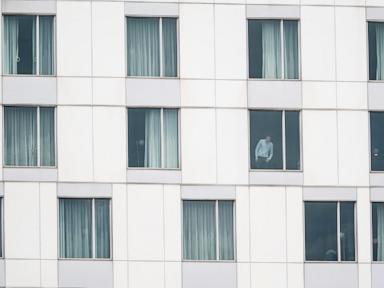
Active shooter mitigation strategies in dense urban environments operate under hyper-compressed time horizons where tactical decisions yield binary outcomes: containment or catastrophe. The June 22, 2026, engagement at the Hilton hotel in Montreal's Côte-des-Neiges district, which resulted in the fatalities of a Montreal police officer, a civilian, and the lone suspect, serves as a lethal case study in urban ballistic risk. A critical analysis of the event reveals that traditional rapid-deployment frameworks remain highly vulnerable to elevated, barricaded adversaries wielding high-velocity long guns.
When a suspect leverages structural elevation within a high-density municipal zone, responding patrol units confront an immediate tactical deficit. The incident demonstrates the structural limitations of standard police response protocols when facing an uncontained kinetic threat. By deconstructing the timeline, spatial mechanics, and multi-agency operational responses, we can map the specific failure points and systemic vulnerabilities that define modern urban active shooter scenarios.
The Chronological Decoupling of Public Alerts
The primary metric of success in public safety operations is the compression of the latency period between threat identification and public containment. In the Côte-des-Neiges engagement, a stark operational mismatch occurred between the physical neutralization of the threat and the digital notification of the surrounding population.
- 11:35 a.m. – Initial emergency dispatch received via 911. Callers report an individual presenting a long gun through a window at the Hilton hotel.
- 11:40 a.m. (approximate) – First responder arrival. Patrol units immediately intercept sustained, high-velocity gunfire from an elevated position. A gunfight ensues, resulting in the downing of two officers and one civilian.
- Pre-2:30 p.m. – Tactical resolution. The suspect is shot and neutralized by return fire during a reload phase.
- 2:30 p.m. – Broadcast of the provincial emergency alert advising residents to shelter in place.
This timeline exposes a significant procedural latency. The suspect was verified dead before the broadcast network transmitted the emergency alert to the civilian population. While tactical units resolved the primary kinetic threat within minutes of arrival, the bureaucratic architecture required to authorize and distribute a mass public safety notification operated on a lag of nearly three hours.
The danger of this systemic delay is clear. Had a second shooter been active, or had the primary suspect moved from the initial structure, hundreds of civilians in the immediate perimeter—including parents and children observed on an adjacent playground—would have remained completely exposed without clear guidance.
Spatial Geometry and Ballistic Advantage in Urban High-Rises
Urban active shooter incidents change fundamentally when the adversary shifts from a horizontal plane (ground level) to a vertical plane (elevated structures). The Hilton hotel architecture afforded the suspect three distinct tactical advantages that standard first-responder equipment is ill-suited to counter.
The Asymmetric Funnel of Visual Dominance
An attacker firing from an upper-floor window commands an unobstructed 180-degree field of view over the surrounding streetscape. Conversely, responding officers arriving via standard patrol vehicles must look upward against sunlight and architectural shadows, severely degrading their ability to acquire target locks. In this instance, the suspect opened fire from behind a fractured window frame, utilizing the interior room depth as a natural concealment wrapper while maintaining full ballistic access to the street below.
The Failure of Standard Light Armor
First-responding patrol officers typically wear Level IIIA soft body armor, designed to stop standard handgun calibers (e.g., 9mm, .40 S&W). The suspect in Côte-des-Neiges utilized a long gun. Rifle rounds travel at velocities exceeding 2,500 feet per second, generating kinetic energy that easily bypasses soft armor. This armor differential explains the high casualty rate among the initial wave of responding officers, with one killed and a second sustaining severe, altering injuries.
The Urban Micro-Canyon Sound Distortion
Witnesses and construction workers near the Hilton hotel reported hearing between 30 and 40 gunshots, but noted extreme difficulty in identifying the source point. High-density structures create acoustic reflections, making it difficult to pinpoint a shooter's location. This echo effect disorients responding officers, slows down the deployment of counter-measures, and increases the time units spend exposed in lethal vectors.
Cascading Interdependencies in Infrastructure Containment
The operational footprint of a barricaded urban shooter extends far beyond the immediate ballistic perimeter. To prevent a secondary breakout and clear lines of fire for specialized tactical units, commanders must initiate a series of rapid, high-impact infrastructure shutdowns. The Côte-des-Neiges operation triggered a massive logistical freeze across three critical networks.
First, the proximity of the Décarie Expressway forced an immediate tactical closure of major vehicle arteries. High-velocity rifle rounds easily penetrate standard automotive sheet metal, turning a highway into a high-density target environment. Second, municipal transit authorities suspended operations across significant sections of two interconnected metro lines to prevent the suspect from utilizing underground infrastructure for evasion. Third, local police set up structural cordons, converting residential blocks into controlled access points and ordering residents to lock themselves indoors.
These actions successfully isolated the threat, but they also introduced secondary systemic strains. The rapid shutdown of mass transit and major arterial roads shifted heavy traffic into surrounding residential zones, complicating the arrival of secondary tactical assets and emergency medical transport.
The Post-Incident Investative Framework
Because the engagement resulted in fatalities inflicted by and upon members of the Service de police de la Ville de Montréal (SPVM), provincial law requires a total decoupling of the subsequent investigation to ensure institutional transparency.
The investigation shifts to the Bureau des enquêtes indépendantes (BEI), Quebec's independent police watchdog. Under this statutory framework, the SPVM cedes control of the crime scene. The BEI assumes custody of all ballistic evidence, radio logs, body-worn camera footage, and civilian recordings. To eliminate internal conflicts of interest, the BEI brings in an outside police force to handle technical forensics.
This investigative handoff introduces a necessary layer of accountability, but it also slows down the immediate flow of information. Police leadership cannot comment on specifics, analyze tactical movements, or release exact operational metrics while an independent review is underway. This creates an information vacuum that can fuel public speculation in the critical 48 hours following an event.
Tactical Realities and Strategic Restructuring
The Côte-des-Neiges engagement shatters the long-standing statistical anomaly enjoyed by the municipality. Prior to June 22, 2026, 24 years had passed since an SPVM officer was killed in the line of duty. This historical safety record can create a false sense of security regarding the standard equipment and deployment speeds of baseline patrol units.
The incident confirms that waiting for specialized tactical teams (such as SWAT or the Groupe d'intervention) during an active long-gun engagement guarantees high civilian and first-responder casualties. Patrol officers must engage immediately to disrupt the shooter's focus, even when facing severe ballistic disadvantages.
To mitigate these vulnerabilities moving forward, public safety agencies must shift away from reactive containment and toward proactive field upgrades:
- Decentralized Hard Armor Deployment: Every standard patrol vehicle must be equipped with Level IV rifle-rated plates and ballistic shields accessible to the first officers on the scene, removing the reliance on specialized tactical units for rifle neutralization.
- Automated Emergency Broadcast Triggers: The administration of public safety alerts must be decoupled from multi-tiered police leadership approvals. Standard operating procedures should mandate that verified calls of an active shooter automatically trigger a localized cellular geo-fence alert within 180 seconds.
- Integrated Counter-Sniper Standard Protocols: Urban patrol sectors with high concentrations of high-rise structures must include counter-sniper configurations in their standard training, ensuring baseline officers understand how to use vehicle placement and structural angles to neutralize elevated threats.