Fear sells newspapers, but it makes for terrible geopolitics. The current obsession with a "spillover" of the Ukraine conflict into Estonia, Latvia, and Lithuania isn't just alarmist—it's analytically lazy. We are witnessing a masterclass in misreading Moscow, fueled by a misunderstanding of what modern power actually looks like.
The consensus suggests that the Baltics are the next dominoes to fall. This narrative relies on the outdated logic of 1939. It assumes that territorial conquest is the only metric of Russian success. It ignores the reality that for the Kremlin, a conventional invasion of a NATO member is the least efficient way to achieve its goals. If you liked this piece, you might want to read: this related article.
The NATO Paradox
Critics love to point at the "Suwalki Gap" as the Achilles' heel of the West. They map out tank routes as if we are still playing a tabletop wargame from the Cold War. Here is the truth: Russia does not need to occupy Tallinn to neutralize it.
The NATO Article 5 guarantee is a psychological construct as much as a military one. If Russia wanted to destroy the alliance, it wouldn't send a division of T-90s across the border to get vaporized by precision airpower. It would simply continue doing what it is already doing—eroding the internal social fabric of these nations through digital sabotage and economic pressure. For another angle on this development, see the recent coverage from BBC News.
When a NATO state experiences a total blackout caused by a cyberattack, or when its elections are tilted by localized disinformation, does that trigger a collective military response? The "gray zone" is where the real war is being fought. Talking about "spillover" in terms of kinetic warfare is like worrying about a house fire while the foundation is being eaten by termites.
The Economic Fortress Nobody Mentions
The Baltic states are often portrayed as fragile victims. This ignores their transformation into some of the most digitally resilient economies on earth. Estonia didn't build an e-government system just for convenience; they built it for survival. They have "data embassies" in places like Luxembourg so that even if their physical territory is compromised, the state continues to exist in the cloud.
The real threat isn't a Russian boot on the ground. It is the flight of Western capital. By leaning into the "we are next" narrative, Baltic leaders are inadvertently scaring off the very investment they need to stay relevant. High-tech hubs don't thrive in "war zones."
If I were advising a VC firm today, I’d tell them to ignore the headlines about troop movements. Look at the energy grids. The Baltic decoupling from the Russian BRELL power ring is a far more significant "battle" than anything happening near the border. Sovereignty in 2026 is measured in gigawatts and encrypted packets, not kilometers of dirt.
Dismantling the Russian Ambition
Is Putin a revanchist? Yes. Is he a fool? No.
The Russian military is currently bogged down in a positional war of attrition that has drained its stocks of modern equipment and professional cadres. The idea that they would pivot from a meat-grinder in Donbas to a high-intensity conflict against a unified, nuclear-backed bloc is a fantasy.
Russia’s strategy is "reflexive control." They want you to believe an invasion is imminent because it forces the West to over-invest in static defenses while neglecting the technological and economic fronts. Every billion spent on a trench in Lithuania is a billion not spent on AI-driven electronic warfare or energy independence.
The Demographic Red Herring
You often hear about the "Russian-speaking minority" as a fifth column. This is a tired trope from the 2014 Crimea playbook that has failed to materialize in the Baltics.
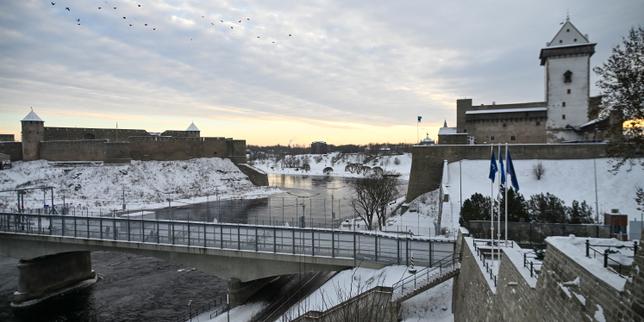
Why? Because a Russian speaker in Narva has a higher standard of living, better healthcare, and more freedom than their cousin across the border in Ivangorod. Identity is complex, but the pocketbook is simple. The Kremlin’s "Russian World" ideology loses its shine when compared to an EU passport.
The real danger isn't a popular uprising; it's the demographic collapse of the region's youth, who are moving to Berlin and London. A country with no people is easier to manipulate than a country with an "unfriendly" minority.
Stop Preparing for the Last War
If you want to understand the future of Baltic security, stop looking at maps of the 1940s.
- Cyber-kinetic thresholds: The next "invasion" will be a series of deniable infrastructure failures.
- Economic attrition: Russia wins if the Baltics become too "risky" for international banking.
- Political fragmentation: The goal is to make the West ask, "Is Daugavpils worth a nuclear exchange?" without a single shot being fired.
The Baltics aren't waiting for a war to start. They are already in one, and the West is losing because it’s looking for tanks while the enemy is already inside the network.
Stop asking if the war will spill over. Start asking why we are still using a definition of war that became obsolete twenty years ago. The border isn't a line in the forest; it's the screen in your hand.
Build the digital wall. Forget the trenches.