Six thousand meters beneath the Pacific surface, there is a silence so heavy it feels like a physical weight. Light died miles ago. The temperature hovers just above freezing. Here, in the abyssal plains of the Minamitori-shima seabed, the pressure is enough to crush a luxury car into the size of a soda can.
But in this cold, dark crush lies the DNA of the twenty-first century. Meanwhile, you can explore other developments here: Ukrainian Autonomous Drones and the End of Traditional Warfare.
If you are reading this on a smartphone, you are holding a piece of this story. If you drive an electric vehicle or rely on a wind turbine to keep your lights on, you are a participant in a silent, global struggle. We have built a world that runs on "rare earths"—elements like neodymium and dysprosium—yet we have allowed the keys to that world to be held by a single hand. China currently controls the overwhelming majority of the global rare earth supply chain. They don't just dig it up; they process it, refine it, and decide who gets to buy it.
Japan knows what happens when that hand clenches into a fist. In 2010, a diplomatic spat led to a sudden freeze in Chinese exports. Prices skyrocketed. Japanese assembly lines groaned to a halt. It was a wake-up call that echoed through the halls of the Diet in Tokyo: dependency is a form of surrender. To see the full picture, check out the recent report by CNET.
The Great Mud Rush
Now, Japan is preparing to dive.
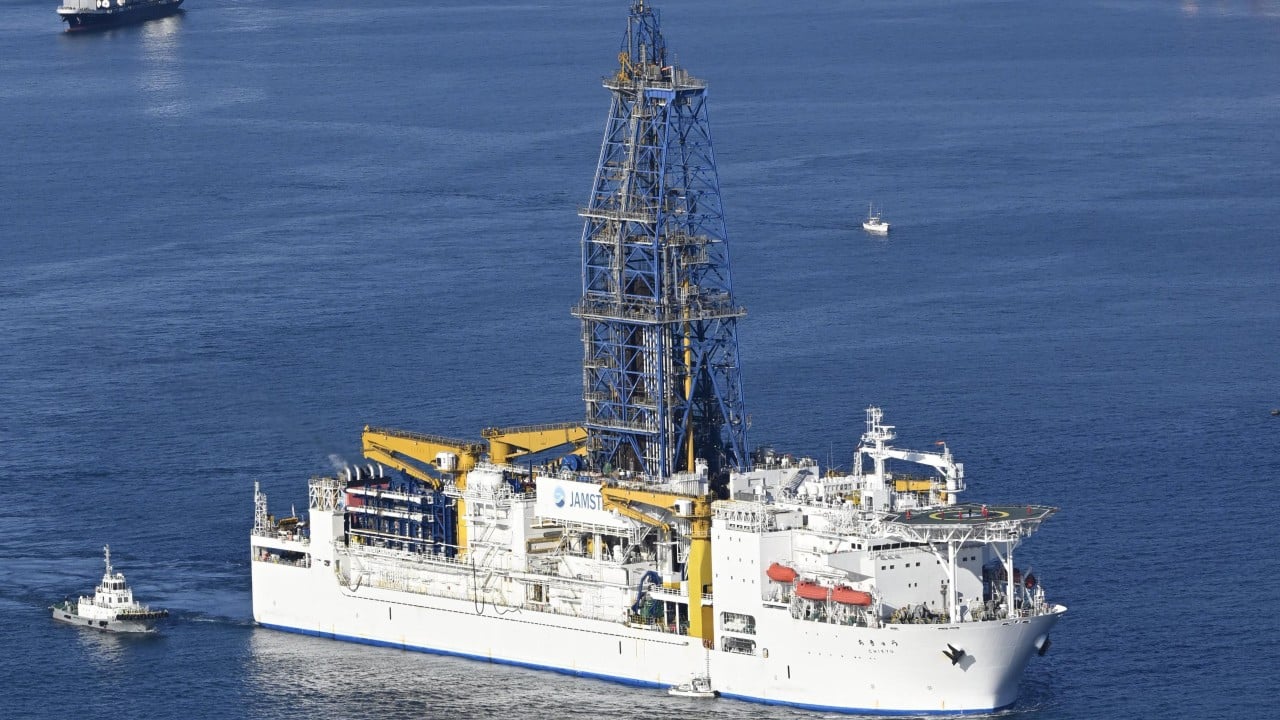
The Japanese government has greenlit a plan to commission a specialized, world-first extraction ship. This isn't just a boat; it is a floating industrial fortress designed to do what was once thought impossible: vacuum up mineral-rich mud from the floor of the deep ocean.
To understand why this matters, you have to look at the mud itself. It isn't just dirt. It is a concentrated slurry containing enough yttrium and terbium to power Japan’s high-tech industry for centuries. The Japan Organization for Metals and Energy Security (JOGMEC) has already proven the concept works. In 2022, they successfully pumped up seabed minerals from depths of nearly 2,500 meters. But the target at Minamitori-shima is much deeper—6,000 meters.
Imagine trying to sip a thick milkshake through a straw that is nearly four miles long, while standing on a moving platform in the middle of a storm. That is the engineering challenge.
The Cost of Sovereignty
Why go to such lengths? Why spend billions of yen on a ship that might take years to become profitable?
Consider a hypothetical engineer named Hiroshi. Hiroshi works for a major Japanese automotive firm. His job is to source the magnets for electric motors. Every quarter, he watches the price charts like a hawk. He knows that if trade tensions flare up, his supply chain could vanish overnight. For Hiroshi, this ship isn't a "geopolitical asset." It is job security. It is the guarantee that his company can keep building the future without asking for permission from a foreign power.
This is about more than just business. It is about the "invisible stakes." When a nation loses its ability to source the materials for its own technology, it loses its agency.
Japan’s push for a dedicated extraction vessel is a declaration of independence. By 2024, the government allocated roughly 16 billion yen for the project. The goal is to start large-scale extraction by the late 2020s.
The Weight of the Deep
Critics point to the environmental price. The deep sea is one of the last truly untouched frontiers on Earth. When you disturb the seabed, you create "sediment plumes"—vast clouds of dust that can drift for miles, potentially choking delicate ecosystems that have evolved in total stillness for millions of years.
The Japanese scientists leading this charge aren't blind to this. They are operating in a grey zone of ethics and necessity. They argue that the environmental cost of deep-sea mining must be weighed against the horrific human and environmental toll of terrestrial mining. In places like Myanmar or the Democratic Republic of Congo, rare earth and cobalt mining often involve child labor, toxic runoff, and the total destruction of local landscapes.
Is a cloud of dust in a pitch-black abyss worse than a poisoned river in a populated jungle? There is no easy answer. There is only a choice between two different kinds of impact.
A New Kind of Vessel
The proposed ship will be a marvel of marine engineering. It needs to remain perfectly stationary in heavy swells while managing a vertical transport system that weighs thousands of tons. It will serve as a mother ship for Remotely Operated Vehicles (ROVs) that act as the hands and eyes of the operation.
These ROVs crawl across the bottom, loosening the mud and feeding it into the lift system. The mud is then processed on deck, with the wastewater being carefully returned to the depths. It is a closed loop of high-pressure physics and chemistry.
The technical hurdles are massive. At 6,000 meters, the sheer weight of the piping system can cause it to snap under its own mass. The pumps have to be made of specialized alloys to resist the abrasive nature of the mineral mud. Every component is pushed to its absolute breaking point.
The Global Ripple Effect
Japan isn't the only one watching this ship. The United States, the European Union, and Australia are all monitoring Tokyo’s progress. If Japan succeeds, the "China monopoly" begins to crack.
Currently, China produces about 70% of the world's rare earths and handles nearly 90% of the processing. They have spent decades building this dominance, often by depressing prices to drive Western competitors out of business. It was a brilliant, long-term play. But it created a brittle global system.
By building this ship, Japan is creating a blueprint for others. They are proving that the ocean is not just a barrier, but a reservoir.
The Invisible Race
We often think of "arms races" in terms of missiles and satellites. We look at the sky and worry about who owns the stars. But the most important race of our lifetime is happening in the opposite direction. It is a race to the bottom.
The ship Japan is building is a symbol of a world in transition. We are moving away from the era of oil and into the era of minerals. In the old world, power was determined by who controlled the straits and the pipelines. In the new world, power belongs to whoever can reach the mud.
Think back to that silence 6,000 meters down. Soon, it will be broken by the hum of electric motors and the rhythmic pulse of pumps. It will be the sound of a nation reaching for survival.
The stakes are high, the pressure is immense, and the water is very, very deep. But for Japan, staying on the surface and doing nothing is the most dangerous option of all.
The ship will sail. The drills will descend. And the world will wait to see what we bring back from the dark.