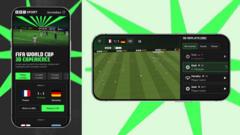
You won't just watch the next World Cup on a screen. You're going to live inside the data. BBC Sport is shifting its entire broadcast strategy away from traditional, passive viewing and moving toward a fully customizable digital hub. If you've grown tired of standard match commentary and static camera angles that miss off-the-ball action, the upcoming tournament coverage aims to fix exactly that.
The broadcaster is betting everything on personalization. For decades, major tournament coverage meant one feed, one commentary team, and whatever replay the director chose to show you. That era is dead. By integrating multi-camera switching, live data overlays, and interactive audio directly into the BBC iPlayer and the BBC Sport app, the network is handing control back to the audience.
Why standard football broadcasts feel outdated
Traditional sports television assumes everyone wants the exact same experience. It treats the die-hard fan who tracks tactical shapes the same way it treats someone who only watches football every four years. It doesn't work anymore.
When you watch a match on a standard TV feed, you miss the tactical reality of the pitch. You don't see the winger sprinting to drag a defender out of position. You don't see the central midfielder frantically gesturing to fix a broken pressing line. You only see the ball.
BBC Sport recognizes this gap. Their digital overhaul focuses heavily on giving viewers choices that linear television physically cannot support. We aren't talking about gimmicky graphics or social media crawls on the bottom of your screen. This is about functional utility for the viewer.
The death of the single camera angle
The primary change hits the way matches are captured and delivered. Through the BBC iPlayer, users can choose from several live streams during a single match.
- The Tactical Cam: A high, wide-angle bird's-eye view that stays fixed on the entire pitch. This lets you watch team shapes stretch, collapse, and counter-attack in real time.
- The Player Cam: A dedicated feed focusing purely on star players or specific matchups, tracking their off-the-ball movement and work rate.
- The Traditional Broadcast: The standard, directed feed for those who just want to sit back and watch.
Switching between these feeds happens instantly. If a team concedes a goal, you can immediately jump to the tactical view to see exactly who lost their marker or failed to track back. It fundamentally changes how you analyze the game.
Live data overlays that actually make sense
We've all seen broadcast graphics that provide useless trivia mid-match. Knowing a striker hasn't scored on a rainy Tuesday in three years doesn't tell you anything about the game happening right now.
The BBC's new digital interface introduces real-time telemetry. By toggling a menu on your tablet, phone, or smart TV, you can overlay live performance metrics directly onto the video feed.
[ Live Match Feed ] ---> Toggle Overlay ---> [ Expected Goals (xG) ]
                                             [ Player Sprint Speeds ]
                                             [ Live Heat Maps ]
This isn't delayed data shown during halftime. It updates second by second. You can track expected goals (xG) as chances create, monitor player sprint speeds during a counter-attack, and view live heat maps to see which flank a team is overloading.
Custom commentary feeds
Audio customization is another massive shift. If you find the main commentary pair irritating, or if you simply want a different perspective, the BBC Sport app allows you to swap audio tracks without interrupting the video.
You can choose the standard television commentary, jump over to the BBC Radio 5 Live feed for a more fast-paced radio description, or mute the commentators entirely while keeping the crowd noise turned up to maximum. For the tactically minded, select matches will feature alternative analytical commentary tracks focusing purely on coaching decisions and statistical trends. It lets you curate the exact atmosphere you want in your living room.
How to optimize your setup before kickoff
To actually get the most out of this technology, you shouldn't just rely on an old smart TV app. Legacy hardware often struggles with multi-stream switching and live data rendering.
First, ensure your BBC iPlayer app is fully updated on a device with strong processing power, like an Apple TV, Amazon Fire TV Cube, or a modern games console. Hardwiring your connection with an ethernet cable makes a massive difference when juggling multiple high-definition streams simultaneously.
Second, utilize a dual-screen approach. Keep the main match action on your big screen via your TV's iPlayer app, and open the BBC Sport app on your phone or tablet. Use the second screen exclusively for the live data feeds and tactical maps. This keeps your main view clean and clutter-free while still giving you instant access to every statistical insight. Download the latest versions of both apps now, log into your BBC account, and test the multi-stream functions on current live events so you aren't figuring out the interface five minutes before the opening match.