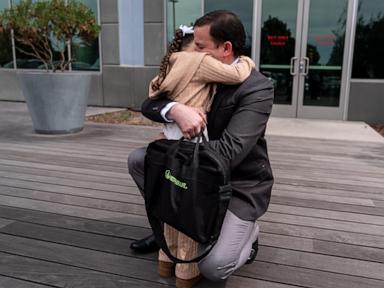
The headlines practically write themselves. A doctor, a spouse, a missed interview, and the cold machinery of Immigration and Customs Enforcement (ICE). It is a story designed to trigger an immediate emotional response. You are meant to feel the sting of the bureaucracy. You are meant to see a "broken system" that traps the "right kind of people."
But the obsession with individual heartbreak is exactly why the immigration debate has been stuck in a circular firing squad for decades. By focusing on the sympathetic outliers—the Venezuelan doctors and the PhD students—we ignore the structural reality of how borders actually function.
The media loves a tragic anecdote because it sells. Policy, however, cannot be built on anecdotes. When we demand exceptions for the "worthy," we aren't fixing a system; we’re just asking for a more polite version of chaos.
The Myth of the Exceptional Immigrant
The current discourse relies on a tired hierarchy of human value. We are told that because someone is a doctor, their detention is a unique tragedy. This implies that the detention of a construction worker or a janitor is somehow less of an affront.
This is the Respectability Trap.
When activists and journalists lean on a subject’s professional credentials to argue against enforcement, they inadvertently validate the very system they claim to oppose. They are saying the rules should apply to those people, but not to these people.
In my years tracking policy shifts, I have seen this "exceptionalism" strategy backfire repeatedly. It creates a two-tiered perception of migrants that makes it impossible to have a coherent conversation about national sovereignty. If the law is only "fair" when it ignores high-value targets, then the law is actually just a suggestion.
The Logic of the Labyrinth
Let's talk about the airport detention. The common outcry is that it is "senseless" to detain someone already in the process of seeking asylum.
From a purely administrative standpoint, it is the opposite of senseless. It is the logical conclusion of a system overwhelmed by a backlog of 3 million cases.
When the system is this bloated, every interaction at a Port of Entry becomes a binary choice: let them in and hope they show up for a court date five years from now, or detain them to ensure the process moves.
- The "No-Show" Reality: ICE data suggests that while many do show up, the sheer volume of "nones" (those with no legal basis to stay) creates a massive enforcement gap.
- The Incentive Structure: Every time an exception is made based on media pressure, it signals to the world that the rules are negotiable. That isn't empathy; it's an invitation for more people to gamble their lives on a porous border.
The competitor article paints the missed asylum interview as a bureaucratic failure. It was actually a bureaucratic function. If you are in custody, you are part of a different track. The system does not pause simply because you have a calendar invite.
Why We Ask the Wrong Questions
People often ask, "Why can't we just let the good ones stay?"
This is a flawed premise. It assumes that "good" is a legal category. It isn't. The law doesn't care if you have a stethoscope or a shovel. It cares about your visa status and your entry point.
By asking how we can save the Venezuelan doctor, we avoid asking the brutal, honest question: How many people can we actually process?
We pretend the answer is infinite if we just "fix the paperwork." It's not. Resources are finite. Space is finite. Judicial bandwidth is finite. When you prioritize one "extraordinary" case because it went viral, you are pushing ten "ordinary" families further down the list.
The Cruel Compassion of Open-Ended Asylum
There is a specific kind of cruelty in the way we handle asylum today. We allow people to enter, settle, build lives, and then—years later—tell them they don't qualify.
The "humane" approach currently championed by most news outlets is actually a slow-motion disaster.
- Entry: The migrant is released into the interior.
- Integration: They get a job, a home, and a community.
- The Crash: The court finally hears the case and denies it.
- The Drama: We see more headlines about "tearing families apart."
If we actually cared about these individuals, we would demand immediate adjudication at the border. This means more detention, not less. It means instant "yes" or "no" decisions. But that requires a level of honesty about deportation that most people can't stomach.
It is easier to cry over a doctor missing an interview than it is to admit that an effective border requires a high-speed rejection engine.
The Cost of the Emotional Lens
I have watched NGOs and legal advocacy groups burn millions of dollars on "impact litigation" for individual cases. They win the battle and lose the war.
Every time a specific case is carved out as an exception, the overall policy becomes more convoluted. We add layers of "discretionary memos" and "priority enforcement" guidelines that even the agents on the ground can't follow.
The result? A legal thicket that only the wealthiest and most "exceptional" can navigate. The doctor might get out because she has a lawyer and a press release. The guy from Honduras who doesn't speak English and has no "human interest" angle stays in the cell.
If you want to fix the system, stop looking for the most sympathetic victim. Start looking at the mechanics of the machine.
Stop Trying to "Humanize" Policy
Policy is, by definition, an abstraction. It has to be. When we try to make immigration policy "human," we make it arbitrary.
The outcry over the Venezuelan doctor is a symptom of a society that prefers feelings over functions. We want the security of a border without the discomfort of enforcement. We want the benefits of a labor force without the responsibility of a rigid legal framework.
You cannot have a functioning nation-state based on the "vibe" of a person's LinkedIn profile.
If we want a system that works, we have to accept that it will occasionally be "unfair" to people we like. We have to accept that a doctor might miss an interview. We have to accept that the rules must apply to everyone, or they apply to no one.
The real tragedy isn't that a professional was detained. The tragedy is that we have built a system so reliant on emotional blackmail that we’ve forgotten how to actually govern.
Quit looking for a hero to save from the "mean" government. Start demanding a system that is boring, predictable, and—above all—consistently enforced. Until then, you’re just participating in a PR campaign for a sinking ship.
Pick a side: The rule of law or the rule of the loudest story. You can't have both.