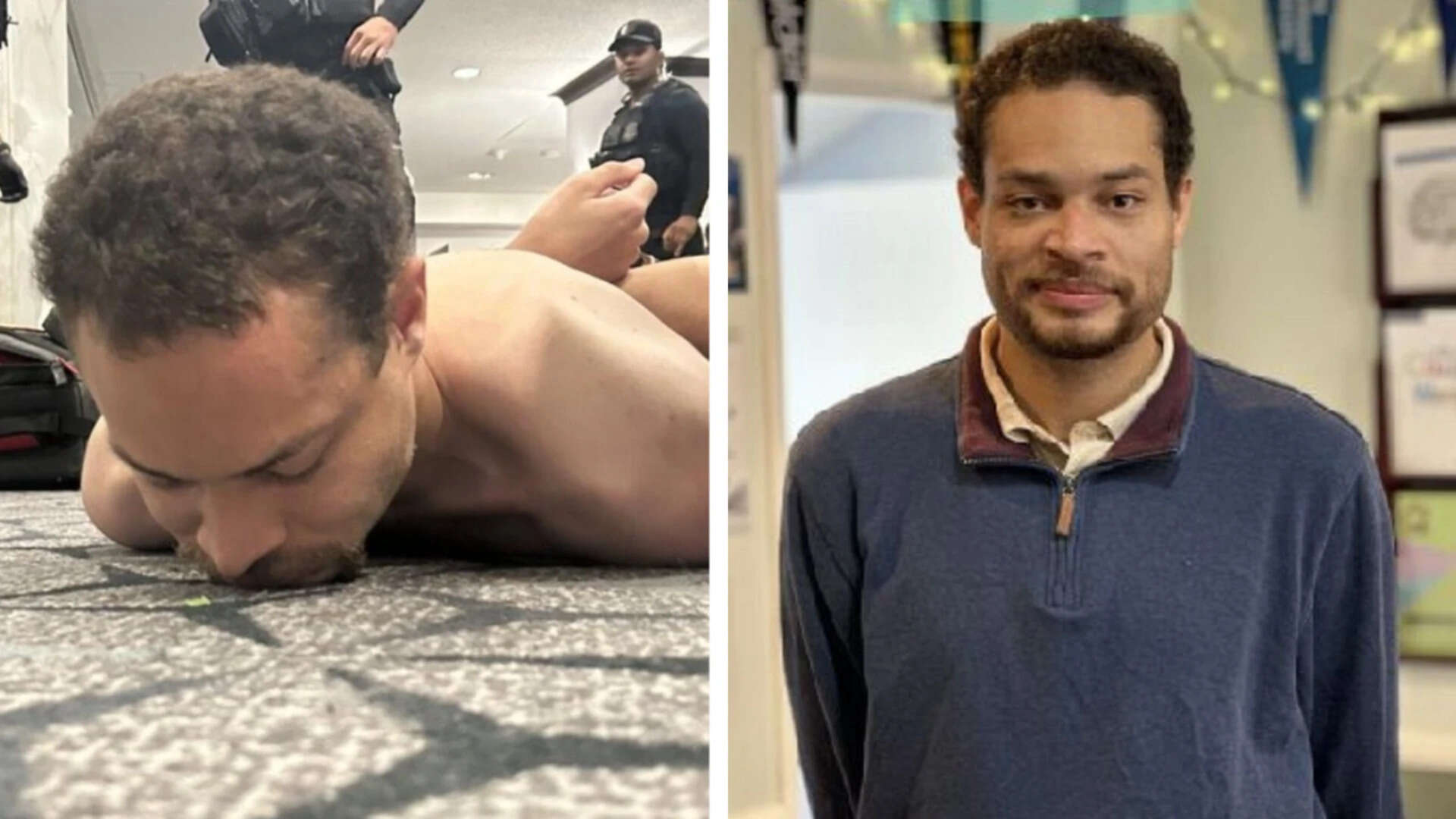
The immediate aftermath of a public shooting follows a predictable, almost mechanical script. First comes the chaos, then the body count, and finally, the desperate scramble to find a motive that makes sense of the senseless. When Cole Tomas Allen opened fire in Washington D.C., the machinery of public perception began grinding toward a familiar explanation. His sister’s revelation that he wanted to "fix the world" provides the psychological anchor the public craves. It transforms a chaotic act of violence into a tragic, albeit twisted, crusade.
However, looking at the evidence suggests that the "fix the world" motive is less a window into his soul and more a mirror reflecting the systemic failures of modern intervention. Allen did not exist in a vacuum. He was the product of a specific intersection between digital radicalization, mental health gaps, and the ease of access to high-capacity weaponry. To focus solely on his stated desire to improve society is to miss the structural rot that allowed that desire to manifest as a massacre.
The Myth of the Relatable Monster
There is a dangerous tendency in modern reporting to humanize the perpetrator through the lens of their loved ones. While his sister’s testimony offers a glimpse into his internal state, it often serves to obscure the cold reality of the planning involved. Allen wasn't just a man with a heavy heart. He was an individual who navigated the logistics of a capital city to maximize impact.
The phrase "fixing the world" is a common trope among those who have lost their grip on reality or have been absorbed into extremist ideologies. It suggests a messiah complex that justifies any means—including murder—to achieve a perceived end. When we lead with these narratives, we risk validating the internal logic of the killer. It frames the violence as a misguided attempt at altruism rather than what it actually is: a catastrophic failure of empathy and a total breakdown of social responsibility.
The Architecture of Radicalization
We have to talk about how a man gets from wanting to "fix" things to pulling a trigger. The path is rarely linear. Investigative records and digital footprints often show a slow descent into echo chambers where grievance is nurtured. In these spaces, the world is broken, and the only way to mend it is through "accelerationism"—the idea that one must speed up the collapse of society to build something new.
- Isolation as a Catalyst: Social withdrawal isn't just a symptom; it's a tool. It removes the friction of dissenting opinions.
- The Digital Echo: Algorithms don't care about ethics. They care about engagement. If a user engages with "fixing the world" through violent rhetoric, the system feeds them more of the same.
- Access to Hardware: You cannot fix a world you can't reach, and you can't execute a mass shooting without the tools. The ease with which Allen acquired his gear remains the most concrete "why" in the entire investigation.
The focus on his sister's perspective ignores the digital breadcrumbs that likely predated his final actions. We are looking at a generation of men who feel uniquely disempowered and are being sold a lie that violence is the ultimate form of agency.
Beyond the Mental Health Shield
Every time a shooter is described as having "good intentions" or being "troubled," the conversation shifts toward the mental health system. It is a convenient shield. While it is true that a healthy mind does not commit mass murder, labeling every act of terror as a mental health crisis ignores the intentionality of the crime.
Allen made choices. He chose his targets. He chose his timing. He chose his weapons. By focusing on his desire to fix the world, the narrative softens the blow of his agency. We treat him as a victim of his own mind rather than a perpetrator of a calculated attack. This distinction matters because it dictates our response. If it's just a mental health issue, we build more clinics. If it's an ideological and logistical issue, we have to change laws and monitor radicalization pipelines. We rarely have the stomach for the latter.
The Failure of the "Quiet Neighbor" Trope
The descriptions of Allen as a man who wanted to help others are a variation of the "he was so quiet" narrative. It shocks us because it doesn't fit our caricature of evil. But the most dangerous people are rarely the ones screaming on street corners. They are the ones who believe they have found a secret truth that the rest of us are too blind to see.
This messianic drive is a recurring theme in domestic incidents. Whether it is political, environmental, or purely personal, the belief that one is acting on behalf of a greater good is the ultimate permission slip for atrocity. It allows the killer to sleep at night right up until the moment they wake up to kill.
The Logistics of the DC Breach
Washington D.C. is one of the most monitored cities on the planet. For a lone actor to successfully execute a shooting there, it requires more than just a "fixed" mindset. It requires a failure of the security apparatus. We need to stop asking what he was thinking and start asking how he was moving.
What were the red flags that the federal agencies missed? If he was vocal about his desires to change the world through drastic measures, who was listening? The gap between "concerning behavior" and "actionable threat" is where these shooters live. We have spent billions on counter-terrorism, yet we are consistently blindsided by individuals who telegraph their intentions to their inner circles for years.
The Cost of the Altruistic Narrative
When media outlets prioritize the "sister's heartbreak" or the "brother's confusion," they are selling a human-interest story at the expense of a security analysis. The public consumes these details because they are relatable. We all have siblings. We all have dreams of a better world. By connecting the shooter to these universal experiences, we make the violence feel like a natural disaster—unavoidable and tragic.
It is not unavoidable. It is the result of specific policy choices and social failures.
We have to stop looking for the "good man" inside the monster. The "good man" who wanted to fix the world is a ghost. The only thing that is real is the damage left behind and the reality that as long as we focus on the shooter's "intentions," we are ignoring the weapons in his hands.
The next Allen is currently sitting in a room somewhere, convinced that he too has a plan to save us all. He is reading the articles about Cole Tomas Allen. He is seeing how the media explores his motives, how his family defends his character, and how his name is etched into the public record. For a man who feels invisible, that isn't a deterrent. It's an invitation.
We provide the platform, the weapons provide the power, and the "fix the world" narrative provides the moral justification. If we want to stop the cycle, we have to stop participating in the myth-making. The world doesn't need to be fixed by men with guns; it needs to be protected from them.
The focus must remain on the tactical failures and the legislative gaps that turn a private delusion into a public tragedy. Everything else is just noise designed to make the uncomfortable comfortable.
Stop looking for the humanity in the crime. Start looking for the flaws in the system that allowed the crime to happen.