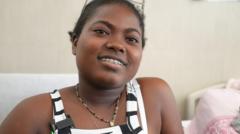
The rescue of a young Venezuelan boy from the rubble of a collapsed residential building captured global headlines, shifting quickly into a human-interest narrative about family resilience as his aunt promised to step in and provide a mother’s warmth. Behind the emotional media coverage lies a stark systemic failure. When mudslides, earthquakes, or infrastructure collapses hit vulnerable populations in Latin America, international attention peaks at the moment of extraction and vanishes during the grueling, decades-long aftermath. The immediate survival of a child is a miracle, but the bureaucratic and economic void they inherit is a predictable tragedy.
Disaster response frameworks are heavily weighted toward the initial 72 hours. Search and rescue teams arrive, cameras roll, and political leaders promise sweeping reforms. Once the dust settles and the international press corps packs up, the long-term survival of displaced minors falls entirely on fractured extended family networks that are already stretched to the breaking point by economic instability.
The Myth of the Functional Safety Net
Standard international aid protocols operate on the assumption that local state mechanisms will assume responsibility for a child’s long-term welfare once the immediate medical emergency ends. In reality, countries grappling with hyperinflation, institutional decay, or political gridlock cannot maintain basic welfare infrastructure.
When a child loses their immediate family and their home in a single catastrophic event, the burden shifts to aunts, uncles, or grandparents. These relatives frequently reside in the same vulnerable socio-economic conditions that contributed to the disaster in the first place. High-risk informal housing, precarious informal employment, and a lack of access to clean water do not disappear because a family takes in an orphaned relative.
The economic reality is brutal. An extra mouth to feed in a household already struggling to afford basic caloric intake can push a family from fragile stability into outright poverty. State stipends for orphans, where they exist on paper, are routinely eaten away by inflation or blocked by bureaucratic red tape that requires months of documentation.
Infrastructure Failures as Predictable Assassins
Geological hazards are inevitable, but the scale of destruction in working-class neighborhoods across Latin America is entirely man-made. Unregulated urban sprawl forces low-income families to build on unstable hillsides or in dry riverbeds. Local municipalities frequently turn a blind eye to substandard construction practices in exchange for political support or through sheer administrative impotence.
+-------------------------------------------------------+
|  The Cycle of Vulnerability in Informal Settlements    |
+-------------------------------------------------------+
| 1. Economic Exclusion -> Forced Into High-Risk Land    |
| 2. Substandard Building Materials Used for Housing    |
| 3. Lack of Municipal Drainage or Soil Stabilization   |
| 4. Climate Shock/Heavy Rainfall Triggers Collapse      |
| 5. Total Loss of Assets and Immediate Family Structure|
+-------------------------------------------------------+
When a building collapses, it is rarely just an act of God. It is the final link in a chain of systemic neglect. The survivors are left to clear the debris with their bare hands because municipal emergency services are underfunded and under-equipped. By the time heavy machinery arrives, the window for rescue has closed for most victims.
The Psychological Void After the Cameras Leave
A child pulled from concrete sustains injuries that aren't visible on an X-ray. Pediatric trauma support is virtually non-existent in public healthcare systems across the region. A child who has watched their home collapse and lost their parents requires intensive, long-term psychiatric care to process profound post-traumatic stress.
Instead, these children are expected to adapt immediately to a new household dynamic. Extended family members, while well-intentioned, are rarely equipped to handle severe childhood trauma. They are consumed by the daily logistics of survival. The psychological toll manifests years later in high dropout rates, chronic anxiety, and early entry into the informal labor market to help the family stay afloat.
International non-governmental organizations (NGOs) often compound this issue. They collect donations using images of dramatic rescues, utilizing the emotional pull of a survivor’s story to fund broad institutional budgets. Very little of that capital is earmarked for direct, long-term cash transfers or psychological support for the specific families taking in these survivors.
Rebuilding the Post-Disaster Protocol
The current model of international charity is broken because it prioritizes the spectacle of rescue over the monotony of rehabilitation. To prevent orphaned survivors from falling through the cracks, the international community must pivot away from short-term emergency funding and toward direct, legally protected trusts for affected minors.
- Direct Cash Assistance: Rather than routing funds through corrupt or inefficient local government agencies, international aid should establish direct, audited digital cash transfers to verified guardians.
- Structural Auditing: Aid packages must be legally tied to strict municipal zoning enforcement, preventing the rebuilding of homes on the exact sites of previous deadly collapses.
- Legal Guardianship Acceleration: Bureaucratic processes for executing legal guardianship must be streamlined during crises to ensure aunts and extended family members can access existing state benefits without waiting years for court approval.
The promise of family warmth cannot replace structural security. Without systemic changes to how the international community anchors long-term aid, every miraculous rescue is simply a prelude to a quiet, untelevised struggle for survival.