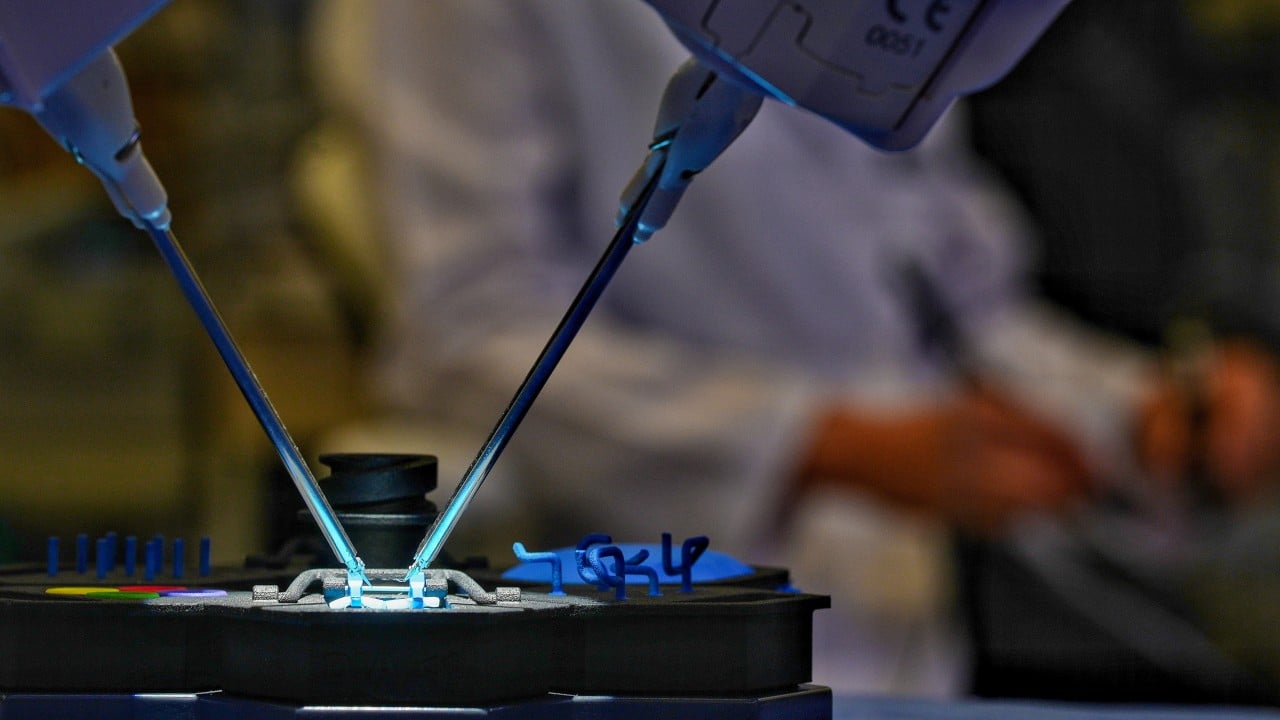
Surgeons in Hong Kong have completed the world’s first purely robotic living-donor liver transplant, marking a technical milestone in visceral surgery. A team at the Queen Mary Hospital utilized a multi-arm robotic surgical system to extract a liver lobe from a living donor and implant it into a recipient with acute liver failure. While early press releases celebrate the feat as an unmitigated triumph, an investigation into the clinical reality reveals a more complex narrative. The procedure represents a significant leap forward in reducing donor trauma, but it also exposes deep systemic challenges regarding training costs, operational bottlenecks, and the steep learning curves that prevent this technology from reaching the mainstream.
Living-donor liver transplantation is one of the most demanding procedures in modern medicine. Unlike deceased donor transplants, surgeons must operate on a healthy individual—the donor—with a zero-tolerance threshold for error. The traditional open approach requires a massive subcostal incision, often referred to as a Mercedes-Benz incision, which cuts through heavy abdominal muscle layers. This leads to prolonged recovery times, severe post-operative pain, and a substantial risk of incisional hernias. The Hong Kong breakthrough changes this physical toll. By utilizing microscopic incisions and robotic wristed instruments, the surgical team managed to dissect the donor’s left hepatic lobe with minimal disruption to the surrounding tissue.
The Mechanics behind the Metal
To understand why this matters, one must look at the spatial limitations of conventional laparoscopy. Standard laparoscopic tools are rigid sticks. They lack articulation. This makes maneuvering around the retrohepatic vena cava—the massive vein running behind the liver—extraordinarily hazardous.
The robotic system bypasses this limitation through several key mechanisms.
- EndoWrist Technology: The instruments mimic the human wrist but with a 540-degree range of motion, allowing surgeons to suture behind vessels where human hands cannot fit.
- Tremor Filtration: The console filters out the micro-tremors of the human hand, a critical factor during a twelve-hour operation where fatigue sets in.
- High-Definition 3D Vision: Surgeons view the operative field with up to ten times magnification, providing a clear view of the microscopic bile ducts and hepatic arteries that must be cleanly severed and reattached.
During the Hong Kong operation, the critical phase involved isolating the middle hepatic vein. In a standard open procedure, the surgeon relies on tactile feedback, literally feeling the tension of the vessel. The robot deprives the surgeon of haptic feedback. This is the great irony of robotic surgery. You can see better, but you feel nothing. The console operator must judge the tension of a thread or the pressure on a vessel wall purely through visual cues, watching how the tissue deforms under the grip of the metal forceps.
The Hidden Costs and the Training Chasm
The success in Hong Kong masks a harsh economic reality. Robotic platforms are expensive luxury items for most public healthcare systems. A single setup costs upwards of two million dollars, with annual maintenance contracts adding hundreds of thousands more. Every instrument used has a strictly programmed lifespan—often locking out after ten to twelve uses—forcing hospitals into a perpetual cycle of purchasing high-priced consumables.
For a hospital to justify this capital expenditure, the robotic suite must be in constant use. Yet, the learning curve for robotic liver resection is notoriously steep.
[Traditional Open Surgery] -> Fast, high trauma, low equipment cost
[Laparoscopic Surgery]     -> Slow, moderate trauma, moderate equipment cost
[Robotic Surgery]          -> Extremely slow initial phase, ultra-low trauma, exorbitant cost
A surgeon must typically perform at least fifty lower-complexity robotic liver resections before attempting a living donor extraction. This creates a bottleneck. Junior surgeons cannot get console time because the stakes are too high, and senior surgeons are often reluctant to abandon the open techniques they spent decades mastering.
Furthermore, the operation time for this inaugural robotic transplant stretched significantly longer than a standard open procedure. While the donor benefited from smaller scars and a shorter hospital stay, the extended anesthesia time introduces its own set of metabolic risks, particularly regarding prolonged pneumoperitoneum—the inflation of the abdomen with carbon dioxide gas to create working space. Extended exposure to this gas can impede venous return to the heart and stress the renal system.
The Recipient Dilemma
Most discussions surrounding the Hong Kong breakthrough focus on the donor. This is tactical, as the donor is a healthy volunteer whose safety is paramount. However, the recipient side of the equation remains a battlefield. Replanting a liver lobe requires microvascular anastomoses—stitching together blood vessels that are often only a few millimeters in diameter.
If the reconstruction of the hepatic artery fails, the new liver dies within hours. The Hong Kong team used the robotic system for both the donor extraction and the recipient implantation. While the robot excel at the steady suturing required for these tiny vessels, the lack of tactile feedback means that if a stitch is placed too tightly, tearing the fragile intimal layer of the artery, the surgeon may not realize it until the blood flow is turned back on and a thrombosis forms.
This is why many global transplant centers choose a hybrid approach. They use the robot to minimize trauma for the healthy donor, but stick to an open incision for the critically ill recipient, where speed and tactile assurance are vital to survival. The insistence on a "purely" robotic procedure for both sides is a powerful proof of concept, but it may not represent the most pragmatic path forward for everyday clinical practice.
Institutional Resistance and the Path Forward
Outside of elite academic medical centers like Queen Mary Hospital, adoption faces fierce resistance. Insurance reimbursement frameworks are structurally unaligned with the realities of robotic surgery. Most public health schemes and private insurers pay a fixed rate for a liver transplant, regardless of whether it was performed with a scalpel or a multi-million dollar machine. The hospital must absorb the cost differential.
To scale this breakthrough beyond a singular headline, three distinct shifts must occur.
- Dual-Console Training: Hospitals must adopt dual-console systems where a mentor can instantly take control of the instruments from a trainee, mimicking the safety profile of flight simulators.
- Universal Haptic Integration: The development of pneumatic tactile feedback systems that translate tissue resistance back to the surgeon's fingertips.
- Cross-Institutional Data Sharing: Standardizing the step-by-step video logs of these robotic procedures to create an international registry for complications.
The achievement in Hong Kong proves the technical feasibility of the completely robotic approach, changing the calculus of what can be accomplished through a few keyhole incisions. But the celebration should be tempered by the understanding that a technology is only as good as its accessibility. Until the financial barriers collapse and training protocols are standardized, this milestone remains a brilliant anomaly rather than the current standard of care. The true victory will not be measured by the first successful operation, but by the fiftieth consecutive procedure performed without incident in a regional municipal hospital.