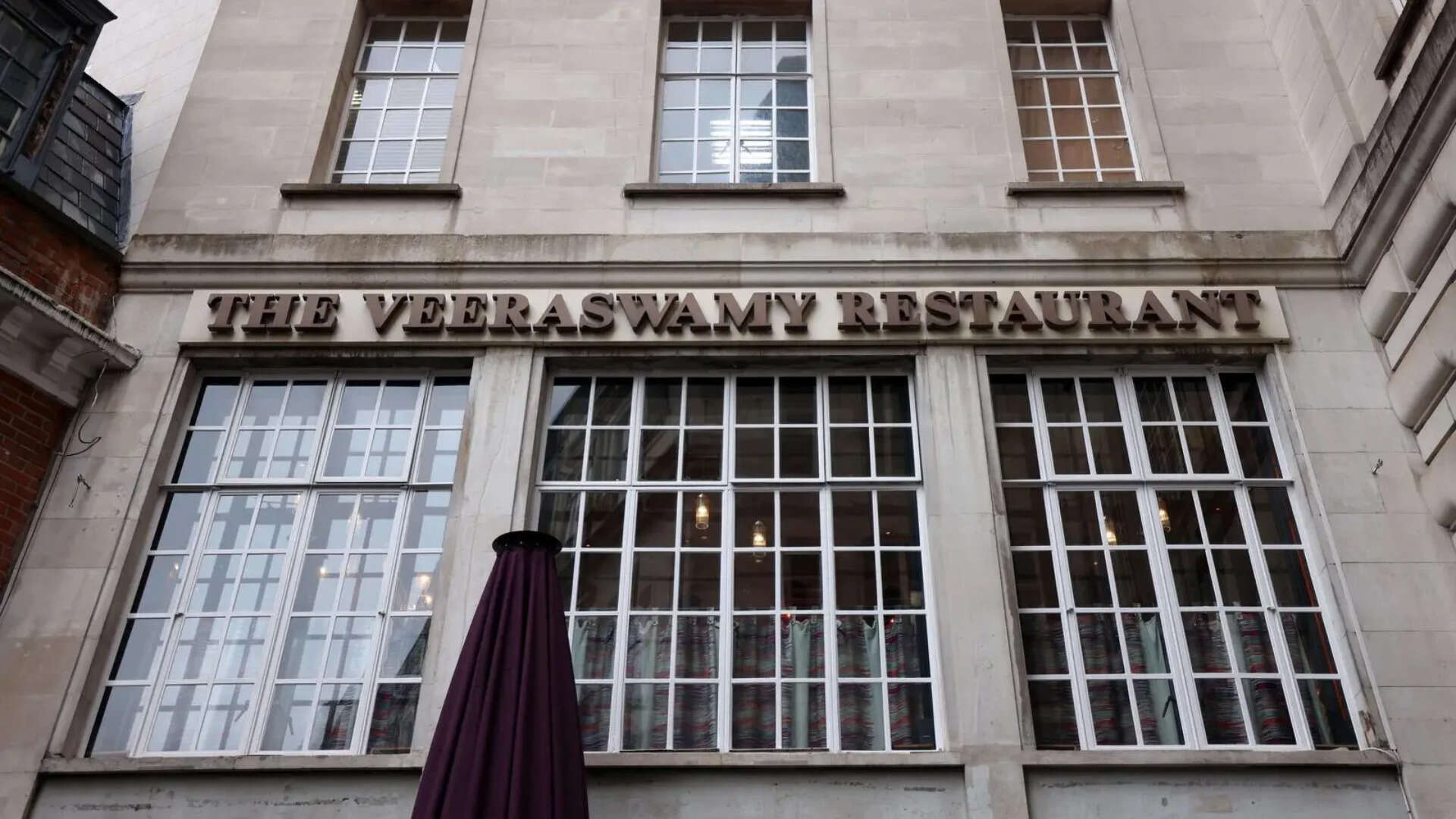
Veeraswamy, the oldest Indian restaurant in the United Kingdom, is locked in a high-stakes legal battle with the Crown Estate over a sudden eviction notice. Co-owner Ranjit Mathrani recently declared that all private negotiations have utterly collapsed, forcing the historic Regent Street institution to seek a court injunction to survive. This clash is not a mere landlord-tenant dispute. It represents a systemic shift in how London’s ultra-prime real estate is managed, signaling a cold, metrics-driven future where cultural legacy holds zero currency against corporate portfolio optimization.
For nearly a century, Veeraswamy has stood as a culinary landmark. Founded in 1926 by Edward Palmer, the grandson of an English general and an Indian princess, the restaurant has hosted royalty, prime ministers, and literary icons. It holds a Michelin star. It survived the Blitz. Yet, it now faces its greatest existential threat from its own landlord, an institution that manages a £16 billion property empire on behalf of the monarch.
The core of the dispute lies in a fundamental disagreement over lease terms, modernization demands, and skyrocketing commercial valuations in the West End. While the Crown Estate positions its aggressive redevelopment strategies as essential modernization, independent operators see it as an existential purge.
The Cold Logic of the Crown Estate
To understand how a Michelin-starred institution finds itself on the brink of eviction, one must peel back the layers of the Crown Estate’s operational mandate. The Crown Estate is not a typical commercial landlord, nor is it a government department. It operates under a statutory duty to enhance the value of its portfolio and return maximum profits to the UK Treasury.
In practice, this creates an aggressive corporate posture. Over the past decade, the Regent Street quadrant has undergone a massive transformation. The Crown Estate has systematically consolidated smaller, historic units into massive, flagship retail spaces capable of commanding premium rents from multinational corporations.
Independent operators rarely fit into this blueprint. They are messy. They require bespoke lease structures. Most importantly, they cannot match the square-foot revenue generated by global luxury brands or institutionalized hospitality conglomerates.
When a lease nears its end, the Crown Estate frequently deploys stringent redevelopment clauses. These clauses allow the landlord to reclaim possession of the property if they can prove an intention to substantially alter or demolish the premises. For a restaurant like Veeraswamy, which relies heavily on its historic, specific location, relocation is not a viable fallback. It is a death sentence.
The Failed Diplomacy Behind the Scenes
Ranjit Mathrani, who also chairs MW Dishes—the group behind acclaimed restaurants like Chutney Mary and Amaya—is no stranger to West End property dynamics. He knows the game. Yet, the breakdown of these specific negotiations points to a deeper, more rigid stance from the landlord.
According to industry insiders close to the talks, the negotiations stalled on three distinct fronts.
- The Valuation Gap: The landlord sought a rent adjustment aligned with peak post-pandemic commercial valuations, ignoring the structural headwinds facing the hospitality sector, including labor shortages and soaring energy costs.
- The Modernization Mandate: The Crown Estate demanded extensive infrastructural upgrades to meet stringent new environmental standards, expecting the tenant to foot a prohibitive bill while simultaneously shortening the lease security.
- The Refusal of Historical Discounting: Mathrani’s team argued that Veeraswamy’s status as a cultural anchor added intangible value to Regent Street, a claim the Crown Estate’s asset managers reportedly dismissed as economically irrelevant.
When diplomacy fails, litigation is the only leverage left. By taking the Crown Estate to court, Mathrani is utilizing the Landlord and Tenant Act 1954, a piece of legislation designed to protect business tenants by giving them a statutory right to a lease renewal unless the landlord can prove specific, narrow grounds for possession.
Why a Michelin Star Offers No Protection
There is a common misconception that critical acclaim and institutional status shield a business from market forces. They do not. In the eyes of an asset management algorithm, a Michelin star is an operational detail, not an economic defense.
Consider the financial mechanics of high-end independent dining versus corporate retail. A luxury fashion boutique operates on massive margins with minimal staff-to-customer ratios and low utility overheads. A historic restaurant operates on razor-thin margins. It requires a vast kitchen staff, specialized chefs, premium ingredient sourcing, and high energy consumption.
+----------------------------+----------------------------+
| Luxury Retail Metrics      | High-End Dining Metrics    |
+----------------------------+----------------------------+
| Profit Margins: 30-40%     | Profit Margins: 5-10%      |
| Staffing: Low-Medium       | Staffing: Extremely High   |
| Inventory Turnover: Slow   | Inventory Turnover: Daily  |
| Rent Sensitivity: Low      | Rent Sensitivity: Critical |
+----------------------------+----------------------------+
When landlords demand rent parity across a geographic zone rather than a sector classification, independent hospitality is systematically priced out. The court case will likely hinge on whether the Crown Estate's plans for the physical space constitute a genuine, necessary redevelopment, or if it is a tactical maneuver to clear out a legacy tenant in favor of a more lucrative, corporate occupant.
The Gray Area of Public Benefit
The Crown Estate occupies a unique moral hazard. Because its profits flow to the Treasury, it can argue that maximizing rent is a public good. Higher rents mean more money for public services.
This argument is short-sighted. It ignores the concept of cultural capital.
What draws visitors to London's West End is not the presence of the same global retail chains found in Dubai, New York, or Shanghai. It is the distinct character of its historic venues. By stripping away institutions like Veeraswamy, the landlord risks hollowed-out homogenization. The short-term balance sheet looks spectacular. The long-term cultural value of the real estate asset plummets.
The Precedent at Stake
The legal outcome of this battle will reverberate far beyond Regent Street. Every independent restaurateur, boutique theater owner, and historic shopkeeper in London is watching this case with absolute dread.
If the Crown Estate successfully evicts the nation’s oldest Indian restaurant despite its profitability and cultural significance, it sets a chilling precedent. It signals to every institutional landlord that legacy is a liability, not an asset. It confirms that the legal protections of the 1954 Act can be bypassed through aggressive, well-funded redevelopment strategies.
Operators will have to rethink how they negotiate leases from the outset. Expect to see tenants demanding stricter non-disturbance agreements and fighting tooth and nail against landlord-favorable redevelopment breaks.
The era of relying on a landlord's goodwill or respect for tradition is officially dead. The courtroom drama between Mathrani and the Crown Estate proves that in the modern property market, survival requires a willingness to wage scorched-earth legal warfare.