The narrative of a greening planet is a dangerous half-truth. While recent satellite data suggests a slight deceleration in the clearing of primary tropical forests, the reality on the ground is far more volatile. We are not seeing a steady march toward conservation. Instead, we are witnessing a fragile, temporary reprieve that is currently being dismantled by the return of El Niño. This climatic phenomenon does more than just warm the oceans; it turns the world's remaining carbon sinks into tinderboxes, effectively erasing years of policy gains in a single dry season.
The numbers look promising on a spreadsheet. In 2023, primary forest loss in the tropics dropped by roughly 9% compared to the previous year. To the casual observer, this looks like a win for international climate agreements. To those of us who have tracked these patterns for decades, it looks like a statistical anomaly waiting to be corrected by the heat. The core issue remains: we are still losing over 3.7 million hectares of primary tropical forest annually. That is an area nearly the size of Switzerland vanishing every twelve months.
The Political Mirage in the Amazon
Brazil and Colombia have led the recent charge in reducing deforestation rates. This didn't happen by accident. It happened because of a shift in political will. In Brazil, the current administration has aggressively ramped up enforcement, deploying environmental police to territories that were previously lawless frontiers for illegal loggers and cattle ranchers. These are "command and control" tactics. They work, but they are expensive and politically vulnerable.
The problem with relying on enforcement is that it addresses the symptom, not the hunger. As long as global demand for beef, soy, and timber remains high, the pressure on the forest edge persists. When enforcement budgets are cut or a new administration takes office with a different set of priorities, the chainsaws return. We have seen this cycle before. The current dip in Brazilian deforestation is a temporary victory in a permanent war.
Furthermore, while the Amazon grabs the headlines, other regions are bleeding out. Deforestation in the Democratic Republic of the Congo and Southeast Asia remains stubbornly high or is actively accelerating. In these regions, the drivers are often more localized and harder to track—small-scale agriculture and charcoal production fueled by extreme poverty. You cannot arrest your way out of a hunger crisis, and international aid has yet to provide a viable economic alternative to the standing forest.
How El Niño Rewrites the Rules
Climate cycles are now moving faster than policy. El Niño creates a specific set of atmospheric conditions that lead to suppressed rainfall across the Amazon and parts of Indonesia. This isn't just about trees dying from thirst. It’s about the "edge effect."
When a forest is fragmented by roads or small clearings, the interior is exposed to dry air. The humidity that usually keeps a rainforest fire-resistant evaporates. In a standard year, a fire started by a farmer to clear a small patch of land might stay contained. During an El Niño year, that same fire leaps into the canopy of the surrounding primary forest. These are not the "healthy" fires seen in some pine ecosystems that clear out underbrush; these are catastrophic events that kill ancient, carbon-dense trees that have no evolutionary defense against heat.
We are currently entering a phase where the frequency of these cycles is tightening. The forest doesn't have time to recover between droughts. This creates a feedback loop. Dead trees become fuel for the next fire season, and the loss of canopy cover further reduces the forest's ability to generate its own rain through transpiration.
The Carbon Accounting Fraud
The way we track forest loss often masks the true extent of the damage. Most international monitoring focuses on "clear-cutting"—the total removal of trees. What is frequently overlooked is forest degradation.
Selective logging, where only the most valuable trees are removed, doesn't register as "loss" on many satellite maps because the canopy appears intact from above. However, the biological integrity of that forest is shattered. The removal of a few giants opens up the understory to sunlight, drying out the floor and making the entire area more susceptible to fire.
If we accounted for degradation with the same rigor we use for deforestation, the "progress" of the last two years would likely vanish. We are counting the number of trees while ignoring the health of the lungs.
The Failed Promise of Carbon Credits
The private sector's primary tool for saving forests has been the voluntary carbon market. The logic was simple: companies pay to protect a forest, and in exchange, they get to claim they are "carbon neutral."
It has been a disaster.
Multiple investigations have revealed that many of these "protected" forests were never actually at risk, or that the protection simply pushed the loggers into the next valley—a phenomenon known as leakage. Even worse, these projects are often the first to burn during an El Niño event. When a "carbon offset" forest goes up in flames, years of supposed climate mitigation vanish into the atmosphere in a few days. The company keeps its "neutral" status on its annual report, but the planet keeps the CO2.
The market for these credits is currently in a tailspin because the math doesn't hold up. We cannot offset the burning of fossil fuels by protecting a forest that might burn down next year because of a weather pattern we can no longer control.
The Infrastructure Gap
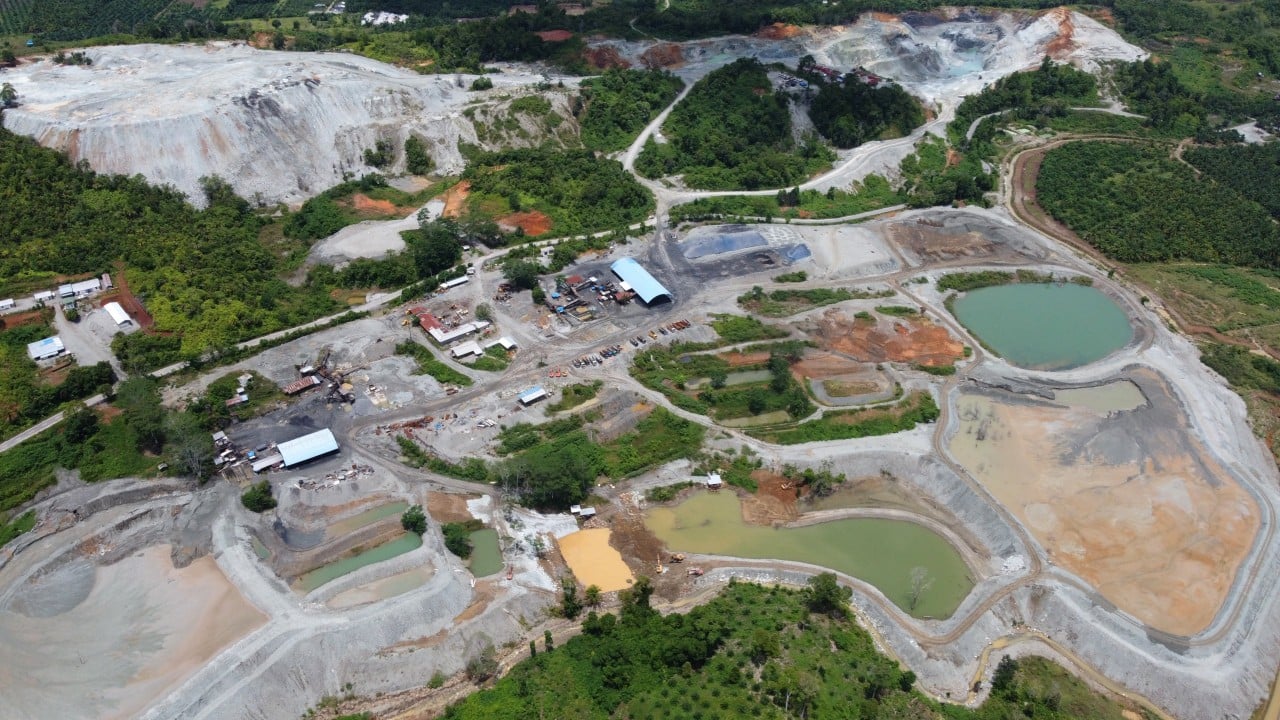
While we argue over satellite data, the real threat is moving in on four wheels. The expansion of "legal" infrastructure—highways, dams, and railways—is the single greatest predictor of future forest loss.
A road is a dagger in the heart of a primary forest. Once a road is built, the cost of transporting timber and crops drops significantly. This makes previously remote areas economically viable for exploitation. In the Brazilian state of Pará, nearly 90% of all deforestation occurs within 100 kilometers of a main road.
If we want to stop the bleeding, the focus needs to shift from monitoring the forest to monitoring the banks and governments funding these "development" projects. You don't need a satellite to see where the next million hectares will be lost; you just need to look at the highway blueprints currently sitting on desks in Brasília, Kinshasa, and Jakarta.
A New Model for Survival
The current strategy of "islands of conservation" surrounded by a sea of exploitation is failing. To actually stabilize the global forest cover, the economic value of a standing tree must exceed its value as timber or its value as the soil beneath it.
This isn't about charity. It’s about a fundamental shift in global trade.
- Direct Payments for Ecosystem Services: Instead of convoluted carbon credits, we need direct, transparent payments to the communities on the front lines. This means paying indigenous groups and local farmers a living wage to act as stewards of the land, contingent on verified forest health.
- Supply Chain Accountability: The European Union’s recent Deforestation Regulation (EUDR) is a step in the right direction. It requires companies to prove that their products—beef, soy, palm oil, coffee—did not come from recently deforested land. However, implementation is being met with fierce resistance from trading partners who claim it is "green protectionism."
- Fire-Ready Infrastructure: We must stop treating forest fires as "natural disasters" and start treating them as predictable industrial accidents. This requires investing in early-warning systems and rapid-response teams that can reach remote areas before a small burn becomes a regional catastrophe.
The forest doesn't care about our net-zero targets or our political cycles. It only responds to the physical reality of moisture and heat. If we continue to treat the slight dip in deforestation rates as a reason to relax, the next El Niño will be happy to correct our oversight. The progress we see today is not a trend; it is a precarious moment of balance. To maintain it, we have to stop looking at the forest as a backdrop for our climate goals and start seeing it as a volatile biological system that is currently fighting for its life.
Stop measuring success by how many trees we didn't cut down this year. Start measuring it by the resilience we build for the year everything starts to burn.