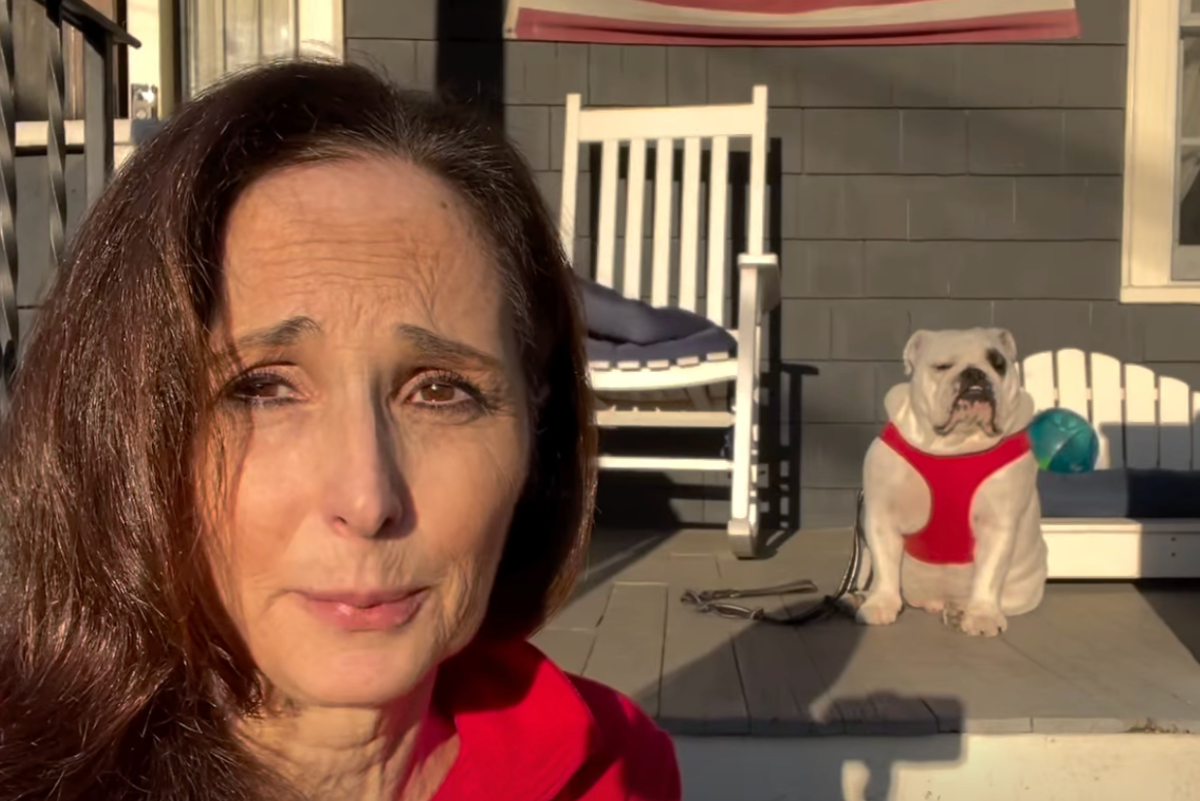
When a familiar face from the evening news vanishes from the airwaves, the audience usually assumes a contract dispute or a quiet jump to a larger market. For former New York news anchor Mike Marza, the disappearance was a matter of biological failure. Diagnosed with primary sclerosing cholangitis—a chronic liver disease that slowly chokes the bile ducts—Marza found himself trapped in the bureaucratic and physical purgatory of the American organ transplant system. The resolution of his case, involving a life-saving donation from a longtime viewer named Geena Caporella, is being framed by local outlets as a feel-good human interest story.
That framing is a distraction.
The reality is that Marza’s survival was not just a product of medical science, but a consequence of a high-stakes social media campaign that bypassed the traditional, and often sluggish, national waiting list. It highlights a widening divide in healthcare where "social capital"—the ability to command public attention—is becoming as vital as a blood match. While the medical outcome is a triumph, the mechanism behind it exposes a system where those without a public platform are left to wait for a tragedy to provide them with a second chance.
The Crushing Gravity of the MELD Score
To understand why Marza needed a viewer to step in, you have to understand the Model for End-Stage Liver Disease (MELD). This is the numerical gatekeeper of the transplant world. It calculates a patient’s risk of dying within three months based on lab results. The higher your score, the higher you sit on the list.
It sounds fair. It isn't always efficient.
The MELD system is designed to prioritize the "sickest first." However, many patients with chronic conditions like Marza’s can be profoundly ill, suffering from cognitive fog, extreme fatigue, and internal itching that feels like fire under the skin, yet their lab numbers don't always trigger a high enough score to receive a deceased donor organ before it is too late. They are "sick, but not sick enough" to outrank a patient in active liver failure.
Living donation changes the math entirely. By finding a healthy person willing to give up a portion of their liver—which remarkably regrows to full size in both the donor and recipient within weeks—a patient can "jump" the line. They aren't taking an organ away from someone else on the list; they are bringing their own resource to the table. Marza’s status as a public figure gave him a megaphone to find that resource that a quiet accountant or a retired teacher simply does not have.
The Audience as a Biological Reservoir
Geena Caporella wasn't a family member or a close friend. She was a viewer who had watched Marza on her television for years. When the anchor went public with his need for a transplant, he tapped into a psychological phenomenon known as parasocial relationships.
To the viewer, Marza was a trusted guest in her living room. To the medical system, she was a "non-directed" or "altruistic" donor, though her motivation was rooted in a sense of connection built through a screen. This is the new frontier of organ procurement. We are moving away from the era where donors were found in hospital hallways and moving into an era where they are recruited via Instagram reels and news segments.
Why Living Donors are the Gold Standard
- Timing Control: Deceased donor transplants are chaotic, middle-of-the-night affairs. Living donations are scheduled surgeries, allowing the recipient to be in the best possible physical shape.
- Organ Quality: A living donor is typically a healthy adult who has undergone months of rigorous testing. The organ doesn't spend hours on ice being transported across state lines.
- Success Rates: The five-year survival rate for living-donor liver recipients is generally higher than for those receiving deceased-donor organs.
The Hidden Costs of Altruism
The narrative rarely dwells on what it actually takes for a person like Caporella to step up. It is not just a "kind gesture." It is a major abdominal surgery with a grueling recovery period and significant financial risk.
While the recipient’s insurance typically covers the medical costs of the donor's surgery, it does not cover the "soft costs." Lost wages during a six-to-eight-week recovery, travel expenses, and childcare are often the responsibility of the donor. For many Americans, these costs are a barrier that no amount of altruism can overcome.
The National Living Donor Assistance Center exists to help, but the paperwork is dense and the income caps are often restrictive. When we celebrate these stories, we often gloss over the fact that our system relies on the donor’s ability to absorb a temporary financial hit. If you are living paycheck to paycheck, you likely cannot afford to save a life, no matter how much you want to.
The Ethics of Public Appeal
There is a growing discomfort in the medical ethics community regarding "celebrity" transplant appeals. When a news anchor or a social media influencer puts out a call for an organ, they often receive hundreds of offers.
What happens to the 299 people who weren't a match for Mike Marza but were willing to donate? In a perfectly efficient system, those willing donors would be funneled to others on the list. In reality, many of them drop out of the process once their specific "target" is no longer in need. The "Marza Effect" creates a temporary surge in interest, but it doesn't necessarily solve the systemic shortage.
We are seeing the rise of directed donation, which allows a donor to pick and choose who gets their organ. While this is legally and ethically permitted, it creates an uneven playing field. If survival depends on how many followers you have, the "equity" in our healthcare system is a myth.
The Biological Miracle of Regeneration
The science of what happened in that operating room remains the most compelling part of the story, far beyond the media fame. The liver is the only internal organ capable of full regeneration.
During the surgery, doctors removed roughly 60 percent of Caporella’s liver. That piece was then transplanted into Marza, whose own diseased liver was entirely removed. Within 48 hours, the cells in both the donor’s remaining liver and the recipient’s new segment began a frantic process of replication.
They don't just grow in size; they grow in function. The blood vessels reconnect, the bile begins to flow, and the chemical processing plant of the body restarts. Within two months, both individuals will have a liver that is back to nearly 100 percent volume. It is a primitive, lizard-like ability hidden inside the human torso.
The Long Road Back to the Desk
Marza’s return to the newsroom isn't just a career milestone; it is a clinical victory. But the story doesn't end with a "thank you" segment. Both parties now face a lifetime of monitoring.
For Marza, this means a permanent regimen of immunosuppressant drugs. These medications prevent his body from recognizing the new liver as a foreign invader and attacking it, but they also leave him more vulnerable to common infections and certain types of cancer. The "gift of life" comes with a lifelong subscription to the pharmaceutical industry.
For the donor, the risks are lower but not zero. Long-term studies on living liver donors are still being compiled. While the majority go on to live completely normal lives, they have undergone a voluntary trauma to their bodies. They have one less "spare tire" if they were to ever face liver issues themselves in the future.
Beyond the Headline
The Marza-Caporella case shouldn't be filed away as a simple feel-good story about a nice viewer and a lucky newsman. It should be used as a blueprint for the failures and the potential of the current medical landscape.
If we want to save more lives, we cannot rely on every patient having a primetime news slot to find a donor. We have to address the financial barriers for donors and the inefficiencies of the MELD scoring system that force people to become "critically ill" before they are worthy of an organ.
The real story isn't that a viewer saved a journalist. The real story is that she had to.
The medical community is currently experimenting with "paired exchanges" for livers, similar to what is already common with kidneys. This would allow a donor who isn't a match for their loved one to give to a stranger, in exchange for another stranger giving to their loved one. This creates a chain of survival that doesn't depend on fame.
Until those chains become the norm, the transplant list will remain a hierarchy of the visible versus the invisible. Mike Marza is back at work because he was visible. Thousands of others are still in the dark, waiting for a screen to flicker to life with their name on it.
The next time you see a plea for a living donor on your feed, remember that you aren't just looking at a request for help. You are looking at a person who has realized the system as it stands will likely let them die, and they are taking the only desperate gamble they have left.
Fix the system, or keep watching the news and hope you’re a match for the next person in the 6:00 PM slot.