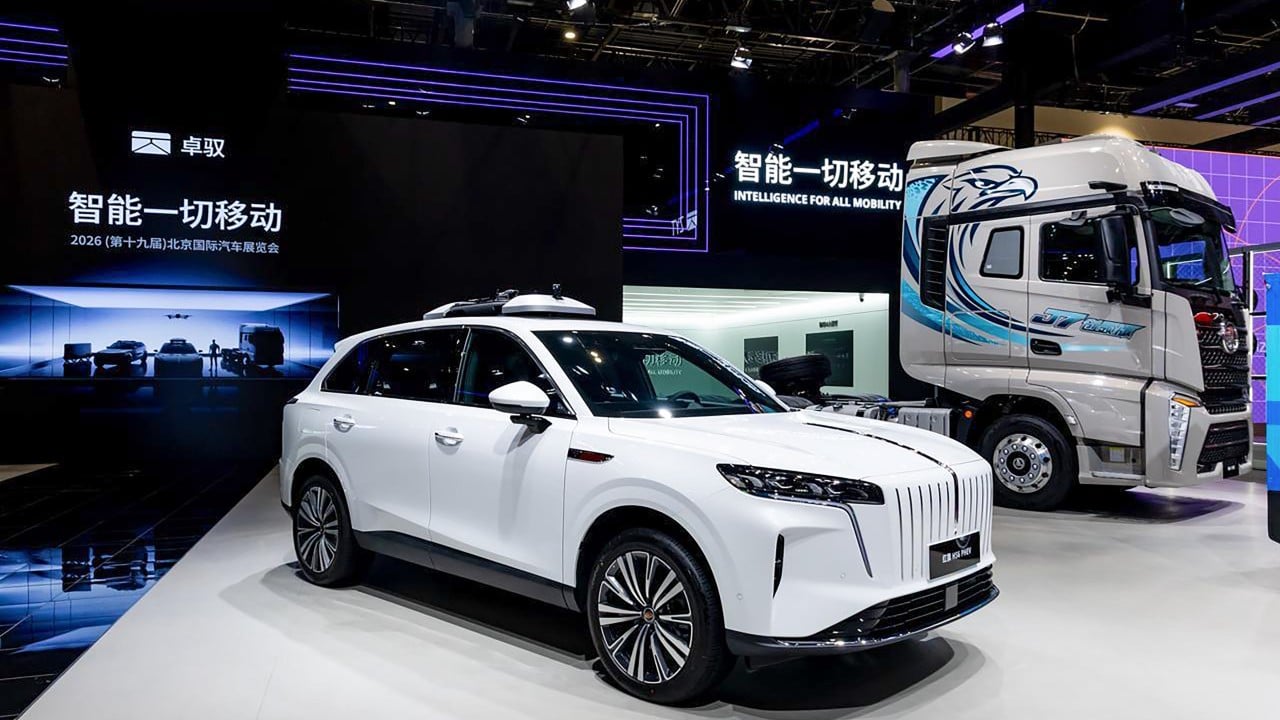
The promise of an empty driver’s seat has been the siren song of the logistics industry for a decade. Every year, a new contender emerges claiming to have finally cracked the code of long-haul automation. This year, the spotlight has shifted to ZYT—a Chinese startup often characterized as a DJI spinoff due to its lineage in drone-based perception tech—which is aggressively moving toward the mass production of semi-autonomous heavy-duty trucks. While the headlines suggest a frictionless leap into the future, the reality on the ground in China’s industrial hubs reveals a much more complicated struggle for dominance, safety, and economic survival.
ZYT is not merely aiming to build a smarter truck. It is attempting to prove that the high-frequency perception data used in drones can be scaled to stop a 40-ton tractor-trailer moving at 100 kilometers per hour. The company’s target for the first half of 2026 isn't just a prototype run; it is a full-scale industrial integration with major OEMs like FAW Jiefang. To understand why this matters, one must look past the "autopilot" branding and into the brutal math of the trucking industry.
The Perception Gap
Most autonomous systems fail not because they lack "intelligence," but because they lack context. In the crowded corridors of the Pearl River Delta, a truck's sensors are bombarded with noise—erratic mopeds, shifting cargo shadows, and unpredictable construction zones. ZYT claims its new AI system can already "outdrive" its own CEO in the urban density of Shenzhen. This is a bold claim, but it highlights the shift from Level 2 driver assistance to "Level 2.5" or "Level 3" systems that actually shoulder the cognitive load of the driver.
The hardware stack is where the real war is fought. By utilizing LiDAR systems integrated directly into the vehicle's frame during the assembly line phase—rather than as a rooftop after-thought—ZYT and its partners are slashing the cost of autonomy. This integration is crucial. If an autonomous suite adds $50,000 to the price of a truck, it is a luxury. If it adds $15,000 and saves $20,000 in fuel and insurance in the first year, it is an inevitability.
The Weight of Policy
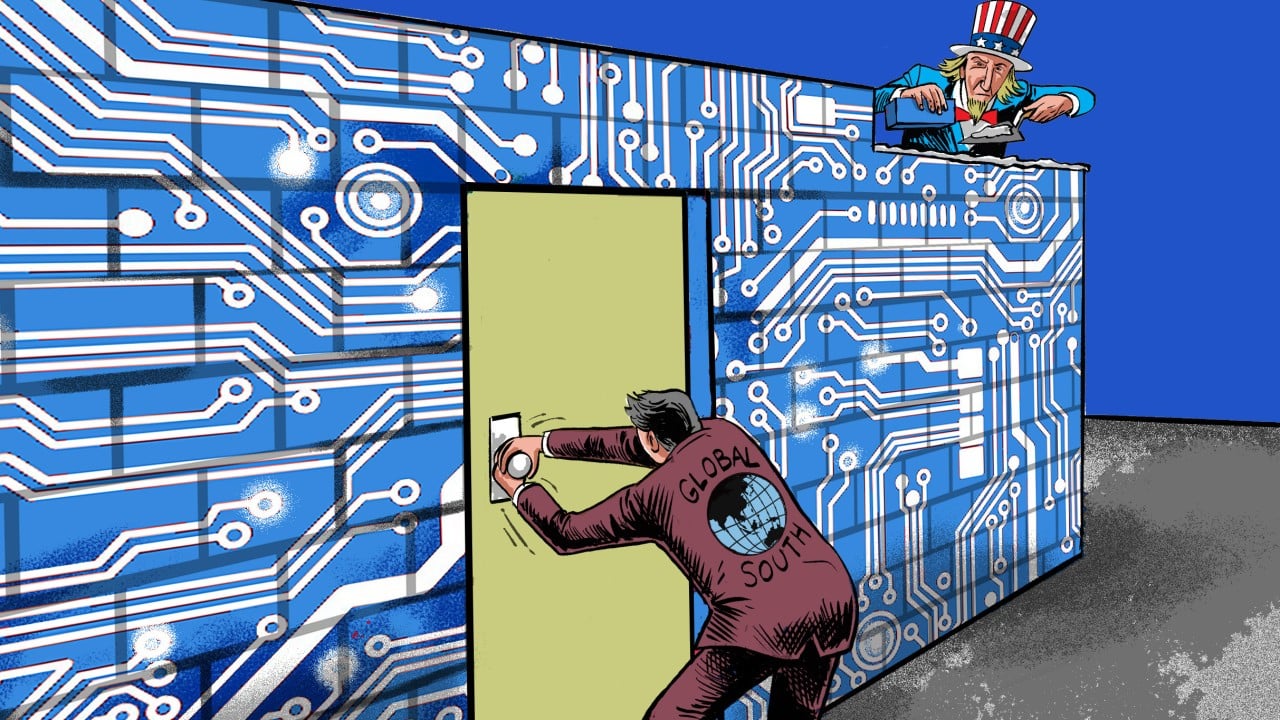
China’s advantage in this race isn't just technical; it is structural. The government has identified autonomous heavy transport as a strategic pillar for energy security. This has resulted in a "deliberate and well-funded national strategy" that allows companies like ZYT to test on public highways with a level of freedom that would be tied up in American courts for years.
However, this rapid deployment creates a regulatory gray area. Who is liable when a semi-autonomous truck, operating under "human supervision," fails to distinguish a white trailer from a bright sky? In the United States, the line between state and federal oversight remains a tangled mess of 50-year-old rules. In China, the state is the architect of the ecosystem. This removes the "red tape" but places an immense amount of pressure on these startups to perform perfectly. One high-profile disaster could lead to a sudden, crushing regulatory freeze that wipes out the entire sector.
The Human Toll and the Efficiency Trap
We often talk about "mass production" as a victory for progress, but for the millions of drivers in China’s logistics backbone, it feels like a countdown. ZYT and its competitors, such as Pony.ai and Inceptio, argue that they are solving a labor shortage. They point to the fact that younger generations do not want to spend weeks away from home in a cramped cabin.
This is only half the story. The push for semi-autonomy is less about replacing the driver today and more about commoditizing the driver’s role. By reducing the "skill" required to operate a heavy rig, companies can lower wages. The truck becomes the primary actor, and the human becomes a monitor—a role that pays less and offers even less job satisfaction.
Survival of the Integrated
The autonomous trucking graveyard is full of companies that had brilliant software but no way to build a vehicle. ZYT’s survival depends entirely on its ability to play nice with the traditional giants. The collaboration with FAW Jiefang is the backbone of this venture. You cannot simply "disrupt" the manufacturing of heavy machinery; you have to join it.
The technical challenge remains the "edge cases"—those one-in-a-million events that human intuition handles instantly. A plastic bag blowing across the road might look like a solid object to a poorly trained neural network. A truck that slams on the brakes for a piece of trash creates a pile-up. ZYT is betting that its drone-derived perception algorithms are better at filtering this noise than the traditional automotive-first approaches.
The Cost of Being First
There is a massive risk in being the first to mass-produce. The first generation of any hardware is inherently flawed. If ZYT pushes thousands of these units onto the road this year, they are essentially conducting a live experiment on the world's most vital supply chains.
The industry is currently at an inflection point. The technology is largely ready, but the infrastructure—V2X (Vehicle-to-Everything) communication and dedicated autonomous lanes—is still being built. Shipping a truck that can drive itself is useless if the highway it travels on doesn't "speak" the same language.
The real test for ZYT won't be the first thousand trucks off the line. It will be the performance of those trucks in their second year of operation, after they've survived the vibration, heat, and grime of real-world logistics. Success here isn't measured in lines of code or venture capital rounds. It is measured in kilometers driven without a fatality and cents saved per ton-mile.
The race for the driverless future is no longer a theoretical exercise for Silicon Valley labs. It is a gritty, high-stakes industrial competition happening on the factory floors of Suzhou and Shenzhen. ZYT is making its move, but in the world of heavy trucking, momentum is a double-edged sword. Once you start the machine, there is no hitting the brakes.