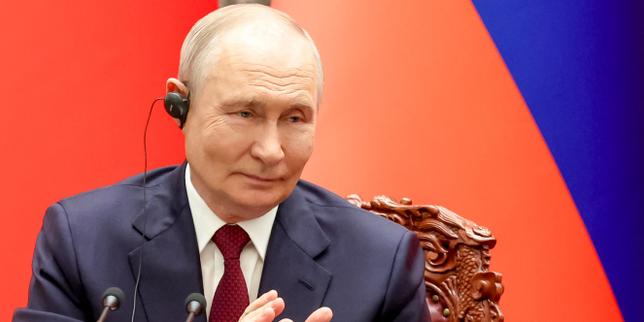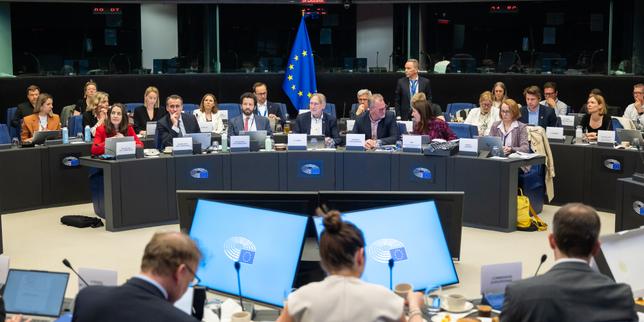
Western diplomats visiting New Delhi frequently repeat a comfortable narrative that India holds the economic and geopolitical keys to halting the war in Ukraine. This viewpoint, recently echoed by Estonian Foreign Minister Margus Tsahkna, suggests that if India simply tightened the screws on its massive purchases of Russian crude oil, Moscow’s war machine would collapse.
It is a theory disconnected from the harsh realities of global trade and South Asian security. India will not force Vladimir Putin’s hand, because doing so would jeopardize its own national survival. While the West views India’s massive consumption of Russian energy as a moral failure or an untapped diplomatic weapon, New Delhi views it as an existential necessity. The assumption that India can swap its strategic autonomy for Western approval misreads the deep-seated priorities of the world’s most populous nation.
The Illusion of Economic Coercion
The argument for Indian intervention hinges entirely on oil. Since the 2022 invasion of Ukraine, India has scaled up its imports of Russian crude, transforming from a minor buyer into Moscow’s primary customer alongside China. Western strategists look at these billions of dollars flowing into the Kremlin’s coffers and see an opportunity for pressure.
The math tells a different story. India’s refining sector is built on thin margins and massive volume. Buying discounted Russian Urals crude was not a political statement; it was a macroeconomic lifeline. When the war began, global energy prices threatened to trigger runaway inflation across the developing world. Had India competed with Europe for non-Russian oil, global prices would have spiked to catastrophic levels, devastating poorer economies across the globe.
New Delhi’s energy strategy actually stabilized Western economies by keeping global oil supplies fluid while allowing India to manage its own domestic inflation. Forcing India to cut off these imports would not necessarily stop the war. It would, however, trigger an immediate economic crisis within India, a risk no democratic leader in New Delhi is willing to take to satisfy European security priorities.
The Silent Threat on the Northern Border
Western analysts often analyze the Ukraine conflict through a strictly Eurocentric lens, ignoring the immediate security threats facing India. New Delhi’s relationship with Moscow is fundamentally an insurance policy against Beijing.
India and China share a heavily disputed, heavily militarized 2,100-mile border. Following the deadly 2020 clashes in the Galwan Valley, relations between the two nuclear-armed neighbors plummeted to their lowest point in decades. Tens of thousands of troops remain deployed in a tense, cold-weather standoff across the Himalayas.
In this theater, Russia is India’s most critical defense partner. Over half of India’s military hardware—including fighter jets, submarines, and the sophisticated S-400 missile defense system—is of Russian origin. Maintaining a functional relationship with Moscow is essential for ensuring a steady supply of spare parts and technical upgrades.
If India were to break ties with Russia over Ukraine, it would drive Moscow directly into a tight, subservient alliance with Beijing. A fully integrated Russia-China axis is India’s ultimate geopolitical nightmare. By keeping lines of communication and commerce open with Moscow, India prevents Russia from becoming entirely dependent on China, preserving a crucial diplomatic counterweight in Eurasia.
The Limits of Western Defense Substituted
The West frequently offers to replace Russia as India’s primary defense supplier. This transition cannot happen overnight.
Procuring advanced military hardware involves decades of integration, training, and logistical tailoring. Switching from Russian platforms to American or French alternatives requires billions of dollars and years of transition time, during which India would be left highly vulnerable to Chinese aggression. Furthermore, Western defense deals often come with strict political strings attached, whereas Moscow has traditionally offered India technology transfers and co-production agreements with fewer ideological demands.
Moving Beyond Non Alignment
To understand why India resists Western pressure, one must understand the evolution of its foreign policy. The old doctrine of Non-Alignment, born during the Cold War, has been replaced by a sharper strategy of strategic autonomy and multi-alignment.
New Delhi no longer seeks to sit out global conflicts out of principle. Instead, it actively engages with competing power centers based entirely on national interest. India is a member of the Quad alongside the United States, Japan, and Australia, designed to counter Chinese expansion in the Indo-Pacific. Simultaneously, India maintains its membership in the BRICS bloc and the Shanghai Cooperation Organisation alongside Russia and China.
This is not diplomatic duplicity; it is calculated realism. India refuses to view the world as a binary struggle between autocracies and democracies. From New Delhi’s perspective, the international order is shifting toward a multipolar system where middle powers must protect their own borders and balance sheets first.
The Reality of Diplomatic Mediation
This does not mean India is entirely passive. Prime Minister Narendra Modi famously told Vladimir Putin in 2022 that "today's era is not an era of war." New Delhi has consistently called for a cessation of hostilities, respected territorial integrity in public statements, and provided humanitarian aid to Ukraine.
India's potential role is that of a quiet backchannel communicator, not an economic hammer. Because New Delhi commands respect in both Washington and Moscow, it can relay messages, facilitate prisoner exchanges, or help negotiate specific humanitarian corridors, much like Turkey’s role in the Black Sea Grain Initiative.
Expecting India to cut off trade and issue ultimatums to Moscow is a fundamental misunderstanding of the conflict’s dynamics. Washington and Brussels must accept that India will continue to purchase Russian oil, maintain its defense ties, and prioritize its own immediate neighborhood. Expecting New Delhi to compromise its own national security to solve a European border crisis is not just unrealistic; it is a diplomatic dead end.