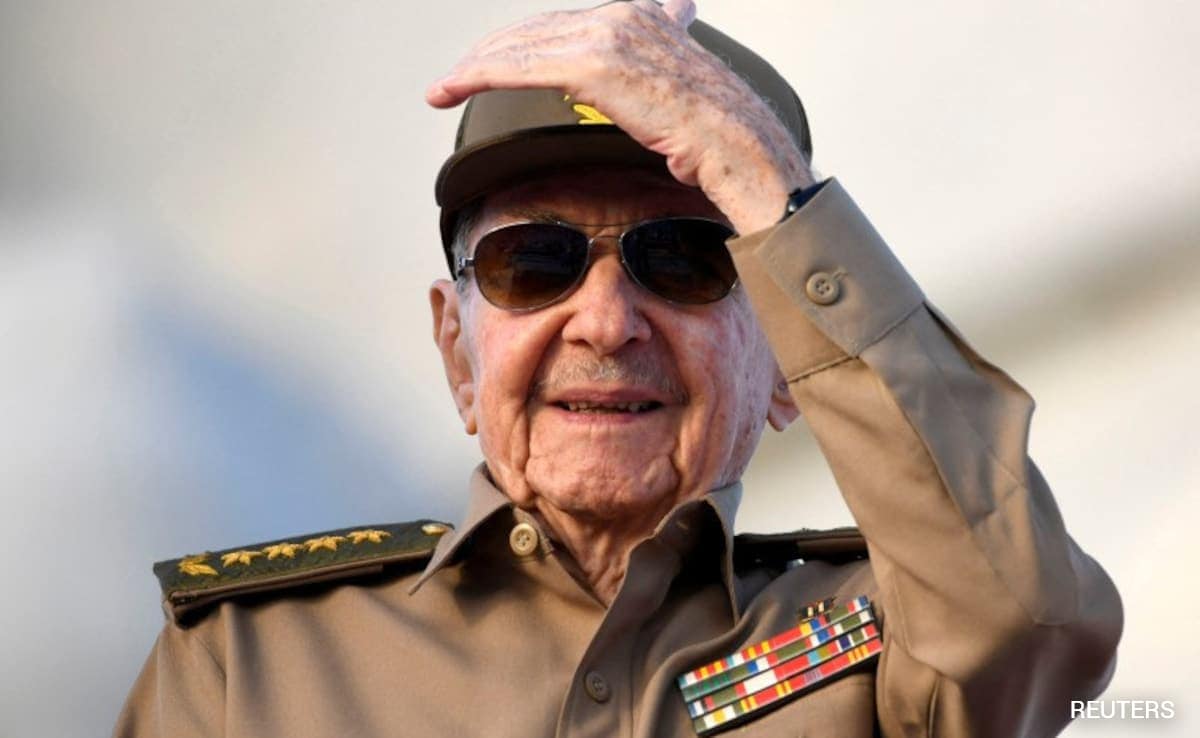
The United States Department of Justice has unsealed a federal criminal indictment charging 94-year-old former Cuban President Raúl Castro with murder, conspiracy to kill US nationals, and the destruction of aircraft. The charges stem from the February 24, 1996, shoot-down of two unarmed civilian planes operated by the Miami-based exile group Brothers to the Rescue, an attack over international waters that left four men dead. Acting Attorney General Todd Blanche announced the indictment at Miami’s historic Freedom Tower, signaling a massive escalation in Washington's pressure campaign against Havana. While the legal filing provides a long-delayed sense of closure for South Florida’s Cuban-American community, the timing and aggressive rhetoric reveal a deeper geopolitical strategy aimed at forcing the total collapse of Cuba's six-decade-old communist regime.
To understand why a 30-year-old cold case is suddenly weaponized as a capital offense, one has to look beyond the courtroom. This is not merely an exercise in historical justice. It is the legal architecture for a potential regime change. For another perspective, read: this related article.
The Trigger and the Trap
On that afternoon in 1996, Russian-made MiG fighter jets under the direct chain of command of Raúl Castro—then Cuba’s defense minister—intercepted three Cessna aircraft. Two were obliterated by air-to-air missiles. The victims, Carlos Costa, Armando Alejandre Jr., Mario de la Peña, and Pablo Morales, were part of an organization that flew search-and-rescue missions for Cuban rafters fleeing the island.
Havana has long maintained that the aircraft violated its airspace and ignored warnings, branding the group as provocateurs. Current Cuban President Miguel Díaz-Canel quickly condemned the new US indictment, calling it a fabricated political maneuver to justify military aggression. Related reporting on this trend has been published by The Guardian.
Yet the unsealed indictment reveals a meticulously planned operation. US prosecutors allege that Cuban intelligence had deeply embedded spies within Brothers to the Rescue, feeding flight patterns back to Havana. Raúl Castro and his late brother, Fidel, allegedly ordered specific military training to track and destroy these exact planes weeks before the ambush. The trap was set, the trigger pulled, and the geopolitical fallout has reverberated for three decades.
Justice Delayed or Regime Collapse Accelerated
For thirty years, the families of the victims have lobbied successive American administrations for this day. The legal reality, however, is that a 94-year-old former dictator living in Havana will almost certainly never sit in a federal court in Miami.
This raises the critical question of utility. If the target cannot be practically apprehended, what does the indictment actually achieve?
The answer lies in the precedent set earlier this year in Venezuela, where US special forces arrested Nicolás Maduro under the legal framework of a federal drug trafficking indictment. By framing Castro not merely as a hostile political figure but as an indicted murderer, the White House establishes the explicit domestic legal justification needed for extraordinary measures. Acting Attorney General Blanche hinted as much, stating that the US expects Castro to appear "either by his own will or by another way."
Weaponizing Economic Desperation
The legal assault coincides with an island in absolute free fall. Cuba is experiencing its worst economic collapse since the fall of the Soviet Union. A stringent US energy blockade has systematically cut off fuel imports, triggering rolling blackouts, widespread food shortages, and public protests across Havana.
Washington is using the indictment to squeeze an already fractured leadership elite.
- Targeting the Military Conglomerate: The administration is explicitly aiming at Gaesa, the vast, military-run business empire that controls the lion's share of Cuba’s economy. By labeling the regime's historic leader a criminal, Washington intends to scare off the remaining foreign investors and financial institutions still willing to do business with Cuban state entities.
- The Drone Threat Pretext: Security analysts point to a leaked intelligence report detailing Cuba's recent acquisition of hundreds of advanced drones. By pairing the indictment with disclosures of a mounting military threat, the administration is building a public case that Havana is an active national security risk to the United States mainland.
The High-Stakes Gamble of a Cornered Regime
The administration's strategy relies on the calculation that immense economic misery, combined with the legal decapitation of its historic leadership, will force Havana to open its economy and release political prisoners. It is a high-stakes gamble.
History suggests an alternative outcome. For over sixty years, external pressure has historically caused the Cuban Communist Party to circle the wagons, double down on domestic repression, and blame Washington for the systemic misery of its people. Rather than fracturing the ruling elite, an existential threat from the north frequently unifies them.
The indictment of Raúl Castro delivers a powerful moral victory to a community that has bled for decades. But as a tool of statecraft, it moves the region into highly volatile territory. Washington has drawn its red lines and built its legal case. The true test will be what happens when a collapsing regime, with its back completely against the wall, decides to push back.