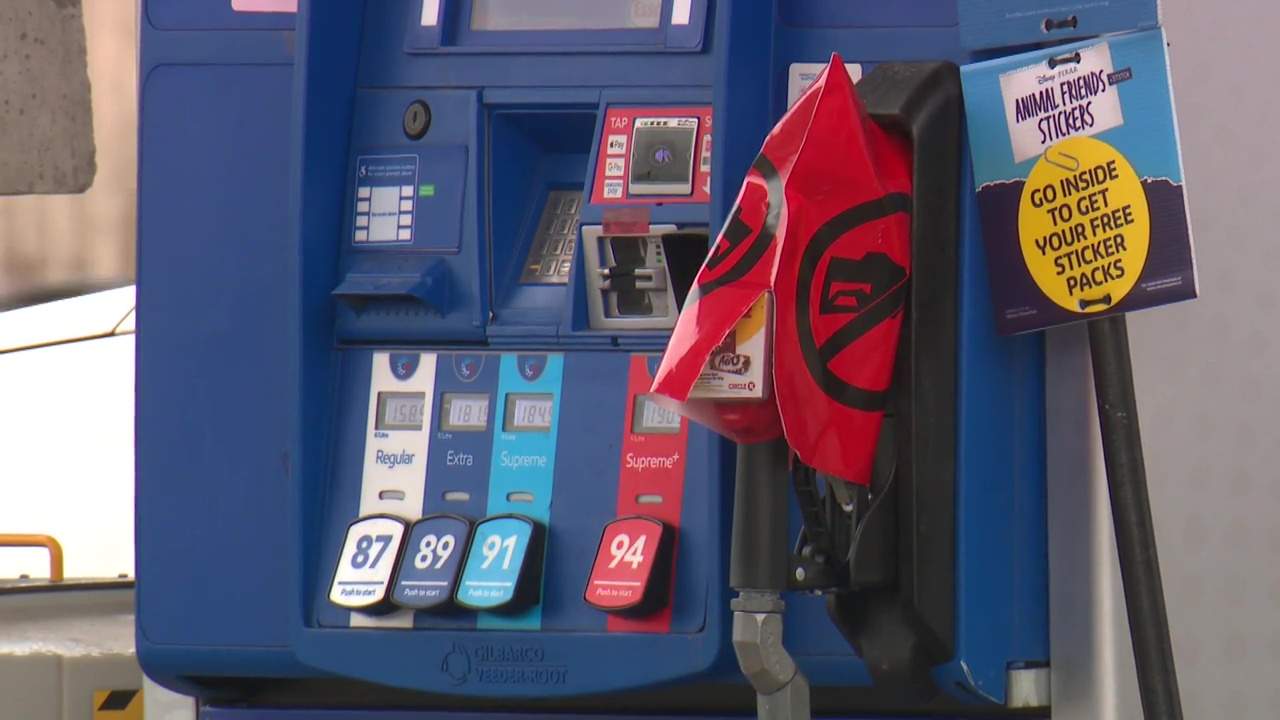
The headlines out of South Edmonton are predictable. Dozens of motorists are lining up with repair bills, pointing fingers at a local Esso station because their engines sputtered after a fill-up. The narrative is easy: Big Oil slipped up, water got in the tanks, and the "little guy" is paying the price. It is a story of corporate negligence and mechanical tragedy.
It is also largely a fantasy.
If you think a few liters of water in a massive underground storage tank is the primary reason your modern vehicle is sitting in a shop, you are ignoring the brutal reality of modern fuel chemistry and the even more brutal reality of how people treat their cars. We love a villain. It’s much harder to admit that your high-tech engine is a delicate ecosystem that you have likely been sabotaging for years.
The Water Myth and the Ethanol Reality
The common "watery gas" complaint assumes that a gas station is just a giant bucket that someone accidentally left the lid off of during a rainstorm. That isn't how fuel infrastructure works. Modern Underground Storage Tanks (USTs) are sophisticated, double-walled containment systems equipped with automated tank gauging (ATG) sensors. These sensors detect "water bottoms"—the layer of water that naturally settles at the base of a tank—down to a fraction of an inch.
If the water level hits a specific threshold, the submersible turbine pump (STP) literally cannot pull fuel. The system shuts down. The idea that a station knowingly or even unknowingly pumped "watery gas" into fifty cars in a row ignores the basic mechanical failsafes designed to prevent exactly that.
The real culprit? Phase Separation.
Most consumer-grade gasoline in Alberta contains up to 10% ethanol. Ethanol is hygroscopic, meaning it actively pulls moisture out of the air. When the water content reaches a critical point—usually around 0.5% by volume—the ethanol and water bond together and drop to the bottom of the tank. This leaves a "top" layer of sub-octane gasoline and a "bottom" layer of a corrosive, unburnable ethanol-water slurry.
When this happens, it isn't necessarily because the station is "bad." It happens because of thermal cycling and low turnover. If you’re filling up at a station that hasn't updated its filtration or has slow-moving inventory during a seasonal temperature swing, you’re playing Russian roulette with chemistry, not just "dirty water."
Your Fuel Filter is Probably a Ghost
Let’s talk about the "victims." I have spent years looking at the guts of fuel systems, and here is the uncomfortable truth: Most drivers treat their fuel system like a "set it and forget it" utility.
Modern cars have moved toward "lifetime" fuel filters integrated into the fuel pump assembly inside the tank. Manufacturers tell you they never need replacing. They are lying. These "filters" are often just fine-mesh socks. When you introduce even a marginal amount of sediment or phase-separated fuel, these socks clog, the pump works twice as hard, overheats, and dies.
The "contaminated fuel" at the Esso wasn't the sole cause of your $2,000 repair bill; it was the straw that broke the back of a fuel pump that was already struggling under years of varnish and debris. If you aren't running a high-quality fuel system cleaner or choosing Top Tier certified fuel 100% of the time, you are the one who primed the engine for failure.
The High-Pressure Injection Trap
We are no longer driving 1998 Chevy Cavaliers. Most vehicles on the road today utilize Gasoline Direct Injection (GDI). In a GDI system, fuel is sprayed directly into the combustion chamber at pressures exceeding 2,000 psi.
At these pressures, the fuel acts as a lubricant for the injectors. If there is even a microscopic deviation in fuel density—caused by, say, a tiny amount of moisture—the lubrication fails. The injector tips gall. The spray pattern distorts. The engine misfires.
The South Edmonton "crisis" highlights a massive gap in consumer education. People believe their cars should be able to digest anything sold at a pump. They can't. We have built engines with the tolerances of a Swiss watch and we are feeding them the equivalent of industrial runoff. When the watch stops, we blame the guy who sold us the battery, not the fact that we're wearing it in a salt-mine.
The Compensation Culture Scam
Whenever a story like this breaks, the "victims" immediately rush to the media to demand compensation. They want the station to pay for the tow, the diagnostic, the new pump, the injectors, and the rental car.
Here is why that is a losing game:
- The Burden of Proof: To actually win a claim, you need a retained sample of the fuel from the nozzle at the time of purchase, or a certified lab analysis of the fuel drained from your tank. Most people just have a murky Mason jar they filled after the car broke down.
- The Pre-existing Condition: If a mechanic pulls your fuel tank and finds three inches of sludge and rust, that didn't happen because of one bad fill-up on a Tuesday. That is years of neglect. A corporate legal team will eat that defense for lunch.
- The Insurance Shuffle: Your personal auto insurance likely won't cover "mechanical breakdown" due to fuel. They see it as a maintenance issue.
Stop looking for a payout and start looking at your maintenance schedule.
How to Actually Protect Your Engine
If you want to avoid being the person crying on the evening news because your SUV turned into a paperweight, stop following the "lazy consensus" of car care.
Stop Chasing the Lowest Price
The difference between the cheapest gas in the city and the premium stuff is often just a few dollars per tank. Is your $60,000 engine worth a $4 savings? Look for the Top Tier logo. This isn't marketing fluff; it’s a standard supported by Audi, BMW, General Motors, Honda, Toyota, and Volkswagen. It ensures a higher level of detergent additives that prevent the very buildup that makes "bad gas" so lethal to your injectors.
The Quarter-Tank Rule
If you are the type of person who runs their tank down until the light comes on, you are begging for a breakdown. The fuel in your tank acts as a coolant for the fuel pump. Furthermore, any contaminants or moisture that have settled at the bottom of the tank are most concentrated when the fuel level is low. Keep it above a quarter tank. Always.
Forget the "Dry Gas" Additives
In the old days, people dumped isopropyl alcohol (Dry Gas) into their tanks to "absorb" water. In an ethanol-blended world, adding more alcohol is like trying to put out a fire with hairspray. It can actually accelerate phase separation. If you suspect moisture, use a high-quality polyetheramine (PEA) based cleaner.
The Industry’s Dirty Little Secret
The oil companies don't want you to know how fragile the supply chain is. Fuel travels through pipelines, sits in massive terminals, gets loaded into trucks that might have hauled a different grade an hour prior, and finally ends up in a hole in the ground.
Contamination is an inevitability of physics, not just a failure of management.
The South Edmonton Esso isn't an anomaly; it's a reminder. The system is built for volume, not for the surgical precision your GDI engine requires. When you pull up to that pump, you are participating in a massive industrial transfer that assumes a "tolerable level of filth."
If you aren't prepared for that, you shouldn't be driving.
The motorists in Edmonton aren't victims of a "watery gas" conspiracy. They are victims of their own belief that technology has made maintenance obsolete. It hasn't. It has just made the consequences of ignoring it more expensive.
Keep your receipts. Keep your tank full. And stop acting surprised when a complex machine fails because you fed it the bare minimum required to keep it turning.
The station might pay for your repair this time just to shut you up, but the next time your engine dies, you won't have a news crew to hide behind. You’ll just have a high-interest credit card and a long walk home.
Change your filters. Watch your octane. Stop complaining.