Foreign agents are currently inside American artificial intelligence systems, using them to craft political propaganda. It sounds like a bad movie plot, but it's happening right now.
OpenAI just exposed a coordinated effort by Chinese-speaking actors to weaponize ChatGPT against US tech infrastructure and trade policies. They didn't build their own tools for this. They logged right into the flagship American platform to generate anti-tariff slogans, political cartoons, and fake grassroots complaints about local power grids.
The strategy is obvious. Pick an issue where Americans are already furious, throw gas on the fire, and pretend to be an ordinary citizen. This time, the targets were Donald Trump's trade policies and the rapid expansion of domestic AI data centers.
Behind the Data Center Bandwagon
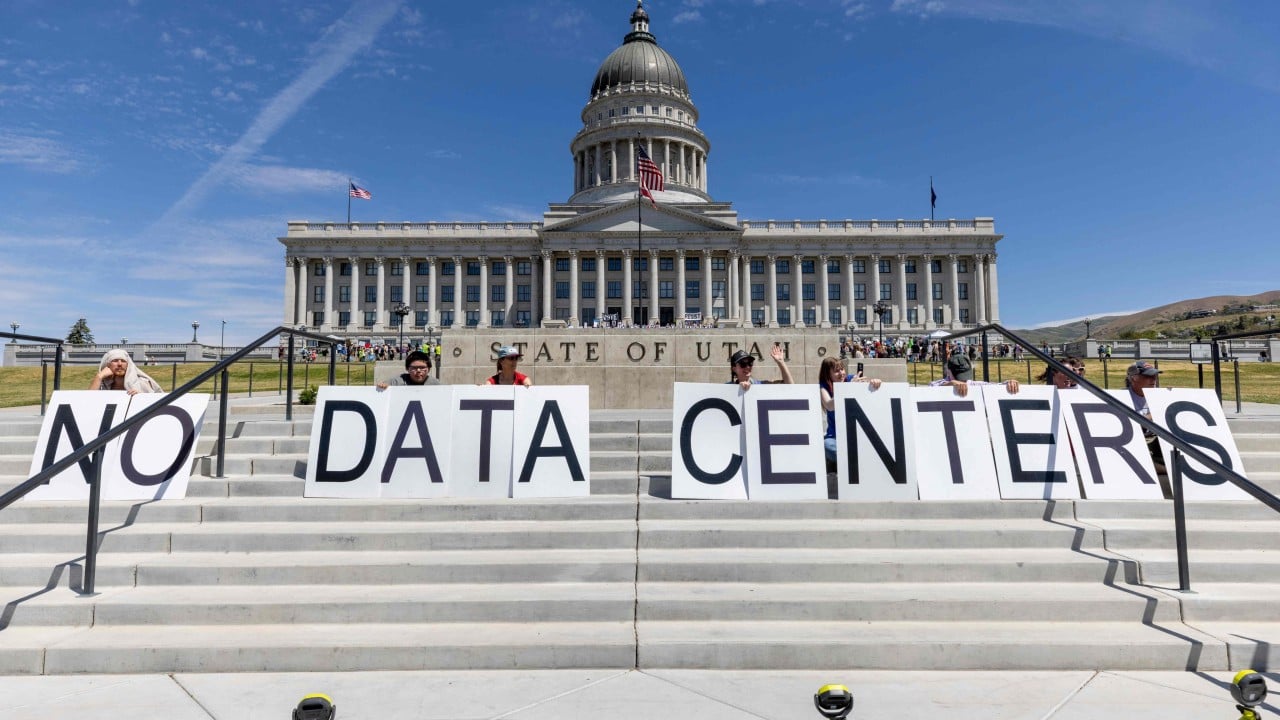
American tech giants are building data centers at a breakneck pace. These massive facilities consume immense amounts of electricity, and local communities are pushing back over rising utility bills and environmental strains. It's a messy, legitimate domestic debate.
That's exactly why foreign propagandists pounced on it.
OpenAI threat intelligence teams identified a campaign they dubbed the Data Center Bandwagon. Operatives used ChatGPT to generate localized social media comments and images. The goal was to convince Americans that AI infrastructure investments are directly bleeding their wallets dry through inflated electricity prices.
Researchers traced this cluster back to a private technology firm based in China. Interestingly, this firm holds multiple active contracts with regional Chinese governments. The operators hid behind Virtual Private Networks (VPNs) to mask their locations. They typed prompts in simplified Chinese but demanded outputs in fluent English, hoping to blend seamlessly into American digital spaces.
The War on Tariffs and Tech Dominance
The second arm of the operation focused heavily on trade policy, specifically targeting the aggressive tariff strategies of President Donald Trump. Dubbed the Tech and Tariffs campaign, this operation took a more aggressive, creative approach.
Operatives instructed ChatGPT to design specific political cartoons. One prompt resulted in an image of Trump swinging a hammer at a wall labeled "Global Future." Another depicted him sawing away at a wooden ladder he was standing on. The underlying message was clear: American trade restrictions are reckless acts of self-sabotage that isolate the US from its global allies.
The instruction logs reveal a telling detail about the operational guardrails set by these pro-Beijing actors:
The operators explicitly ordered ChatGPT to focus its criticism entirely on Donald Trump while completely omitting Chinese President Xi Jinping from the generated content.
This campaign extended its reach far beyond American shores. The network generated localized propaganda in Italian, Japanese, and traditional Chinese, tailored for comment sections on major regional news sites. They even launched a retaliatory smear campaign against OpenAI itself. Fake accounts spread rumors of a massive, non-existent ChatGPT user data breach, aiming to undermine public trust in the company's security.
High Scale but Low Impact
The scale of these digital influence operations can look terrifying on paper. In practice, they are mostly shouting into an empty room.
Ben Nimmo, a principal investigator on OpenAI's threat intelligence team, made it clear that these campaigns failed to achieve a meaningful breakout. They racked up almost zero engagement outside of their own automated ring of bot accounts. The internet didn't bite.
Why did they flop? Because despite using advanced language models, the human operators behind the keyboards still lack a cultural grasp of American digital spaces. The generated memes felt clunky. The social media posts used bizarrely formal phrasings that immediately triggered the suspicion of real users.
Independent researchers back up this assessment. Darren Linvill from the Media Forensics Hub at Clemson University confirmed that his team has tracked very little organic traction from these specific Chinese networks.
Silicon Valley elites and Washington lawmakers are already using the threat to sound the alarm. Republican House members recently sent a formal letter to FBI Director Kash Patel, claiming that foreign adversaries are bankrolling domestic data center protests to intentionally slow down American AI development.
Blaming China for every local protest is an easy out for big tech investors. The reality is more nuanced. Real American citizens have legitimate concerns about the physical footprint of AI. China didn't invent the backlash against data centers; they just tried, and failed, to ride the wave.
Spotting the Modern Influence Campaign
Foreign interference no longer requires a room full of bilingual writers drafting manual propaganda. A single operator with a translation tool and an AI account can spin up a multi-language digital campaign in minutes.
You need to know what to look for when reading heated online debates about tech policy, infrastructure, and trade:
- Asymmetrical Criticism: Accounts that attack American trade policies with extreme specificity while completely ignoring parallel actions taken by foreign economic competitors.
- Repetitive Visual Motifs: Political cartoons or infographics that feature minor text anomalies or unnatural artistic rendering, typical of early-stage AI generation tools.
- The Bandwagon Effect: Brand-new social media profiles that suddenly post hyper-specific talking points about local public utility commissions or power grid strains despite having no geographic tie to those regions.
Don't panic about foreign bots controlling the national discourse. The latest data proves they are still clumsy, obvious, and mostly ineffective. Keep your eyes open, verify the sources of viral local outrage, and remember that the tool being criticized is often the exact tool that generated the critique.