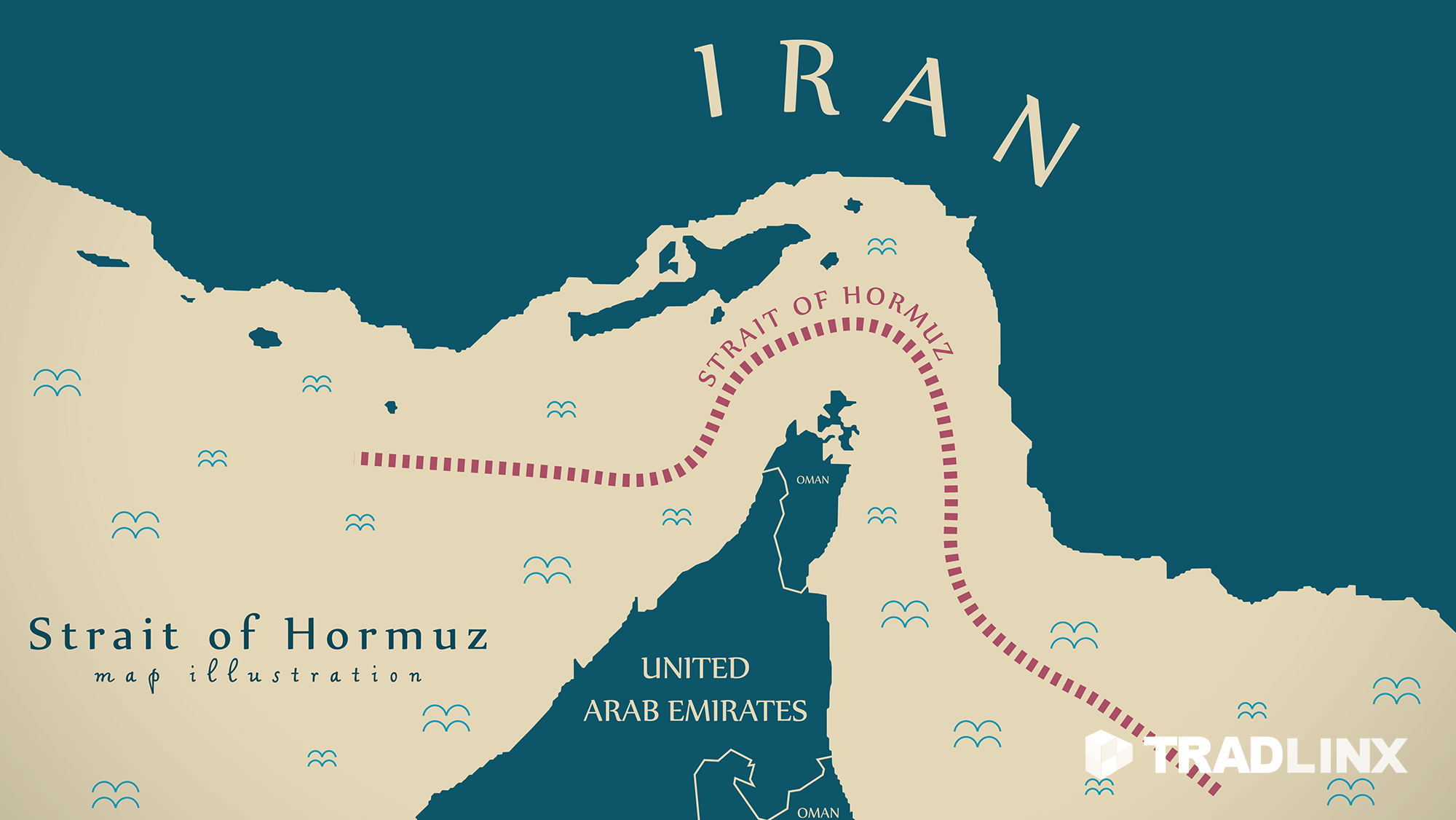
The water in the Strait of Hormuz does not look like a geopolitical flashpoint. To a merchant sailor leaning over the rail of a VLCC (Very Large Crude Carrier), it is a shimmering, deceptive turquoise. It looks tranquil. But beneath that surface, the weight of the modern world’s machinery—the heat in your home, the fuel in your car, the plastics in your pocket—squeezes through a gap only twenty-one miles wide at its narrowest. It is a throat. And it is very easy to choke.
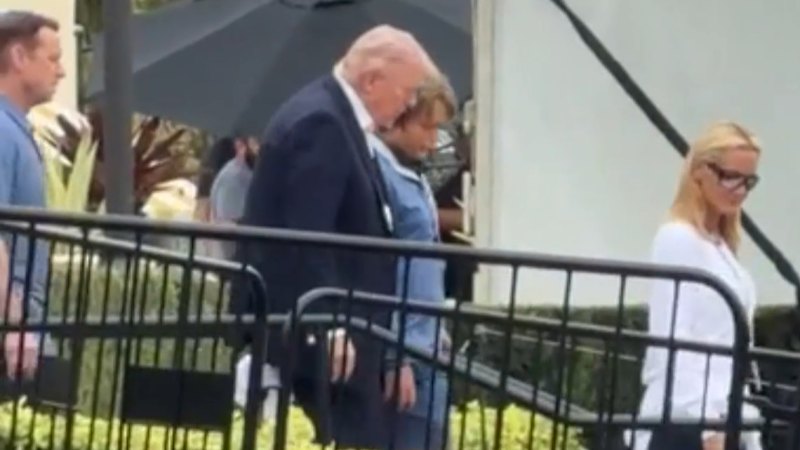
Donald Trump recently stepped to the podium to announce what he termed a "humanitarian" mission for this specific stretch of water. On the surface, the language is soft. Humanitarian. Aid. Protection. But to understand why this matters, you have to look past the suit and the teleprompter. You have to look at the bridge of a cargo ship where a captain is currently sweating through his shirt, watching a radar screen for the ghost of a fast-attack craft.
The Geography of Anxiety
Consider a hypothetical captain named Elias. Elias is not a politician. He is a man who misses his daughter’s birthdays and drinks too much lukewarm coffee. He is currently navigating twenty million barrels of oil through a corridor where one wrong move, or one stray mine, doesn't just mean a maritime disaster. It means a global cardiac arrest.
The Strait of Hormuz is the world's most important artery. About a fifth of the world’s total oil consumption passes through here daily. If that flow stops, the price of bread in a small town in Ohio goes up. The factory worker in Germany finds his shift canceled because the energy costs just spiked. The stakes are not abstract; they are baked into the price of every single thing we touch.
When Trump speaks of a humanitarian mission, he is pivoting the narrative. Usually, naval presence in these waters is framed through the lens of "freedom of navigation" or "deterrence." Those are cold, martial terms. By reframing the mission as humanitarian, the administration is attempting to change the rules of engagement. It suggests that the primary goal isn't to provoke a surface war, but to ensure that the global "circulatory system" remains uninterrupted for the sake of the people at the other end of the pipe.
A Different Kind of Escort
For decades, the dance in the Strait has been one of shadows. You have the massive, lumbering tankers—vessels so large they take miles to stop—and you have the "mosquito" fleets. These are fast, agile boats that can swarm a giant before it can even turn its bow.
Under the new directive, the mission takes on a protective, almost parental posture. Trump’s proposal isn't just about showing muscle. It’s about creating a "safety corridor." This isn't just semantics. In the world of international law, a humanitarian designation can sometimes bypass the red tape that bogs down traditional military maneuvers. It allows for a broader coalition of nations to join in without necessarily signing up for a "war footing."
But the tension is thick.
Imagine Elias again. He sees a grey hull on the horizon. Is it a protector? Or is it a target? The presence of more warships, even those labeled as "humanitarian," increases the density of an already crowded room. One nervous finger on a trigger, one misunderstanding over a radio frequency, and the turquoise water turns black with more than just oil.
The Invisible Stakes of the Pump
We often talk about "the market" as if it is a sentient god that lives in the clouds. It isn't. The market is just a collection of human fears and expectations. When news broke of the mission, the reaction wasn't just about the supply of oil. It was about the cost of risk.
Insurance companies—the quiet giants who actually decide where ships go—look at the Strait of Hormuz and see a nightmare. Every time a "mission" is announced, the premiums for these tankers fluctuate wildly. If it costs more to insure the ship, it costs more to move the oil. If it costs more to move the oil, the logistics company charges more to the refinery.
The humanitarian angle is a gamble to stabilize that fear. It is a signal to the insurance markets: The United States is guaranteeing the safety of the cargo.
Yet, there is a paradox at the heart of this. You cannot secure a waterway with "humanitarian" intent without having the capacity for devastating violence. You don't bring a knife to a gunfight, and you certainly don't bring a clipboard to a naval blockade. The ships being sent are destroyers and cruisers. They are floating fortresses.
The "humanitarian" label acts as a velvet glove over a very heavy iron fist.
The Human Cost of a Closed Gate
If the Strait were to close, the immediate impact would be felt in the halls of power, but the long-term suffering would happen in the shadows. We are talking about developing nations that rely on stable energy prices to keep their hospitals running. We are talking about the elderly who cannot afford a 30% jump in their heating bill during a cold snap.
The mission is framed as a preventative measure against a "global catastrophe." It acknowledges that we are all tethered to this twenty-one-mile gap. We are a species that has built its entire civilization on the reliable flow of ancient sunlight trapped in liquid form. When that flow is threatened, our civility begins to fray at the edges.
Trump knows this. His base knows this. The world knows this.
The rhetoric of "humanitarianism" is a bridge. It attempts to link the gritty reality of naval dominance with the moral high ground of protecting the common man. It’s a strategy designed to make the mission "un-protestable." Who could be against a mission that aims to keep the lights on and the world fed?
The Silence on the Water
The most haunting part of the Strait of Hormuz isn't the noise of the engines. It’s the silence that would follow if the shipping stopped.
Elias, our captain, knows this better than anyone. He knows that his ship is a massive, floating target, but he also knows it is a vital organ. He watches the sun set over the Iranian coast to his North and the Omani coast to his South. He feels the thrum of the engine beneath his boots.
The announcement of a mission changes his day-to-day reality very little. He still scans the waves. He still checks his charts. He still waits for the moment he clears the Gulf of Oman and hits the open sea, where the water is deep and the politics are thin.
The Strait remains a place where the world holds its breath. We are currently watching to see if this new mission will act as a stabilizer or a catalyst. The line between a "humanitarian protector" and a "belligerent occupier" is as thin as the wake left by a fast boat in the night.
As the sun dips below the horizon, the tankers continue their slow, rhythmic procession. They carry the lifeblood of the 21st century. And for now, the world waits to see if the throat stays open, or if the squeeze becomes a grip.
The ships keep moving, but the air is electric with the static of what might happen next.