The radiator in a small apartment in Budapest does not hum with politics. It hums with a low, metallic vibration that signifies survival. When Viktor, a retired teacher with a pension that stretches thinner every winter, places his hand against the white metal fins, he isn't thinking about geopolitical pivots or the shifting borders of Eastern Europe. He is thinking about the blue flame in his boiler. He is thinking about the invisible thread of pressurized gas that travels thousands of miles, through steel veins buried deep in the frost, to keep his tea warm.
On a mahogany table in Moscow, that same invisible thread is a leash.
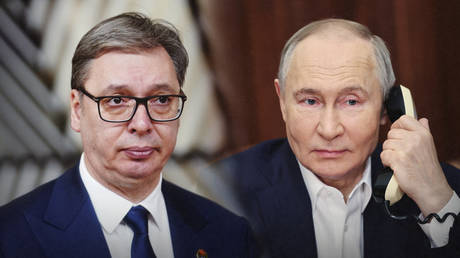
When Vladimir Putin sits across from a European leader—be it from Hungary, Serbia, or any state still tethered to the old Soviet infrastructure—the air in the room is heavy with the scent of old-world power. The official press releases speak of "energy security" and "mutually beneficial cooperation." They use words that feel like concrete blocks: stable, long-term, strategic. But the reality is far more fluid. It is a game of caloric chess where the stakes are measured in cubic meters and the players are well aware that one man holds the valve.
The Architecture of Dependency
The geography of Europe was not drawn by artists; it was etched by engineers during the Cold War. While Western Europe spent decades trying to diversify, building LNG terminals and wind farms that dot the North Sea like white giants, the East remained locked in a physical embrace with the Siberian Tundra. You cannot simply flip a switch and change where your heat comes from when your entire national grid is a circulatory system designed in Moscow.
Consider the physical reality of a pipeline. It is not like a shipping lane. You cannot just steer a tanker to a different port if the price is too high or the rhetoric too sharp. A pipeline is a marriage. It is a multi-billion dollar commitment of steel and earth that binds two nations together for forty years. When Putin discusses energy security with an ally, he isn't just selling a commodity. He is reminding them of the infrastructure of their own existence.
The "ally" in these headlines is often caught in a brutal pincer movement. On one side is the pressure from Brussels to decouple, to go green, to punish aggression with sanctions. On the other side is the terrifying silence of an empty pipe. For a leader in Central Europe, the choice isn't between right and wrong. It is between a theoretical moral high ground and a very literal frozen winter.
The Sound of the Valve Turning
There is a specific kind of silence that falls over a city when the energy fails. It starts with the industrial zones. The glass factories and chemical plants, which require a constant, roaring flow of gas to maintain the heat of their furnaces, are the first to go dark. If the gas stops, the molten glass hardens inside the machinery, destroying it forever. This isn't just a business loss. It is the death of a town’s primary employer. It is the end of a thousand grocery budgets.
When we read that "Putin discussed energy security," we should translate that into the language of the furnace. He is offering a guarantee that the glass will stay liquid. In exchange, he asks for a different kind of fluidity—a softening of a stance, a veto in a crucial meeting, or perhaps just a meaningful silence when the rest of the world is shouting.
The leverage is absolute because it is immediate. Unlike trade tariffs or diplomatic expulsions, which take months to bite, energy is instantaneous. If the pressure in the line drops, the lights flicker within hours. It is the ultimate tool of the "master storyteller" of the Kremlin, who knows that a cold citizen is a restless voter.
The Myth of the Open Market
We like to believe that the world runs on the invisible hand of the market, a fair exchange where the best price wins. But in the world of Eurasian energy, the hand is very visible, and it is wearing a suit.
Russia has long used "most favored nation" pricing as a reward system. If you are a friend, the gas is cheap. If you drift toward the West, the price "adjusts" to reflect the "new market reality." It is a sophisticated form of protection money. The European ally sitting at the table knows that a ten percent discount on gas can be the difference between a national budget surplus and a riot in the capital square.
This creates a strange, transactional loyalty. It isn't born of shared values or a common vision for the future of democracy. It is a loyalty born of the geography of the Miocene epoch, of the ancient organic matter that decayed under the Russian permafrost millions of years ago, now compressed into the fuel that powers a suburban kitchen in 2026.
The Invisible Stakes
Behind the handshakes and the sterile rooms of the Kremlin, there is a psychological toll on the "allies." To be dependent on a neighbor for your very breath is to live in a state of perpetual anxiety. Every time a turbine breaks or a "maintenance period" is announced on a major pipeline, a dozen energy ministers in Europe hold their breath. They wonder if it is a genuine mechanical failure or a subtle flick of the wrist from a man who wants to see how they react to the cold.
This is the human element that the "dry" articles miss. They focus on the volume of gas—billions of cubic feet—but they miss the tension in the shoulders of the diplomat who knows his country’s sovereignty is being traded for a lower heating bill.
The cost of this energy isn't just the price per megawatt-hour. The true cost is the erosion of choice. When your energy security is tied to a single source, your foreign policy is no longer your own. It is a ghostwritten script, edited by the supplier.
The Final Calculation
Back in Budapest, Viktor turns the dial on his stove. The flame blossoms, a sharp, clean blue. He doesn't see the thousands of miles of pipe, the soldiers guarding the compressor stations, or the cold-eyed men in Moscow discussing the "security" of his heat. He only knows that today, the house is warm.
But the blue flame has a shadow. It is a long, dark shadow that stretches across the continent, cast by a sun that rises in the East and sets according to the whims of a single man. The tragedy of the European ally is the knowledge that the warmth they enjoy today is a loan, and the interest is paid in the currency of their own independence.
The meeting ends. The cameras are ushered out. The leaders stand, their shadows long on the polished floor. Outside, the wind across the steppe is picking up, and somewhere, deep underground, the gas continues its silent, pressurized journey, carrying with it the weight of an entire continent’s fear.