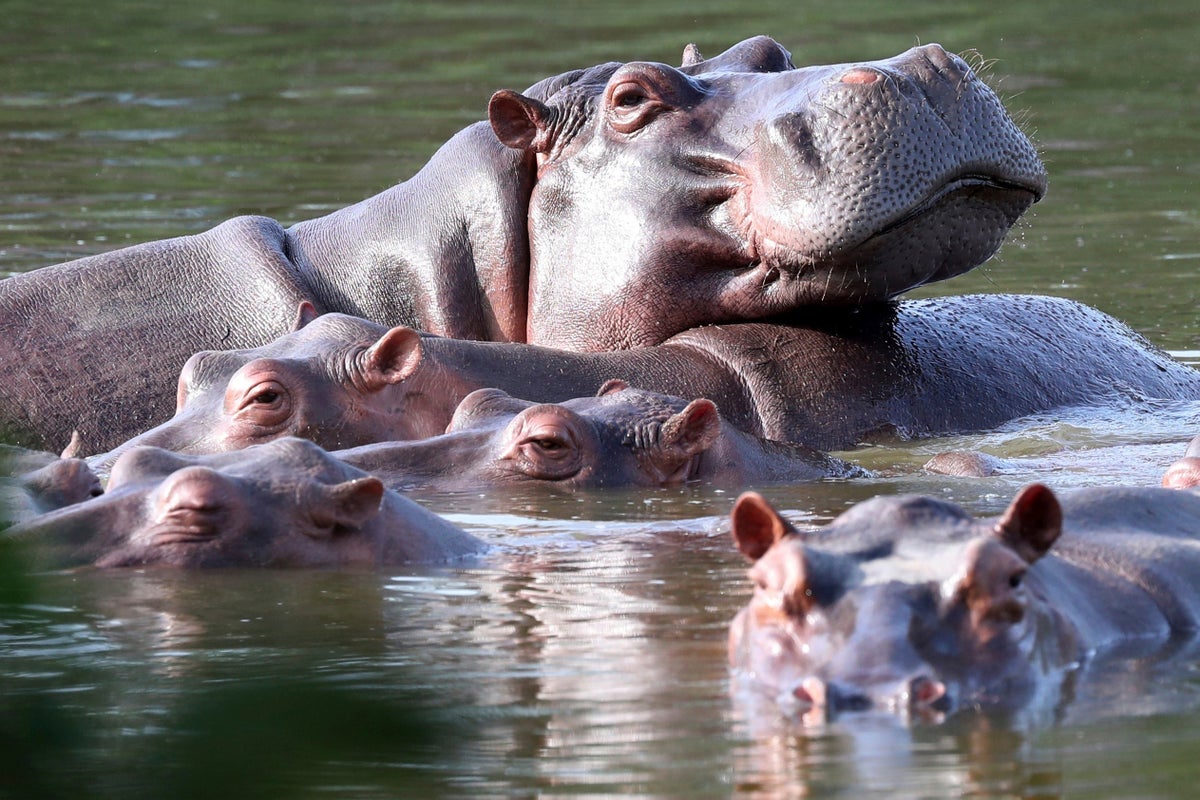
The environmental world is paralyzed by a collective case of "invasive species hysteria" and it is costing Colombia its most unique ecological asset. While newsrooms churn out tear-jerkers about the "tragedy" of a culling or the "terror" of a four-ton African beast in the Magdalena River, they miss the glaring reality. Pablo Escobar’s greatest accidental legacy isn’t a drug empire—it’s a biological miracle that we are currently trying to erase out of a misplaced sense of purity.
The status quo argument is lazy. It claims these hippos are "clogging" waterways, displacing native manatees, and threatening locals. The proposed solution? A massive, expensive, and ethically messy extermination program. It is short-sighted. It is unscientific. It is a waste of a global opportunity. Also making waves lately: The Iron Pipeline and the Ghost of Khartoum.
The Rewilding Myth We Refuse to Accept
Most ecologists are obsessed with a "snapshot" version of nature. They want the world to look exactly like it did in 1492. But nature doesn't work that way. Nature is a moving target.
The hippos in Colombia are not "invaders" in the traditional sense; they are functional replacements for the megafauna that South America lost during the Late Pleistocene. Thousands of years ago, the continent was home to massive herbivores—giant ground sloths and glyptodonts—that performed the exact same ecological roles hippos do today. They moved nutrients from water to land. They carved out channels. They maintained the structural integrity of wetlands. Additional information on this are detailed by BBC News.
By culling these animals, we aren't "saving" an ecosystem. We are preventing it from evolving. We are clinging to a ghost of a landscape that hasn't existed for ten millennia. Instead of viewing the hippos as a problem to be solved, we should view them as the first successful rewilding experiment of the 21st century.
The Economic Absurdity of Culling
Let’s talk numbers, because the environmentalists rarely do. A single sterilization procedure for a hippo costs roughly $10,000 to $25,000. It requires a team of specialized vets, heavy machinery, and high-risk logistics. A mass cull is even more expensive when you factor in the inevitable legal battles, international PR nightmares, and the sheer labor of disposing of tons of biological waste in remote jungle terrain.
I have seen governments burn through millions of dollars chasing "eradication" goals that never materialize. Australia tried it with camels; Florida tried it with pythons. The results are always the same: high costs, low impact, and a resilient population that adapts faster than the bureaucracy can move.
If Colombia spends its limited budget killing hippos, it is effectively stealing money from its own people. That capital could be used for education, infrastructure, or protecting species that are actually on the brink of extinction—like the cotton-top tamarin. Instead, we are subsidizing a war against a creature that has become a cornerstone of local tourism.
The Tourist Trap or the Tourist Treasure?
Ask the residents of Puerto Triunfo if they want the hippos dead. The answer is a resounding no. The "Cocaine Hippos" have done more for the local economy than any government-funded development project. They are a magnet. They bring in global dollars.
The "danger" to locals is largely a manufactured narrative. Yes, hippos are territorial. Yes, they are dangerous if you are foolish enough to corner one. But the same can be said for the jaguars and caimans that already inhabit the region. We don't cull jaguars because they might bite someone; we teach people how to live alongside them.
A Better Way: The Harvest Model
If the population truly is unsustainable, the answer isn't a state-sponsored slaughter. It’s a market-driven harvest.
Imagine a scenario where the Colombian government stops treating the hippo as a "waste" problem and starts treating it as a resource. Hippo meat is a lean, high-protein source consumed in parts of Africa. By establishing a regulated, sustainable harvest program, the government could turn a "pest" into a food security asset for impoverished regions.
- Revenue Generation: Sell permits for high-end, regulated trophy hunting—the proceeds of which go directly back into river conservation.
- Food Security: Process the meat for local consumption or export.
- Population Control: Target specific age groups and genders to keep the numbers stable without total eradication.
This approach is uncomfortable. It offends the sensibilities of the urban elite who watch nature documentaries from their couches. But it is the only path that respects the animal's life by giving it value rather than treating it as trash to be burned in a pit.
The Manatee Distraction
The most common "scientific" objection is that hippo waste changes the pH of the water and harms the manatees. This is a classic example of cherry-picking data. The Magdalena River is already one of the most polluted waterways in South America, choked by industrial runoff, mercury from illegal mining, and untreated sewage from a dozen cities.
Blaming the hippos for the decline of the manatee is like blaming a leaky faucet for a house fire. It’s a convenient scapegoat that allows the government to look busy while ignoring the massive industrial giants that are actually destroying the river’s health. If we killed every hippo tomorrow, the manatee would still be dying because of the toxins we pour into the water daily.
Embracing the "Franken-Nature" of the Future
The world is changing. Climate change is shifting habitats faster than we can track. We are entering an era of "novel ecosystems"—habitats that are comprised of species that never lived together before.
The Colombian hippo is the poster child for this new world. They have adapted. They are thriving. They are healthier and more reproductive in the Magdalena than they are in their native Africa. This should be a source of scientific fascination, not fear. We have a chance to study how a large mammal adapts to a new world in real-time.
We can either be the generation that spent millions of dollars to kill a miracle, or we can be the generation that figured out how to harness it. Stop the culling. Start the management. Stop mourning a past that is never coming back and start building a bio-diverse future that actually works for the people who live there.
The hippo isn't a ghost of Escobar’s past. It’s a resident of Colombia’s future. If we can’t handle a few hundred large herbivores in a massive river system, we have no business claiming we can save the planet.
Put down the rifles and pick up the ledger. It’s time to get pragmatic.