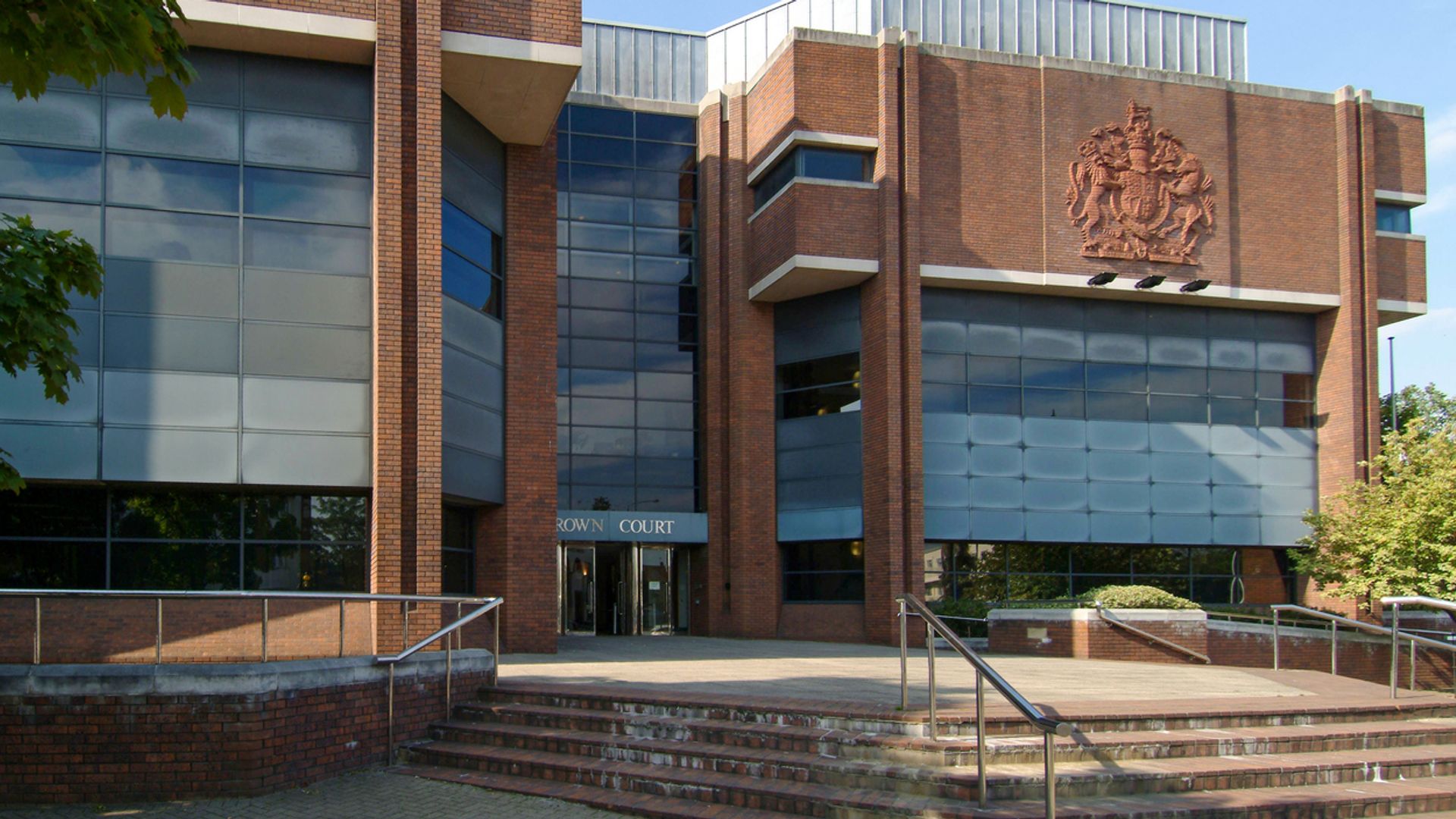
The postponement of a high-profile sentencing hearing for an organized criminal syndicate in a newly reconstructed London court highlights a critical, systemic vulnerability: modern public infrastructure is architected for historical climatic baselines that no longer exist. When an upgraded judicial building fails to regulate internal thermal conditions during an active heatwave, the disruption extends far beyond localized human discomfort. It exposes an operational friction point where structural climate deficits directly degrade institutional capacity, delay the administration of justice, and compound state expenditure.
The institutional impact of climate-induced facility closures can be understood through three distinct operational vectors: state economic friction, physical asset depreciation, and institutional path dependency. Evaluating infrastructure failures through these frameworks reveals that the standard model for public sector civil engineering remains dangerously decoupled from macroeconomic and climatic realities.
The Tri-Partite Model of Public Facility Failure
When a public asset like a crown court experiences an unscheduled shutdown due to thermal limits, it triggers an immediate cascade of operational bottlenecks. This systemic failure operates across three distinct vectors.
+--------------------------------------------------------+
|       THE TRI-PARTITE INFRASTRUCTURE REVENUE &         |
|                 CAPACITY BOTTLE-NECK                   |
+--------------------------------------------------------+
                           |
                           v
 +------------------------------------------------------+
 | 1. FISCAL FRICTION VIA STRANDED LABOR CODES         |
 |    - State-funded backlogs increase hourly           |
 |    - Multi-party scheduling cascades shift outward   |
 +------------------------------------------------------+
                           |
                           v
 +------------------------------------------------------+
 | 2. HVAC & STRUCTURAL SPECIFICATION MISMATCH          |
 |    - Peak load capacities lag ambient temperature shifts|
 |    - Retrofits fail due to architectural insulation  |
 +------------------------------------------------------+
                           |
                           v
 +------------------------------------------------------+
 | 3. DEGRADATION OF INSTITUTIONAL THROUGHPUT            |
 |    - Constitutional rights to timely adjudication fail |
 |    - Custodial overhead escalates per delayed hearing|
 +------------------------------------------------------+
1. Fiscal Friction and Stranded Capital Costs
The abandonment of a judicial hearing does not freeze the operational balance sheet; instead, it crystallizes a significant loss of public capital. A standard criminal trial or complex sentencing hearing requires the synchronized deployment of multi-agency human resources. When a facility shuts down, the hourly burn rate of the following variables becomes unrecoverable:
- Salaried judicial officers and administrative court staff.
- Hourly billing structures for specialized legal counsel (prosecution and defense).
- Publicly funded logistical transport teams responsible for the secure movement of high-risk defendants from custodial facilities.
- Police escort details and specialized security staff allocated to high-profile cases.
Because these contracts and state-funded allocations cannot be dynamically reassigned mid-day, the state absorbs the entirety of this expenditure while yielding zero institutional output. This is a clear case of stranded labor capital.
2. Thermal Saturation and HVAC Specification Gaps
The failure of a newly reconstructed or modernized public facility indicates an underlying engineering oversight: the miscalculation of peak thermal cooling requirements. Infrastructure projects completed over the last decade frequently utilized historical weather averages from the late 20th century to calculate HVAC (Heating, Ventilation, and Air Conditioning) capacity.
When external ambient temperatures breach these localized historical thresholds, HVAC systems face two technical breaking points:
- Refrigerant cycle inefficiency: As the temperature differential between the indoor space and outdoor air expands beyond design specifications, the thermal exchange efficiency of the condenser unit drops exponentially.
- Continuous peak load operations: Systems run at maximum compressor capacity without cycling down, leading to mechanical wear, high failure rates, and localized power grid stress.
This mismatch represents an institutional blind spot where asset refurbishment focuses on aesthetic or superficial digital modernizations while neglecting the underlying thermodynamic tolerances required for extreme weather.
3. Degradation of Institutional Throughput
The judicial system operates as a queue-based processing line with fixed constraints. A disruption at the sentencing stage creates a negative feedback loop that extends backward through the entire legal process. Remand prisoners must be returned to custodial facilities, extending their duration of detention at a documented daily cost to the state.
This delay consumes valuable trial slots further down the line, compounding an existing judicial backlog. The structural capacity of the state to enforce laws is directly bounded by the thermodynamic stability of its regulatory environments.
The Cost Function of Infrastructure Inelasticity
The core problem in public asset management is the reliance on linear cost-benefit models when assessing climate resilience. Traditional public procurement systems evaluate capital expenditure against static risk models. This approach ignores the non-linear relationship between ambient temperature fluctuations and mechanical system failure.
To understand why modern buildings fail during extreme heatwaves, asset managers must measure the marginal failure rate of climate control mechanisms. When ambient temperatures exceed the 95th percentile of historical regional records, the probability of system failure accelerates non-linearly.
System Failure Probability
  ^
  |                                        / [CRITICAL FAILURE ZONE]
  |                                       /  Ambient Temp > HVAC Design
  |                                      /   (e.g., Extreme Heatwave)
  |                                     /
  |                                    /
  |                                   /
  |                                  /
  |---------------------------------/
  |                                /
  |                               /
  |                              /  <-- Linear scaling assumptions used
  |                             /       by legacy procurement models
  |                            /
  |___________________________/____________________________________>
                             Historical Temp Threshold (95th Percentile)
Legacy procurement frameworks treat thermal control as a binary asset feature (either a building has climate control or it does not). In reality, thermal tolerance is highly variable. If a modernized building is insulated to maximize heat retention for cold winter months—a historical priority for northern European architecture—it acts as a thermal trap when localized cooling systems fail. Without sufficient internal volume or advanced variable refrigerant flow systems designed for extreme ambient peaks, the structure quickly becomes unusable under standard occupational health and safety regulations.
Strategic Imperatives for Public Sector Civil Engineering
Addressing this infrastructure gap requires a fundamental shift away from retroactive asset repairs toward proactive, data-driven thermodynamic hardening. Public planning authorities must implement specific structural changes to prevent further operational disruptions.
- Dynamic Climatic Procurement Protocols: Replace static historical weather models with forward-looking climate projections that account for a higher frequency of extreme thermal events. All future public tenders for facility construction or renovation must require HVAC units to maintain operational efficiency at ambient temperatures up to 5°C higher than the local historical maximum.
- Decentralized Redundancy Systems: Integrate auxiliary, passive cooling designs alongside centralized mechanical HVAC networks. This includes using specialized reflective coatings, external automated sunshades, and structural ventilation shafts that leverage natural convection currents rather than relying entirely on localized power grids.
- Dual-Tolerant Mechanical Design: Shift the structural focus of engineering away from single-season optimization. Buildings in temperate climates must be explicitly engineered to handle both extreme low-temperature heating requirements and prolonged high-temperature cooling demands, moving past the historical bias toward insulation over ventilation.
Relying on old infrastructure assumptions creates an operational bottleneck that compromises state functions during predictable weather anomalies. Unless public procurement frameworks mandate a comprehensive overhaul of thermal engineering standards, the closure of vital civic spaces will transition from an isolated operational anomaly into a recurring drain on state capital and administrative efficiency.