The air in the room changes when the loyalty tests begin. It is a subtle shift at first, like the dropping barometric pressure before a summer storm, but the static electricity is real enough to make the hair on your arms stand up. We have seen this play before. It is a cycle of embrace and expulsion that has become the defining rhythm of modern American populism.
Donald Trump sits at the center of a gravity well. For years, the price of admission into his inner orbit has been a specific brand of absolute, unflinching fealty. But the walls of that sanctuary are porous. One day you are a warrior for the cause, a "patriot" held up as the gold standard of the movement. The next, you are a "sleazebag."
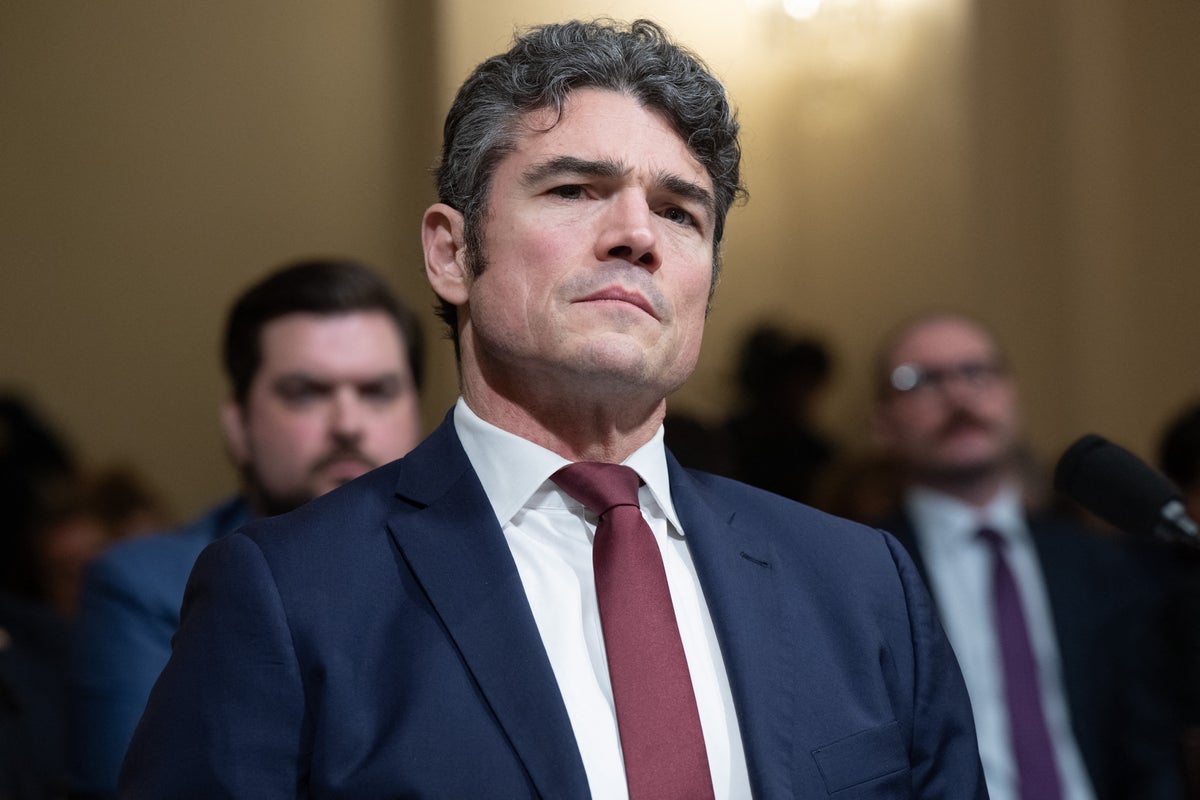
The recent vitriol directed at Joe Kent, a former Green Beret and a man once considered a quintessential MAGA disciple, isn't just another social media outburst. It is a case study in the volatile nature of political identity. It reveals the invisible stakes for those who choose to tie their personal honor to the shifting moods of a single leader.
Joe Kent didn't change his resume overnight. He is still the man who spent decades in the shadows of the Global War on Terror. He still carries the weight of a Gold Star husband, a man whose life was shattered when his wife, Shannon, was killed by an ISIS suicide bomber in Syria. These are the "cold facts" of a human life—the kind of credentials that usually buy you a lifetime of respect in conservative circles. Yet, in the blink of an eye, these merits were rendered irrelevant.
The catalyst was a perceived pivot. Kent, facing the brutal reality of a general election in a swing district, dared to modulate. He suggested that perhaps the movement needed to broaden its appeal. He hinted at the necessity of nuance. In the world of the Crimson Circle, nuance is the first draft of treason.
Think about the psychological toll of that transition. One moment, you are the hand-picked successor to the throne, receiving the digital equivalent of a royal blessing. You are the "greatest." You are "strong." You represent everything the base wants to see in itself. Then, the trapdoor opens. The rhetoric turns. The man you defended on every cable news stage in the country now uses his megaphone to broadcast your "sleazebag" status to millions of followers.
This isn't just politics; it’s a high-stakes emotional divorce played out on a national stage.
The collateral damage extends far beyond Joe Kent. Consider the others who have been cast into the outer darkness: Mike Pence, Bill Barr, even loyalists like Mo Brooks. Each departure follows the same narrative arc. There is a period of intense, almost religious devotion, followed by a single moment of divergence—a refusal to certify an election, a testimony to a grand jury, or a simple suggestion of tactical pragmatism.
The reaction is always radioactive.
This pattern creates a "loyalty trap" that is fundamentally unsustainable for a healthy democracy. When the definition of a "patriot" is tethered entirely to the ego of an individual rather than a set of principles, the ground is never solid. You are building your house on a fault line. The moment the leader’s perception of his own interests shifts, the foundation vanishes.
Kent’s "crime" was the cardinal sin of the new political era: he prioritized the reality of the ballot box over the purity of the brand. He looked at the numbers, the demographics, and the shifting winds of his district, and he tried to navigate. But in the current landscape, there is no such thing as navigation. There is only the march. If you stop to check the map, you are left behind.
The language used in these excommunications is designed to dehumanize. "Sleazebag." "RINO." "Weak." These aren't policy critiques. They are attempts to strip away the personhood of the individual so that the base can discard them without guilt. It doesn’t matter if you bled for the country or if you spent your career defending the very person now attacking you. The slate is wiped clean with every new post.
There is a visceral fear that drives this cycle. It’s the fear of being the next one out. For those still inside the circle, the sight of a Joe Kent being shredded is a warning. It reinforces the need for performative loyalty. You don't just agree; you agree louder than the person next to you. You don't just support; you worship. Because the alternative is the "sleazebag" label, and in the digital age, that label is a permanent scar.
We are watching the erosion of the "Big Tent" philosophy that once defined American political parties. Traditionally, parties were messy, loud coalitions of people who agreed on sixty percent of things and fought over the rest. Now, the tent has been replaced by a spotlight. If you move an inch to the left or right of the beam, you disappear into the dark.
The cost of this constant purging is a narrowing of the mind. When you expel everyone who offers a different tactical opinion, you are left with a room full of echoes. You lose the Joe Kents—men with actual combat experience and skin in the game—and you replace them with those whose only skill is the art of the nod.
Consider what this does to the voter. The person sitting at home in a suburb of Washington state, who respected Kent's service but perhaps felt the rhetoric had gone too far, now sees their candidate being cannibalized by his own side. It creates a sense of profound instability. If the leader doesn't trust his own champions, why should the voter trust the movement?
The human element here is the exhaustion. It is the weariness of a public forced to track the fluctuating "in" and "out" lists of a single man’s favor. It is the tragedy of a veteran whose service is weaponized against him the moment he seeks to lead in a way that isn't perfectly scripted.
We have reached a point where the personal is not just political; the personal is the only thing that matters. Policy, ideology, and the actual governance of the country have become secondary to the maintenance of a personal hierarchy. It is a king-of-the-hill game played with the lives and reputations of people who genuinely thought they were fighting for a cause.
Joe Kent is just the latest ghost in the gallery. He won't be the last. As long as the Crimson Circle demands absolute purity, it will continue to shrink, consuming its own until there is nothing left but the center.
The storm isn't passing. It is just finding new targets. And for those still standing in the light, the most terrifying thought isn't the opposition—it's the realization that the man holding the spotlight can turn it off at any second.