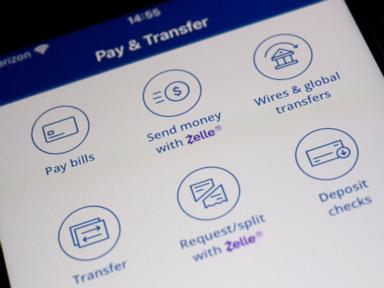
The announcements by Early Warning Services LLC regarding the expansion of Zelle into the Indian market and the introduction of ZelleUSD (ZLUSD) mark a structural shift in cross-border capital velocity. India is the largest global recipient of remittances, capturing over $100 billion annually. Transactions originating from the United States account for roughly one-third of this inbound volume. By inserting a bank-native, domestic network into a cross-border environment, Zelle is attempting to capture market share from traditional multi-tiered correspondent banking structures and independent digital money transfer operators.
The core operational challenge requires analyzing how a localized domestic payment rail can interface with a completely different sovereign network infrastructure while optimizing the cost, speed, and settlement mechanics of inbound capital.
The Three Pillars of Cross Border Payment Friction
To evaluate the feasibility of this expansion, the cross-border payment mechanism must be deconstructed into three operational vectors: clearing efficiency, settlement latency, and foreign exchange (FX) conversion costs.
- Clearing Efficiency: Traditional international wire transfers rely on the SWIFT messaging network, passing through multiple intermediary or correspondent banks. Each node in this chain introduces compliance verification loops, message formatting risks, and transactional fees, causing high rejection rates and administrative costs.
- Settlement Latency: Domestic real-time networks operate on immediate or near-immediate net settlement cycles. Cross-border transfers, however, are restricted by mismatching time zones, operating hours of central bank real-time gross settlement (RTGS) systems, and liquidity maintenance requirements across different jurisdictions.
- Foreign Exchange Conversion Costs: The ultimate cost to the consumer is determined by the interbank mid-market rate spread and fixed processing fees. Independent money transfer operators manage this by holding pre-funded local currency pools in target markets, which introduces significant balance sheet exposure and capital inefficiency.
Zelle's domestic architecture bypasses these three points of friction inside the United States by integrating directly into the core banking applications of its member institutions, using phone numbers or email addresses as tokens mapped to routing and account numbers. Extending this model internationally requires either direct integration with an equivalent foreign rail or the creation of an independent liquidity bridge.
Structural Mismatch: The Zelle Network vs India's UPI Architectural Blueprint
The market entry strategy for India cannot rely on standard software replication because the host market possesses the most deeply integrated digital payment ecosystem globally. The National Payments Corporation of India (NPCI) operates the Unified Payments Interface (UPI), an open-source, interoperable instruction set that enables instant bank-to-bank transfers via virtual payment addresses.
+---------------------------+              +---------------------------+
|    Zelle Network (US)     |              |     UPI Network (India)   |
|  - Closed Consortium      |              |  - Open Interoperable     |
|  - Bank Native Only       |   Bridges?   |  - Decoupled Fintech Apps |
|  - Fixed Core Routing    |<------------>|  - Dynamic Interoperability|
|  - $1.2T Volume (2025)    |              |  - 23B Transactions/Month |
+---------------------------+              +---------------------------+
A comparison of the underlying network topologies reveals a fundamental architectural mismatch:
Access and Interoperability
Zelle operates as a closed-loop consortium owned by seven major domestic financial institutions, acting strictly as an integrated feature within participating bank applications. UPI operates on a decoupled architecture, allowing third-party applications like Google Pay, PhonePe, and Paytm to access the underlying central bank settlement layer. This creates asymmetric competitive dynamics: Zelle relies on institutional custody, whereas UPI allows non-bank fintech platforms to capture user interface layers.
Transaction Scalability
Zelle processed more than $1.2 trillion across its entire ecosystem during the 2025 calendar year. By comparison, the UPI network processes over 23 billion transactions in a single month, supporting a vast ecosystem of roughly 720 participating banks. The sheer operational velocity and micro-transaction density of the Indian market demand horizontal infrastructure scaling that differs fundamentally from the wholesale-backed architecture of the United States banking network.
The integration strategy cannot simply force U.S. account credentials into the Indian domestic ledger. Zelle must act as an originating interface that captures the transaction within a trusted domestic bank app, executes the cross-border transfer through an intermediary mechanism, and terminates the payment instruction via an endpoint that can resolve to an Indian bank account or UPI ID.
The Cost Function of Tokenized Settlement
The introduction of ZelleUSD (ZLUSD), a proprietary U.S. dollar-backed stablecoin, indicates that Early Warning Services aims to solve cross-border settlement issues through asset tokenization rather than conventional correspondent banking lines.
The economic formula governing traditional cross-border remittance costs ($C$) can be modeled as:
$$C = f(F_{\text{fixed}} + V_{\text{spread}} + L_{\text{opp}})$$
Where:
- $F_{\text{fixed}}$ represents fixed intermediary processing fees.
- $V_{\text{spread}}$ represents the foreign exchange premium over the mid-market rate.
- $L_{\text{opp}}$ represents the opportunity cost of capital tied up in pre-funded foreign accounts to ensure immediate payout liquidity.
By utilizing a dollar-backed tokenized ledger on a public or private blockchain network, the settlement mechanism alters this cost function.
First, the tokenization of the dollar eliminates the requirement for multi-day settlement timeframes across varying time zones. A tokenized dollar can be transferred between the originating U.S. bank and the receiving institution instantly, 24 hours a day, 7 days a week. This compresses $L_{\text{opp}}$ to near zero, freeing capital that would otherwise sit idle in nostro/vostro accounts.
Second, the stablecoin provides a predictable value unit that can be converted into local currency (Indian Rupees) at the precise moment of payout. This eliminates overnight market volatility exposure, allowing liquidity providers to offer tighter spreads ($V_{\text{spread}}$) to end consumers.
The first limitation of this model is its dependency on fiat on- and off-ramps. While a dollar-backed token solves the value-transfer problem between financial institutions, the recipient cannot utilize a digital dollar token for daily commerce within India due to strict capital controls and legal tender laws enforced by the Reserve Bank of India (RBI). Therefore, the tokenized asset must be converted into Indian Rupees immediately upon arrival at the domestic clearing gateway.
Compliance Constraints and Policy Redlines
Operating a cross-border payment bridge into India requires navigating a rigid regulatory framework governed by the Foreign Exchange Management Act (FEMA) and the continuous oversight of the RBI. The central bank maintains strict rules regarding capital account convertibility, anti-money laundering (AML) tracking, and data localization.
The second limitation is the explicit regulatory stance regarding digital assets. The RBI has consistently maintained a conservative outlook toward private stablecoins and crypto-assets, preferring state-controlled solutions such as the Central Bank Digital Currency (CBDC-R/W) or direct bilateral real-time linkups between national switches (such as the existing UPI-PayNow link between India and Singapore).
A private stablecoin infrastructure operated by a consortium of Western commercial banks will face intense scrutiny regarding:
- Sovereignty of Capital Controls: The RBI closely monitors every dollar entering the country to maintain exchange rate stability and manage foreign currency reserves. Zelle must prove that its tokenized infrastructure does not create unmonitored capital pathways or bypass reporting frameworks.
- Data Residency Compliance: Indian statutory mandates require all payment data, logs, and end-to-end transactional information to be stored locally within Indian borders. Zelle's architecture must isolate data processing paths to comply with these rules without breaking the continuity of the parent ledger in the United States.
- Fraud and Liability Allocation: Zelle has historically faced legal scrutiny within the United States from regulatory bodies like the Consumer Financial Protection Bureau (CFPB) regarding unauthorized user transfers and peer-to-peer scams. Transferring funds across sovereign jurisdictions introduces complex liability issues. If an international transaction is initiated via social engineering or unauthorized account access, determining whether the originating U.S. institution or the terminating Indian bank absorbs the financial liability remains an unresolved regulatory dispute.
Strategic Execution Roadmap
To successfully capture a meaningful share of the U.S.-to-India remittance market, Early Warning Services cannot rely purely on brand recognition or its domestic scale. The organization must deploy a clear operational sequence:
- API Integration with National Clearing Infrastructure: Zelle should establish a direct API integration with NPCI International Payments Limited (NIPL), the international arm of UPI. This connection will allow an American consumer to enter a recipient's UPI ID directly within their existing U.S. banking application, avoiding the need for complex SWIFT codes or international bank account numbers (IBANs).
- Institutional On-Ramp and Liquidity Provisioning: The seven owner-banks of Zelle must act as wholesale liquidity anchors. Instead of relying on retail crypto-exchanges to convert ZLUSD to Rupees, the consortium must execute high-volume, automated FX bidding blocks directly with institutional clearing desks in Mumbai, securing wholesale conversion pricing for retail end users.
- Hybrid Settlement Matrix: For immediate consumer payouts, the system must utilize a hybrid model. The consumer receives an instant credit in Indian Rupees via the UPI network, backed by a temporary liquidity guarantee from a partner bank in India. Simultaneously, the underlying interbank balance is settled asynchronously between the U.S. and Indian financial institutions using the ZLUSD tokenized rail within minutes, decoupled from standard banking hours.
By executing this infrastructure play, Zelle can re-engineer the economics of international money transfers. Rather than operating as an independent application competing for consumer downloads against established fintech platforms, it can cement its position as the underlying cross-border routing layer embedded inside the institutional banking apps that consumers already trust.