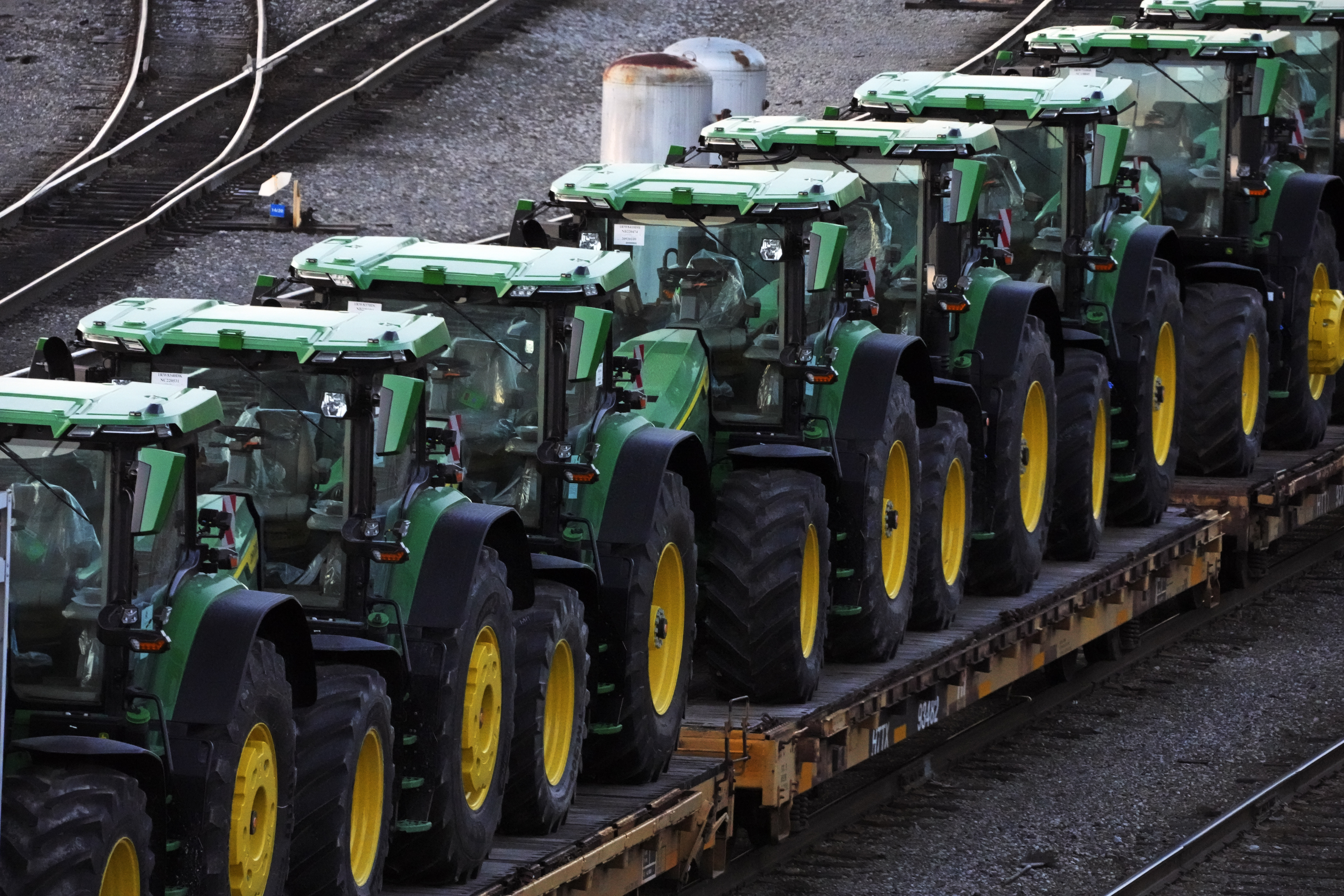
Ninety-nine million dollars sounds like a victory for the little guy. It isn't. It’s a rounding error for John Deere and a tactical retreat that ensures the proprietary stranglehold on American soil remains tighter than a seized piston. If you think this settlement "fixes" the Right to Repair or levels the playing field for the family farm, you’ve been sold a bill of goods. This isn’t a win for farmers; it’s a ransom payment that lets the kidnapper keep the house.
The mainstream narrative is obsessed with the payout. They treat the $99 million fund as a massive penalty. It’s actually a cheap license fee to maintain a closed ecosystem. In the world of high-stakes litigation, $99 million to protect a multi-billion dollar software monopoly is the deal of the century.
The Software Ruse and the Death of Ownership
We need to stop talking about tractors as pieces of iron. They are rolling data centers. When you buy a modern 8R series tractor, you aren’t buying a machine. You are licensing a permission slip to operate Deere’s proprietary code. The settlement addresses the symptoms—the cost of repairs and the wait times—while ignoring the terminal disease: the erosion of private property rights.
The "lazy consensus" argues that farmers just want to fix their own stuff. No. Farmers want to own what they paid half a million dollars for.
Under the current tech architecture, Deere uses "Parts Authorization." This is a digital handshake. Even if you physically bolt a new sensor onto your machine, the tractor’s Central Processing Unit (CPU) will reject it until a Deere technician plugs in a proprietary laptop to "introduce" the new part to the motherbrain. The settlement doesn't kill the handshake; it just promises to make the handshake slightly less expensive for a few years.
The Myth of the Independent Mechanic
The industry likes to pretend that by releasing some manuals and diagnostic tools, they’ve solved the problem. I’ve watched independent shops try to navigate these "concessions." It’s a nightmare. Deere’s Customer Service ADVISOR tool is a neutered version of what the dealers use.
Imagine trying to perform heart surgery, but the hospital only gives you a basic anatomy textbook and a butter knife, while the resident surgeons get laser-guided robots and real-time telemetry. That is the "transparency" this settlement provides.
- Deere Advisor: Limited access to clearing codes and viewing basic parameters.
- Service ADVISOR (Dealer Level): Deep-level ECU flashing, payload calibrations, and predictive analytics.
The gap between these two is where the profit lives. By settling, Deere avoids a court ruling that might have forced them to open the "Dealer Level" gates. They traded a small stack of cash for a permanent technological moat.
Data Harvesting: The Real Gold Mine
The $99 million distraction keeps eyes off the real prize: Agronomic Data. Every time a Deere machine crosses a field, it collects high-fidelity data on soil moisture, yield density, and seed performance.
This data is the new oil. By controlling the repair ecosystem, Deere ensures that the hardware remains tethered to their cloud—John Deere Operations Center. When a farmer is forced into the proprietary repair loop, they remain locked into the data loop.
If a farmer takes their tractor to a truly "rogue" independent mechanic who uses cracked software (which exists and is thriving in the shadows), they risk losing their connectivity and their data history. The settlement reinforces this "walled garden." You stay in the garden, you get the $99 million crumbs. You leave, and you’re a digital pariah.
The Economic Illiteracy of the Settlement Fund
Let’s do the math that the newsrooms skipped. There are roughly 2 million farms in the United States. While not all use Deere, the class action covers a massive swath of the market over several years. After the lawyers take their 30-40% cut (the only real winners here), and the administrative costs are drained, the average payout per farmer will barely cover a set of tires or a single complex hydraulic repair.
It’s a placebo. It’s a "shut up" check.
The real cost of the repair monopoly isn't just the invoice from the dealer. It’s the Opportunity Cost of Downtime. When your combine goes down during a 48-hour harvest window before a storm hits, a $500 rebate from a settlement fund three years later doesn't save your crop.
Why You’re Asking the Wrong Question
People ask: "Will this make repairs cheaper?"
The better question: "Why is repairability being engineered out of existence?"
The answer is Planned Obsolescence via Software. In the 1970s, a 4440 tractor was a 40-year investment. Today’s machines are built with a shelf life defined by their processors, not their pistons. By the time this settlement fund is depleted, the machines it covers will be technologically irrelevant, and the new generation of tractors will have even more layers of encryption that this legal agreement doesn't touch.
The "Nuance" Everyone Missed: The Dealer Network Revolt
Deere isn't just fighting farmers; they are managing a delicate relationship with their dealers. Dealers make their real margins on service, not the initial sale of the iron. If Deere truly opened the software to everyone, their dealer network—the backbone of their distribution—would collapse.
This settlement is a masterclass in corporate balancing. Deere gave the farmers just enough money to go away, gave the public a "Right to Repair" headline to satisfy the regulators, and kept the actual keys to the kingdom safely tucked away in their dealer's pockets.
The Dangerous Precedent of "Software as a Shield"
If we accept this settlement as a "fix," we are validating the idea that Intellectual Property (IP) law trumps physical ownership. This goes beyond farming. It’s your Tesla, your iPhone, and your smart fridge.
- The Argument: "We have to lock the software to protect the environment and safety." (Deere’s favorite talking point).
- The Reality: It’s about controlling the secondary market. If you can’t fix it, you can’t sell it easily to anyone who isn't near a certified dealer. This destroys the resale value of the machine and forces the farmer back into the financing cycle for a new model.
The Brutal Truth for the American Farmer
Stop waiting for the courts to save you. They don't understand the difference between a torque wrench and a BIOS flash. This settlement is a PR win for a company that realized it was better to pay a fine than to lose its monopoly.
If you want real Right to Repair, you don't want a settlement fund. You want the Source Code. You want the ability to bypass the digital handshake. You want the right to install a third-party Operating System on your own hardware.
Until then, you aren't a farm owner. You’re a high-tech sharecropper. You work the land, but John Deere owns the tools, the data, and the software that decides if you’re allowed to start your engine tomorrow morning.
Take the settlement money if you’re eligible. Use it to buy the old, "dumb" iron that doesn't need a permission slip from Moline, Illinois to run. Because in the battle between the 10mm socket and the encrypted cloud, the cloud just won another round.
Stop celebrating. Get back to work. The "fix" was in before the ink was even dry.