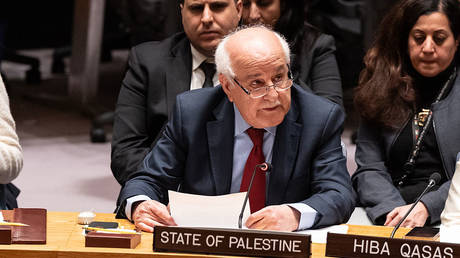
The media is currently obsessing over reports that Washington issued backroom ultimatums to the Palestinian UN envoy, threatening a funding freeze or diplomatic isolation if certain resolutions moved forward. Pundits are scrambling to frame this as a sudden, dramatic escalation in geopolitical hardball.
They are missing the point entirely. For an alternative view, see: this related article.
This isn't a new crisis. It isn't a shift in foreign policy. It is standard operating procedure wrapped in a headline designed to spark outrage. The lazy consensus assumes that a threat of a diplomatic freeze is a sign of supreme American leverage. In reality, it is a glaring admission of structural weakness within the United Nations security framework.
When you strip away the sensationalism, you find a predictable cycle of diplomatic theater that achieves exactly what it was designed to do: maintain the status quo while pretending something changed. Related analysis on this matter has been provided by TIME.
The Myth of the Sudden Threat
International relations reporting frequently suffers from collective amnesia. The idea that Washington using its financial or diplomatic weight to influence UN personnel or delegations is a novel development ignores decades of institutional history.
Let us look at the mechanics of how influence actually operates inside the UN headquarters in New York. The United States remains the largest single financial contributor to the organization, accounting for roughly 22 percent of the regular budget. This financial reality does not buy absolute control, but it does buy a specific type of veto power that extends far beyond the official voting buttons in the Security Council.
When a superpower signals that a foreign envoy’s position or access is in jeopardy, it is rarely an isolated act of aggression. It is a calculated leak. The public posturing serves a dual purpose: it reassures domestic political constituencies that the administration is taking a hard line, and it gives the target of the threat a理由 to pivot without appearing to capitulate entirely.
Imagine a scenario where diplomatic negotiations were completely transparent. They would collapse instantly. The public theater of "threats and ultimatums" provides the necessary cover for the messy, transactional business of international diplomacy to occur behind closed doors.
Dismantling the Leverage Fallacy
The mainstream narrative asks: How will this threat impact the Palestinian bid for recognition? This is entirely the wrong question. The correct question is: Why is Washington forced to use blunt, public threats when it already possesses the ultimate diplomatic shield?
The United States holds a permanent seat on the UN Security Council. It has used its veto power dozens of times over the last few decades to block resolutions critical of its allies or contrary to its strategic interests. If your structural veto is absolute, resorting to intimidation tactics against individual envoys or delegations isn't a display of strength—it is a sign that the structural veto is becoming too costly to use repeatedly on the global stage.
Every time a permanent member exercises a veto against the overwhelming majority of the General Assembly, it burns diplomatic capital. It erodes the perception of legitimacy that the rules-based international order relies upon. Therefore, the goal is always to prevent the vote from happening in the first place. The threat directed at an envoy is a preventive measure designed to avoid the reputational tax of a public veto.
- The Structural Veto: Absolute, institutionalized, but costly to deploy frequently.
- The Diplomatic Leverage: Fluid, psychological, and dependent on the target's willingness to blink.
When the media frames these backroom warnings as a sign of absolute dominance, they mistake the desperation to avoid a public vote for a position of uncontested power.
The Illusion of UN Independence
There is a persistent, naive view that the United Nations operates as an independent, moral arbiter of global affairs, and that state interference is a corruption of its pure mission.
The UN was never designed to be an independent global government. It was designed in 1945 to reflect the global power realities of the post-World War II era. The integration of permanent seats with veto power ensured that the organization could never take decisive action against the vital interests of the world's major military powers.
To complain that a major power is using its weight to pressure an envoy is to complain that the ocean is salty. It is the defining feature of the system, not a bug.
I have watched diplomatic missions spend millions of dollars and thousands of hours drafting resolutions that they knew, with absolute certainty, would never see the light of day. Why do they do it? For the exact same reason the opposing side threatens them: visibility. The resolution is the weapon; the threat is the shield. Both sides are playing their assigned roles in a script that was written eighty years ago.
The Real Cost of Diplomatic Overreach
While the contrarian reality is that these threats are a standard tool of statecraft, they are not without consequences. The downside of relying heavily on bilateral pressure to suppress multilateral initiatives is the gradual degradation of the target's domestic credibility.
If an envoy capitulates too visibly to external pressure, they lose their mandate at home. This creates a dangerous paradox for the pressuring state. If you break the envoy, you destroy the very pipeline you need to negotiate with.
True diplomatic mastery isn't about forcing total submission; it is about creating a golden bridge over which your opponent can retreat with their dignity intact. The public leaking of ultimatums burns that bridge, forcing both sides into entrenched positions where compromise becomes a political liability.
The current coverage treats the news as a chess move. It isn't chess. It is professional wrestling. The anger is real, the stakes are high, but the moves are heavily choreographed to ensure that neither side accidentally destroys the ring they both need to perform in. Stop looking at the headline-grabbing threat and start looking at the vote tally that never happened. That is where the real story hides.