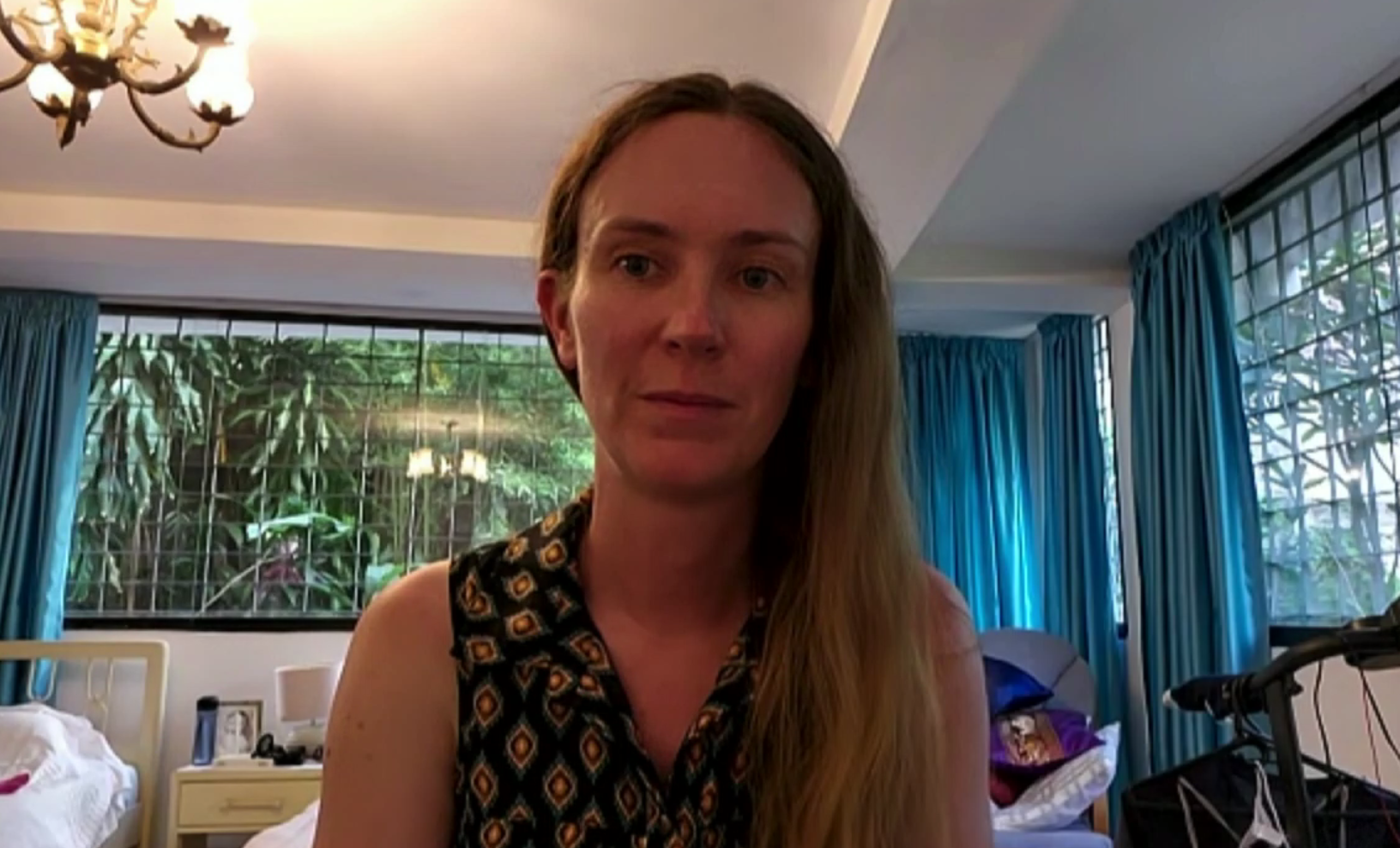
Western media is hopelessly addicted to the tragedy safari.
Every time a developing country suffers a natural disaster or an economic shock, newsrooms default to a tired, lazy formula: find a Western expatriate—usually a teacher, an NGO worker, or a trailing spouse—and treat their panic as a definitive structural analysis of the crisis.
We saw this exact script play out when coverage emerged titled "Canadian teacher in Venezuela describes chaos as earthquakes’ death toll climbs." The narrative was instantly predictable. It painted a picture of absolute, unmitigated collapse, viewed through the eyes of someone whose primary shock was discovering that infrastructure in a developing nation under severe economic sanctions does not mirror downtown Toronto.
This is bad journalism. Worse, it is terrible economic and geopolitical analysis.
When you filter a complex, multi-layered crisis through the lens of an expatriate who is fundamentally insulated from local realities yet emotionally overwhelmed by them, you don't get the truth. You get a distorted, sensationalized caricature that misleads investors, confuses policymakers, and completely misunderstands how communities actually navigate structural shocks.
Let's dismantle the lazy consensus of the expatriate panic narrative and examine how crisis logistics, institutional memory, and local resilience actually operate when the ground moves.
The Expat Gaze: A Flawed Metric for Structural Chaos
Having spent fifteen years analyzing risk management and operational continuity across Latin America and Southeast Asia, I have seen organizations waste millions of dollars relying on what I call "first-world panic metrics."
An expat teacher or mid-level corporate transplant lives in a highly specific bubble. They enjoy asymmetric economic power relative to the local population, yet they possess almost zero institutional memory of the region. To an outsider, a sudden power outage, a three-day supply chain bottleneck, or a breakdown in local communications looks like the end of civilization. To locals, it is Tuesday.
When an earthquake hits a volatile economy like Venezuela's, the immediate Western media reaction is to scream "chaos." But chaos is a subjective, unmeasurable term.
To evaluate a crisis accurately, we must look at variables like the Velocity of Recovery and Informal Asset Mobilization. Local populations in structurally strained environments do not wait for a centralized, top-down government savior that they already know is underfunded or bureaucratic. They operate via decentralized mutual-aid networks and parallel economic systems that standard journalistic narratives completely ignore because they do not fit neatly into a headline about despair.
The Mechanics of Crisis Response in Strained Economies
To understand why the competitor’s narrative is wrong, we have to look at how infrastructure actually functions during an emergency in a country like Venezuela. Mainstream reports assume that a lack of shiny, new emergency vehicles equals a total absence of a response framework. That is a Western bias.
In reality, regions exposed to prolonged economic isolation develop highly adaptable, informal logistical frameworks. Consider how supply chains adapt when central infrastructure fails:
- Decentralized Fuel Routing: While official state channels may freeze up due to bureaucratic paralysis, informal regional cartels and local syndicates routinely reroute fuel supplies within hours to keep critical transport corridors open.
- The Parallel Medical Network: Foreign observers look at empty state hospital shelves and declare a total medical vacuum. They miss the massive, grey-market network of private pharmacies, international contraband medical supplies, and community-managed triage centers that step in to absorb the shock.
- Hyper-Local Communication Protocols: When cellular networks drop, local populations rarely succumb to total panic. They revert to hyper-local radio frequencies, word-of-mouth couriers, and pre-arranged neighborhood assembly points that have been tested through years of political and civil unrest.
Imagine a scenario where a corporate risk manager reads the standard expat-driven headline and completely pulls out of a region, assuming all operations are dead. Meanwhile, a competitor who understands the underlying, informal mechanics of the local market stays put, leverages existing parallel networks, and maintains market dominance. The first manager acted on emotion; the second acted on structural literacy.
Why People Ask the Wrong Questions About Global Crises
If you look at the queries dominating public forums and search engines during a foreign humanitarian event, the systemic misunderstanding becomes even more obvious. People are asking fundamentally flawed questions because they have been conditioned by shallow reporting.
"Why don't international aid organizations just take over the logistics?"
This question assumes that international NGOs possess superior logistical capabilities compared to domestic actors. They do not. The Red Cross or the UN cannot simply drop a logistical web into a sovereign nation experiencing a crisis without relying entirely on local fixing networks. When Western media centers the narrative on foreign teachers or international workers, it fuels the illusion that salvation must come from the outside, ignoring the reality that foreign aid frequently stalls at the border due to customs bottlenecks that only local actors know how to bypass.
"Is the death toll climbing because of government incompetence?"
While institutional corruption and decay certainly degrade safety standards and building codes, attributing the immediate aftermath of a natural disaster solely to state failure is an oversimplification. In high-strain environments, the scale of a disaster is often dictated by historical geographic density and informal housing expansion (like the barrios of Caracas), which operate entirely outside the control of whatever regime happens to be in power at that moment. Blaming a specific political entity for the immediate logistical mess misses the deeper structural reality of decades-old urbanization patterns.
The Brutal Truth About Volatile Markets
Let's be completely transparent: there is a distinct downside to rejecting the mainstream panic narrative. If you look at these situations purely through the lens of cold, structural analysis, you run the risk of sounding indifferent to real human suffering. People are dying, infrastructure is broken, and the pain is genuine.
But confusing empathy with analysis is a dangerous error.
If you are an executive managing global supply chains, an investor allocating capital, or a policy analyst trying to stabilize a region, relying on the emotional dispatches of a terrified expatriate will cause you to make wrong decisions every single time.
The status quo media wants you to believe that developing nations are fragile glass ornaments that shatter permanently at the first sign of a tremor. The reality is far more complex. These environments are often incredibly resilient precisely because they are fragile. Their institutions are weak, which means their populations have spent decades learning how to survive without them.
Stop reading crisis dispatches written by people who are shocked that the electricity went out. Look at the grey market. Look at the informal logistics. Look at the velocity of the local recovery, not the volume of the expat's complaints. That is where the real story lives.