The Boardroom Delusion
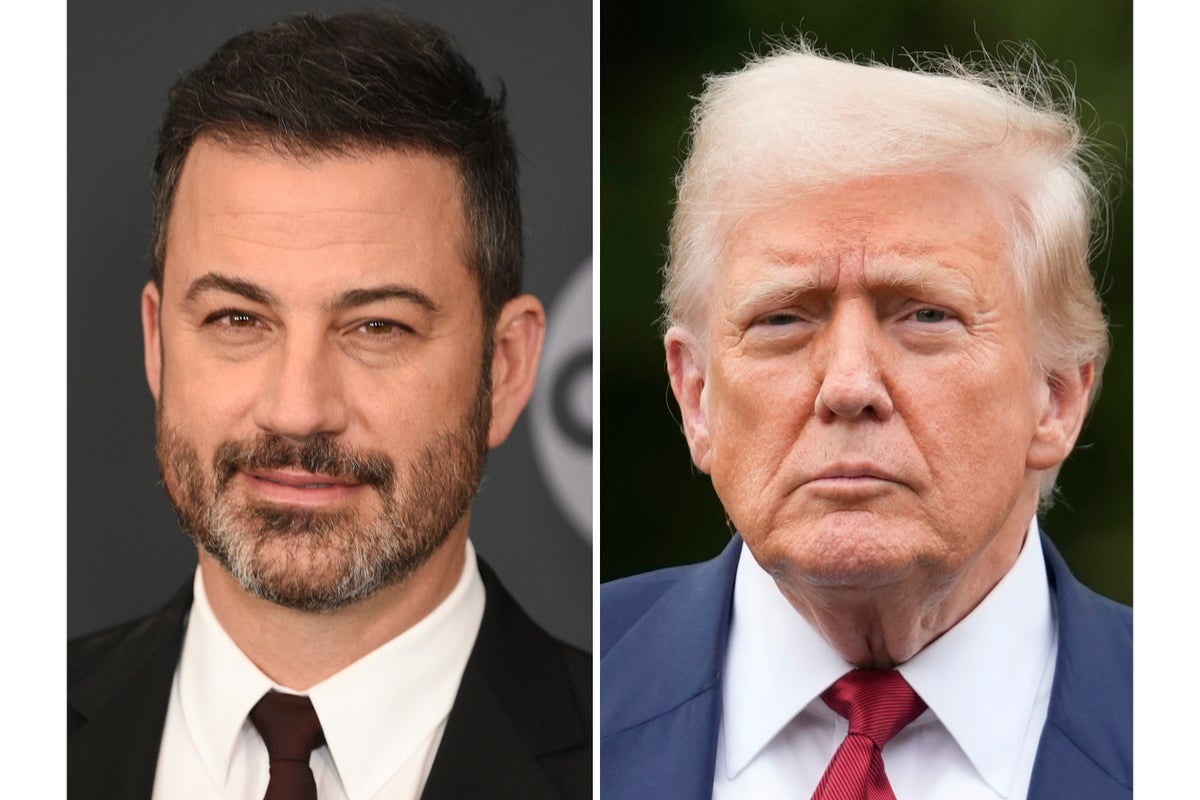
Disney’s leadership is betting the farm on a fundamental misunderstanding of the modern media environment. Mark Parker and the board seem to think their next CEO just needs to be a savvy diplomat who can play nice with both Jimmy Kimmel and Donald Trump.
They are wrong. For a closer look into similar topics, we suggest: this related article.
The idea that "rising to the occasion" of a late-night talk show spat is a core competency for a Fortune 50 CEO is laughable. It’s a distraction. While the board pat themselves on the back for managing "talent relations," the underlying architecture of the Walt Disney Company is cracking under the weight of legacy debt and a dying linear television model.
The competitor narrative suggests that the next leader needs to be a shield. They want a CEO who can absorb political blows so the stock price stays steady. In reality, Disney doesn't need a shield. It needs a sledgehammer. To get more information on this topic, in-depth coverage is available on MarketWatch.
The Kimmel Trump Spat Is A Feature Not A Bug
Let’s look at the "problem" the Disney chair is so worried about. Jimmy Kimmel mocks Donald Trump. Donald Trump fires back on social media. The media cycle churns. The board winces.
From a business perspective, this isn't a crisis. It’s free marketing.
The mistake Disney makes—and has made for a decade—is trying to occupy the "neutral center" in a world that has been stripped of its middle ground. By framing the CEO’s job as "handling" these spats, the board signals that they are still playing by the rules of 1995. They want to please everyone.
Newsflash: In 2026, if you aren't annoying someone, you aren't relevant.
The obsession with "brand safety" has turned Disney into a beige version of its former self. When the board looks for a CEO who can navigate these waters, they aren't looking for a visionary. They are looking for a PR manager with a bigger paycheck.
The Fallacy of the Diplomat CEO
Bob Iger was the ultimate diplomat. He collected brands like Thanos collected Infinity Stones: Pixar, Marvel, Lucasfilm, Fox. He was the "talent-friendly" executive who could talk any creative off a ledge.
But look where that diplomacy got Disney.
The company is now a bloated conglomerate of mismatched assets. They have a streaming service (Disney+) that burned billions to acquire subscribers who churn the moment a season of The Mandalorian ends. They have a linear TV business (ABC, ESPN) that is a melting ice cube. And they have a theme park division that is being milked to death to subsidize the failures of the streaming wing.
If the next CEO "rises to the occasion" by being a great diplomat, they will simply manage the decline more politely.
The board needs to stop looking for a peacekeeper and start looking for a liquidator. A "contrarian" CEO would do the unthinkable:
- Spin off ESPN immediately. Stop trying to make the transition to direct-to-consumer work while the cable bundle dies.
- Gut the content spend. Disney’s "Quantity over Quality" approach has diluted the value of Marvel and Star Wars to the point of exhaustion.
- Ignore the Twitter wars. A CEO's time is worth $50,000 an hour. Spending even ten minutes worrying about what a politician says about a late-night host is a fiduciary failure.
The Data Disney Ignores
The "lazy consensus" in Hollywood is that content is king. It isn't. Distribution and Cost-Per-Acquisition (CPA) are the real kings.
Disney’s CPA for Disney+ is astronomical compared to the lifetime value (LTV) of a customer who pays $10 a month and cancels three times a year. No amount of "handling Kimmel" fixes the math of a broken business model.
Imagine a scenario where the new CEO ignores every political phone call and instead focuses entirely on the unit economics of the parks. The parks are the only part of Disney with a true "moat." You can’t download a ride on Space Mountain. You can’t pirate a hug from Mickey Mouse.
Yet, the current leadership treats the parks like an ATM to fund mediocre streaming shows that nobody remembers two weeks later. This is a strategic catastrophe.
Stop Asking "Who Can Lead Disney?"
The question "Who can handle the pressure?" is the wrong question. It assumes the current structure of Disney is worth saving.
The right question is: "What parts of Disney are worth keeping?"
People also ask if the next CEO will be internal or external. It doesn't matter. If an internal candidate like Dana Walden or Josh D'Amaro takes over, they are already institutionalized. They are part of the culture that thinks a Trump-Kimmel tweet-storm is a "top five" priority. If an external candidate comes in, they will likely be a "safe" pick from another Fortune 50 company who will spend eighteen months "learning the culture" while the ship continues to take on water.
True leadership at Disney would look like a radical divestiture.
The Death of the Generalist CEO
We are seeing the end of the era of the "Celebrity CEO" who can do it all. The Disney chair wants a statesman. The market wants a specialist.
Disney is currently three different companies masquerading as one:
- A technology/streaming company.
- A legacy broadcast/advertising firm.
- A hospitality/real estate powerhouse.
Trying to find one human being who can "rise to the occasion" of managing all three—while also playing referee between the Left and the Right—is a fool's errand. It’s a recipe for burnout and mediocrity.
I’ve watched companies try to "brand-manage" their way out of structural irrelevance before. It never works. You can’t fix a hole in the hull by painting the deck a prettier color.
The "Kimmel vs. Trump" drama is the paint. The business model is the hole.
The Uncomfortable Truth
The Disney board is scared. They are scared of the activist investors. They are scared of the fans. They are scared of the politicians.
Because they are scared, they are looking for a "safe" leader who looks the part. They want someone who can stand on a stage at D23 and look like they’ve got it all under control.
But "under control" is the opposite of what Disney needs. It needs a chaotic reorganization. It needs someone willing to kill the "Disney Way" to save the Disney assets.
The next CEO shouldn't rise to the occasion of a political spat. They should ignore it entirely, fire half the middle management, and sell off the parts of the company that are currently dragging the brand into the dirt.
Anything else is just rearranging the deck chairs on the Titanic and calling it "strategic alignment."
Stop looking for a hero to save the brand. Start looking for an architect to rebuild the business.
The magic isn't in the diplomacy. It's in the margins. And right now, the margins are disappearing while the board worries about a monologue.


