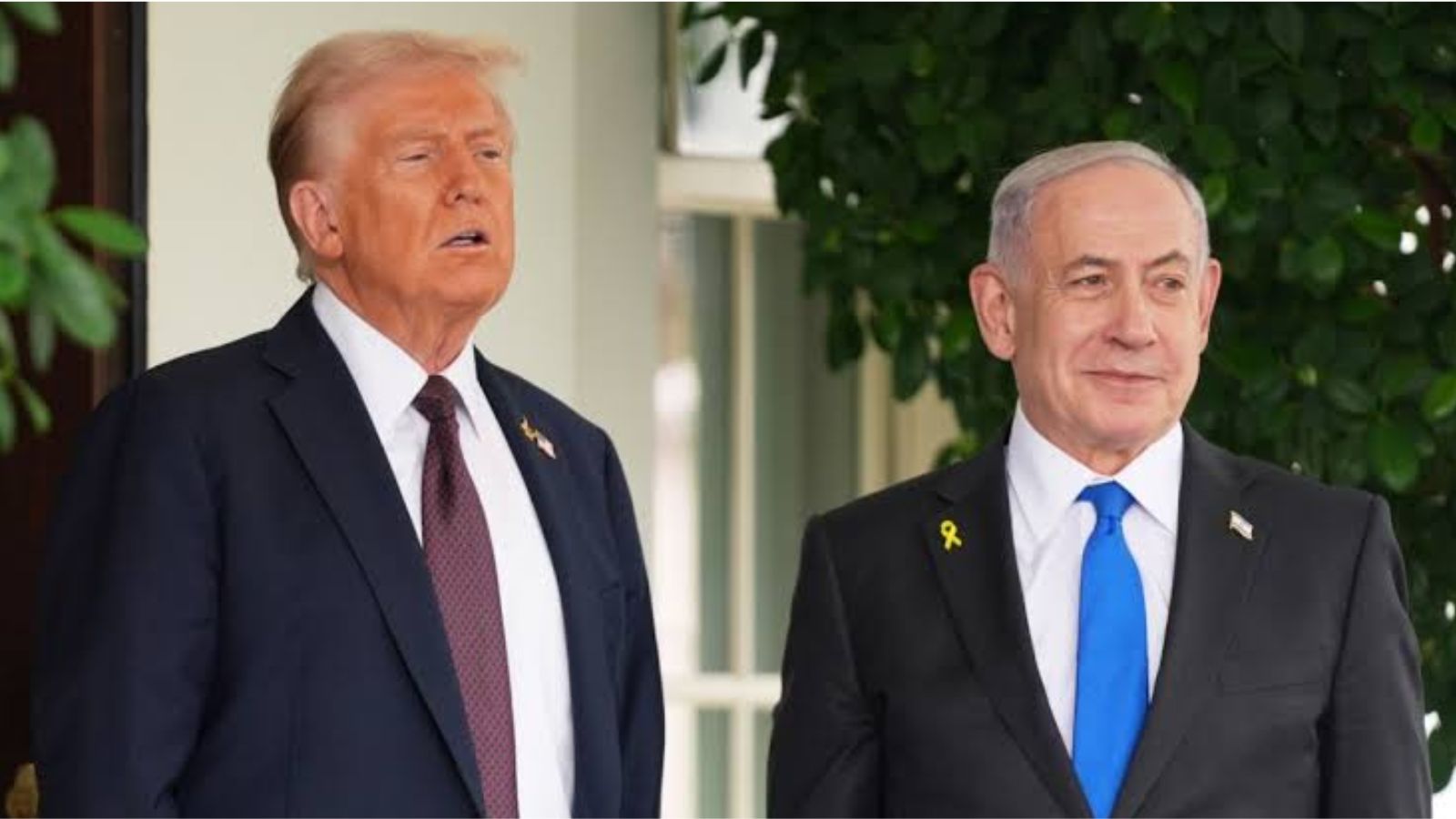
The political press loves a simple script. When Donald Trump boasts that Benjamin Netanyahu wants a meeting because "he knows who the boss is," the media dutifully prints the headline. They paint a picture of a dominant American alpha commanding a desperate foreign supplicant. It fits the established narrative of Trump the dealmaker and Netanyahu the embattled survivor.
It is also completely wrong.
Believing that Netanyahu is coming to Mar-a-Lago or the White House as a submissive junior partner ignores thirty years of geopolitical reality. I have watched Washington analysts misread Middle Eastern power dynamics for two decades, consistently making the same error. They confuse loud rhetoric with actual leverage.
The reality is far more cynical. Netanyahu is not visiting to beg for permission. He is visiting to manage an asset. In the intricate dance of US-Israel relations, the tail does not just wag the dog; the tail frequently directs the dog where to walk.
The Illusion of the Alpha
Mainstream coverage treats foreign policy like a reality television show. They focus on body language, offhand comments, and superficial power plays. When a former president claims dominance, commentators nod along, assuming the superpower always dictates terms to the client state.
This view ignores the fundamental mechanics of political survival. Netanyahu is the longest-serving prime minister in Israeli history for a reason. He does not survive by being subservient to American presidents. He survives by outlasting them. He outlasted Bill Clinton. He managed George W. Bush. He openly warred with and thwarted Barack Obama. He navigated Trump’s first term, and he managed Joe Biden.
When Trump declares himself the boss, Netanyahu does not get offended. He smiles. He knows that feeding an American politician’s ego is the cheapest currency available to secure concrete strategic commitments.
Consider the actual balance sheet of Trump's first term. Who truly benefited from the relationship?
- The United States moved its embassy to Jerusalem.
- The United States recognized Israeli sovereignty over the Golan Heights.
- The United States pulled out of the Iran nuclear deal (JCPOA).
- The United States brokered the Abraham Accords without requiring major concessions on Palestinian statehood.
Every single one of these actions was at the top of Netanyahu’s lifelong political wish list. Trump delivered them all. The media framed these moves as American initiatives, but they were the culmination of decades of Israeli lobbying. Trump got the applause and the headlines; Netanyahu got the map changed.
The Domestic Leverage Machine
To understand why the "boss" narrative fails, you must understand that Israel policy is not foreign policy. It is domestic policy.
An American president cannot simply dictate terms to an Israeli prime minister because the Israeli prime minister possesses immense leverage within American domestic politics. Netanyahu understands the typography of Congress, the donor networks, and the electoral map better than most governors.
The traditional view assumes that US aid creates total dependency. The United States provides billions in military assistance, so Israel must obey. This is a basic misunderstanding of how aid works. Once military aid becomes hardcoded into the federal budget, it ceases to be a tool for leverage and becomes a hostage.
Try threatening to cut off that aid. The pushback does not come from Tel Aviv; it comes from Capitol Hill. It comes from defense contractors in Ohio, Texas, and Pennsylvania who manufacture the components funded by that aid. It comes from a bipartisan coalition of lawmakers who view any daylight between the two nations as an electoral death sentence.
Netanyahu understands that Trump’s political base—specifically evangelical Christians and high-dollar donors—demands unconditional support for Israel. If Trump were to genuinely squeeze Netanyahu, he would risk alienating the very people who anchor his coalition. Netanyahu does not need to fight Trump directly. He just needs to remind Trump’s base what is at stake.
The Myth of the Desperate Supplicant
The common consensus insists Netanyahu is desperate for this meeting next week to salvage his domestic standing. His poll numbers at home have been volatile, his coalition is fragile, and the ongoing security crises have drained his political capital. The narrative says he needs a photo op with Trump to prove he can still manage the Americans.
This analysis misinterprets Israeli domestic dynamics. Netanyahu’s core political brand is not that he is a friend to American presidents. His brand is that he is the only Israeli leader strong enough to stand up to them when necessary, and clever enough to manipulate them when required.
When Netanyahu flies to the United States, he is not looking for a blessing. He is establishing a hedge. By meeting with Trump, he signals to the current administration that their time is limited and that he has an alternative path forward. By engaging with the Republican frontrunner, he forces the Democratic establishment to moderate their criticism, lest they push him entirely into the opposition's camp.
It is a classic display of playing both sides of the aisle to maximize autonomy. If Netanyahu were truly a subordinate waiting for orders, he would stay home and wait for the election results. Instead, he inserts himself directly into the American political calendar, forcing both factions to compete for the mantle of being the most pro-Israel.
Dismantling the People Also Ask Premise
Look at the standard questions generated around this event. The public asks variations of the same flawed premise.
Does Trump’s dominance threaten Israeli autonomy?
The question itself is backward. Israeli autonomy is threatened far more by domestic political paralysis and regional security threats than by anything muttered at a campaign rally. Netanyahu has spent his entire career demonstrating that he can ignore American pressure whenever it conflicts with his core security or political survival goals. He built settlements despite Obama's objections; he prosecuted wars despite Biden's warnings. He will manage Trump's rhetoric just as easily.
Will a meeting change the course of regional conflict?
Meetings do not change strategy; interests do. The underlying drivers of conflict in the Middle East—the regional cold war with Iran, the status of Gaza, the northern border tensions—remain unchanged regardless of who sits across the table at Mar-a-Lago. A meeting provides theatre, reassurance, and media fodder. The actual military and intelligence coordination moves on a completely separate track, handled by professionals who indifferent to who claims to be the boss.
The Operational Risk of Believing the Hype
There is a genuine danger when Washington policymakers and the public believe their own press releases. If an administration genuinely operates under the assumption that they hold all the cards, they make critical strategic errors.
They assume that a stern phone call or a public scolding will force a policy shift in Jerusalem. It never does. Instead, it triggers a predictable counter-reaction. Netanyahu uses the public pressure to rally his right-wing base against "foreign interference," strengthening his domestic position rather than weakening it.
True strategy requires recognizing the limitations of your own influence. The United States is an indispensable ally to Israel, but that status does not grant absolute authority. Israel is a sovereign nation with its own existential calculations, its own domestic pressures, and its own deep-seated influence networks within the American political system.
The Theater of Power
When the meeting occurs next week, the cameras will capture the handshakes. Trump will make grand statements about his unique ability to solve complex geopolitical riddles. Netanyahu will nod respectfully, praise American leadership, and speak in broad terms about shared values and mutual threats.
The commentators will dissect every word, looking for signs of friction or submission. They will tell you who won the day and who established dominance.
Ignore them.
The true dynamic is not found in the public statements or the social media posts. It is found in the quiet reality that Netanyahu will leave that meeting with his core strategic options fully intact. He will have given up nothing of substance, while securing the continued alignment of a major American political faction.
Trump can claim the title of boss all he wants. Netanyahu gets the policy, the weapons, and the geopolitical cover. He will happily let anyone else take the credit, as long as he retains the control.