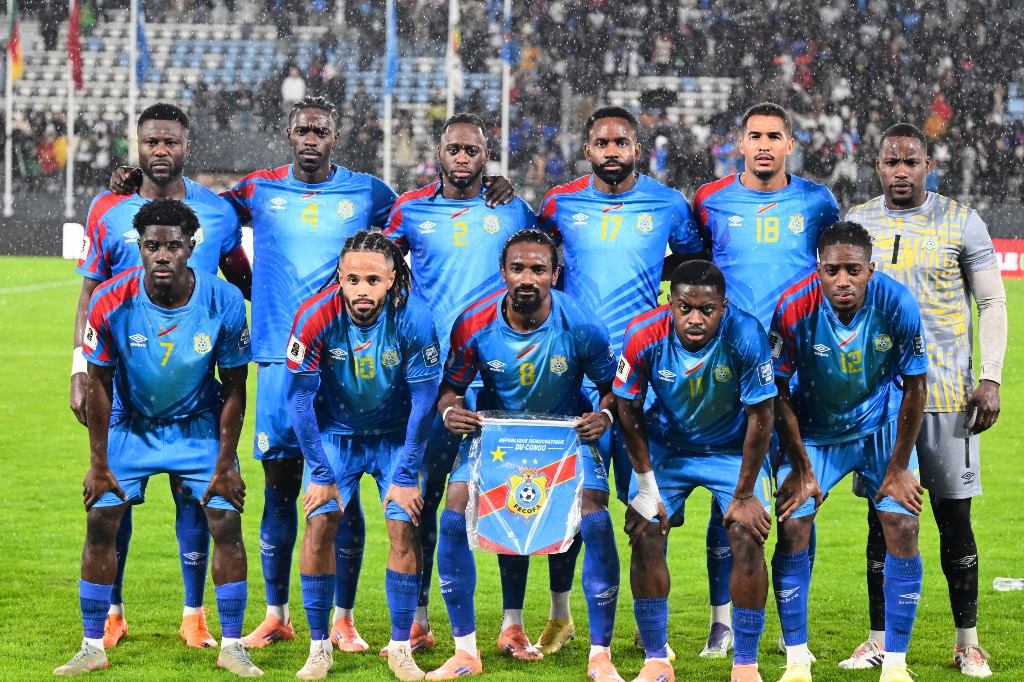
The Democratic Republic of the Congo just pulled the plug on its highly anticipated homecoming. The national football team scrapped its three-day pre-World Cup training camp and public farewell celebration in the capital city of Kinshasa. The reason? A deadly outbreak of a rare Ebola strain in the eastern part of the country.
For a nation celebrating its first World Cup qualification since 1974—back when they competed as Zaire—this was supposed to be a moment of pure national pride. President Félix Tshisekedi was scheduled to attend, and thousands of fans were ready to send off their heroes. Instead, geopolitical health realities took over. Meanwhile, you can find similar developments here: The Strategic Tradeoffs of Veteran Selection in Elite Football A Quantitative Assessment of Germany Goalkeeping Framework.
While the sudden cancellation hurts the local fanbase, the real story here is the logistical panic it's triggering behind the scenes for FIFA and United States border control.
The Viral Reality Disrupting Group K
The World Health Organization (WHO) officially designated this sudden flare-up a public health emergency of international concern. We aren't talking about the standard Ebola strains we have existing vaccines for, either. This outbreak is driven by the rare Bundibugyo strain. Right now, there is no approved vaccine for this specific variant, and the WHO estimates developing one could take up to nine months. To understand the full picture, we recommend the recent report by Sky Sports.
Look at the numbers coming out of the region. The WHO reports 139 deaths out of roughly 600 suspected cases. Meanwhile, Congo's own health ministry told state broadcaster RTNC that the death toll has already hit 159. The epicenter sits in the eastern Ituri province. Kinshasa is technically 1,800 kilometers away and free of recorded cases, but the risk of assembling massive crowds and moving personnel across borders was deemed too high.
The Leopards are slated to play Portugal in Houston on June 17 for their opening Group K match, followed by matches against Colombia in Guadalajara and Uzbekistan in Atlanta. That means the clock is ticking loudly for tournament organizers.
Why the Players Escape the Ban but Fans Get Left Behind
The United States government dropped a hammer this week, invoking an emergency public health rule. The Centers for Disease Control and Prevention (CDC) implemented a 30-day ban barring entry to non-U.S. citizens who have recently traveled through the DR Congo, Uganda, or South Sudan.
So, how does the team actually get into Texas?
The squad bypassed the travel ban through sheer geographical luck. Head coach Sébastien Desabre and virtually the entire roster live and play professionally abroad, mostly in France. Because they haven't set foot in the DR Congo recently, they don't violate the 21-day incubation window.
The team's revised itinerary now looks like this:
- Stage 1: Kinshasa public farewell (Cancelled)
- Stage 2: Training camp in Liege, Belgium, featuring a friendly against Denmark on June 3
- Stage 3: Warm-up match against Chile in southern Spain on June 9
- Stage 4: Arrival in Houston on June 11
Team spokesperson Jerry Kalemo confirmed that local backroom staff scrambled to board flights out of the country to clear the 21-day checkpoint before the American matches begin.
But while the multi-million-dollar players are safe in their European bubbles, Congolese fans and journalists are completely stuck. The U.S. embassy in Kinshasa paused its visa services due to the health crisis. Even those who already hold valid visas must prove they have spent at least three consecutive weeks outside of the affected African zones before they can board a flight to the tournament. It's an administrative nightmare that effectively cuts the team off from its traveling support network.
The Chaos Landing on FIFA's Lap
FIFA is putting on a calm face, issuing standard statements about monitoring the situation and coordinating with the White House World Cup task force under the Department of Homeland Security. Behind closed doors, it's a different story.
Public health experts like Dr. Donald Vinh point out that the incubation period for the Bundibugyo strain runs from two days to three weeks. While it's highly improbable an infected player takes the pitch while actively showing symptoms, the risk of someone turning symptomatic shortly after international travel is a scenario nobody wants to contemplate. Managing an international sports tournament across three massive nations is hard enough without tracking viral incubation timelines for support staff, delegates, and international media.
If you are managing logistics or compliance for international travel tied to the tournament, here are the immediate adjustments you need to make:
- Audit all travel histories immediately: Track the exact physical location of every staff member, media representative, and corporate partner for the last 21 days. Do not rely on home addresses; check passport entry stamps.
- Reroute African transits through Europe: If you have personnel traveling from Central Africa, establish a mandatory 22-day holding or training block in a European hub like Belgium or France to guarantee compliance with Western border controls.
- Prepare for extended screening at ports of entry: Expect manual temperature checks, detailed health questionnaires, and potential secondary screening for anyone with recent African travel history arriving at major tournament hubs like Houston or Atlanta.