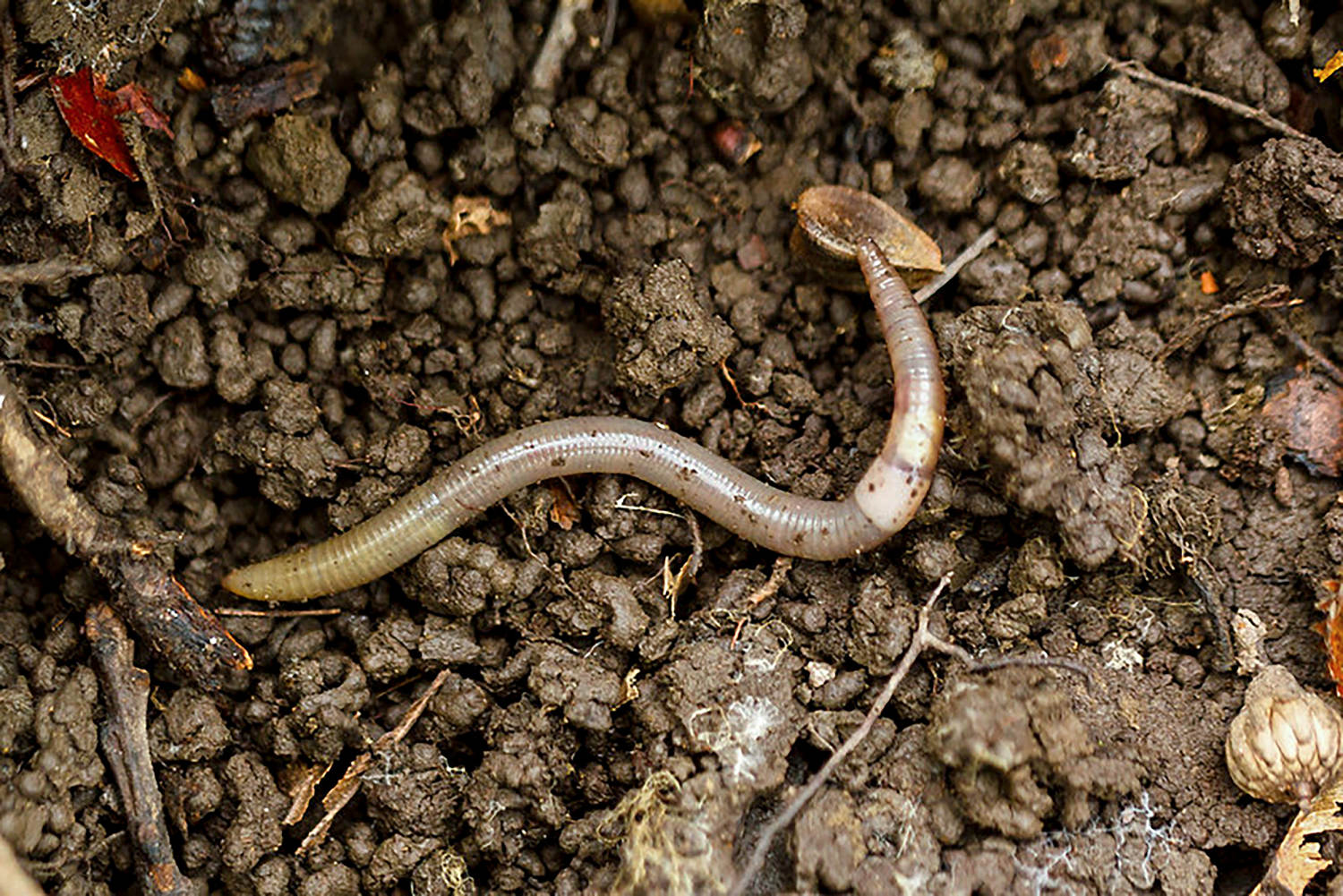
Jim noticed the soil first. It didn't look like the rich, dark velvet that usually cradled his heirloom tomatoes in Boulder. Instead, the ground looked like old coffee grounds—dry, grainy, and strangely lifeless. When he reached down to turn a shovel of dirt, the ground didn't just move. It thrashed.
A cluster of slate-colored worms erupted from the surface. They didn't sluggishly coil like the nightcrawlers Jim had known since childhood. They snapped. They whipped their bodies with a violent, serpent-like frenzy, leaping into the air and skittering across the dry mulch like possessed snakes.
Jim didn't know it yet, but his backyard had become a front line. The "jumping worm" had arrived in Colorado, and the quiet sanctity of the American West was about to change.
The Midnight Snack of a Monster
We have been taught to view the earthworm as the humble hero of the garden. We see them as the silent tillers of the earth, the small but mighty engineers of our compost piles. But the jumping worm—known scientifically as Amynthas agrestis—is a different creature entirely. It is a biological vacuum cleaner with an insatiable appetite.
Unlike the European earthworms we are used to, which burrow deep into the soil and slowly cycle nutrients, jumping worms stay near the surface. They live in the "duff" layer—the top few inches of organic matter where seeds germinate and the forest’s delicate fungal networks thrive.
They eat everything.
Imagine a forest floor. It is a complex architecture of fallen leaves, decaying wood, and tiny sprouts. This layer is the pantry for the entire ecosystem. When the jumping worm moves in, it consumes that pantry in a single season. They strip the soil of its nutrients, leaving behind a gritty, gravel-like casting that cannot hold water and provides no stability for roots.
The plants begin to starve. The ground begins to erode. The foundation of the forest literally disappears into the bellies of an invader that shouldn't be here.
A Ghost in the Garden
The scariest part of this invasion isn't the worm’s speed; it’s its invisibility. These creatures are annuals. They live, they eat, they breed, and then they die with the first hard frost. By the time a gardener notices the frantic movement in their flower beds in late July, the damage is already done.
But the worms leave behind a parting gift.
Before they perish, they produce thousands of tiny cocoons. These are not large, fleshy eggs. They are microscopic specks, the color of dirt and the size of a poppy seed. They are virtually indestructible. They can survive the brutal, sub-zero winters of the Colorado Rockies. They can cling to the tread of a hiking boot, the tires of a mountain bike, or the plastic bottom of a nursery pot.
This is how the invasion spreads. It isn't a slow crawl across the landscape. It is a hitchhike. We are the ones driving them across state lines. We are the ones handing them to our neighbors when we share a perennial split from our garden. We are the ones carrying the destruction of the Western wilderness on the soles of our shoes.
The High Stakes of the West
In the humid forests of the East Coast, where these worms first gained a foothold in the 19th century, the damage is already visible. Great swaths of forest floor have been wiped clean, leaving nothing but bare dirt and invasive weeds that the worms find unpalatable.
But the West is different.
Our ecosystems are already under immense pressure. We deal with chronic drought, shifting climate patterns, and the constant, looming threat of wildfire. The soil in the Western states is often thinner and more fragile than the deep loams of the Midwest. When you remove the organic "blanket" of the soil surface, you aren't just losing a few plants. You are losing the moisture-retention system of the entire landscape.
Consider the ripple effect. If the native plants can't take root in the "coffee ground" soil, the insects that rely on those plants vanish. If the insects vanish, the birds follow. If the soil can't hold water, the runoff during our intense spring storms becomes a torrent, washing away the very earth we stand on.
It is a collapse that starts from the bottom up.
How to Spot the Shiver
You might be wondering if you’ve already seen them. There are a few tell-tale signs that separate a jumping worm from a standard, helpful earthworm.
First, look at the "clitellum"—the band around the worm’s body. On a normal earthworm, this band is thick, pinkish, and raised, like a saddle. On a jumping worm, the band is milky white or light gray, and it is flush with the body. It completely encircles the worm, rather than just sitting on top.
Second, watch the movement. If you touch a jumping worm, it won't just curl up. It will thrash violently. It may even shed its tail as a defense mechanism, a gruesome trick meant to distract predators while the rest of the worm escapes.
Third, look at your dirt. If your soil has lost its structure and looks like a pile of loose taco meat or dried coffee grounds, you are likely looking at jumping worm castings.
The Problem with the Cure
Here is the uncomfortable truth: once they are in the ground, there is no easy way to get them out.
There are no EPA-approved pesticides specifically designed for jumping worms. Because they breathe through their skin and live so close to the surface, anything toxic enough to kill the worms often kills the beneficial microbes, fungi, and native insects that keep the soil alive.
We are left with manual, almost medieval tactics.
Some gardeners have turned to "solarization"—laying clear plastic over the soil during the hottest weeks of summer to cook the cocoons. Others use a mustard pour (a mixture of ground mustard seed and water) to irritate the worms and force them to the surface, where they can be hand-collected and dropped into a bucket of soapy water or vinegar.
It is tedious. It is heartbreaking. It feels like trying to empty the ocean with a thimble.
Protecting the Border
Since we cannot easily kill them once they arrive, our only real weapon is prevention. This requires a shift in how we think about our relationship with the land.
We have to become "soil conscious."
This means being wary of free mulch from municipal piles, which often isn't heated to the high temperatures required to kill the cocoons. It means asking your local nursery if they have a plan for jumping worms. It means washing the mud off your boots after a hike in a known infested area before you step onto your own property.
Most importantly, it means rethinking the culture of the "plant swap." For generations, the hallmark of a good neighbor was a shared hosta or a clump of irises. In the age of the jumping worm, that act of kindness is a gamble. If you must share plants, experts now recommend washing the roots entirely clean of soil—bare-rooting them—before they leave your yard.
The Weight of a Small Thing
It is easy to dismiss a worm. It isn't as dramatic as a forest fire or as visible as a dying reservoir. It is small, slimy, and lives in the dark.
But the health of our civilization has always been tied to the top six inches of the earth. We are a species that survives because the soil allows us to. When that soil changes—when its chemistry is rewritten by a frantic, hungry invader—the world above it must change too.
Jim doesn't garden the same way anymore. He spends more time looking down than he does looking at the blooms. He watches the way the dirt moves. He listens for the sound of dry leaves rustling when there is no wind.
He knows that the ground isn't just dirt. It's a living, breathing history of everything that came before us. And right now, that history is being eaten.
The worms are moving. The question is whether we are willing to move fast enough to stop them.