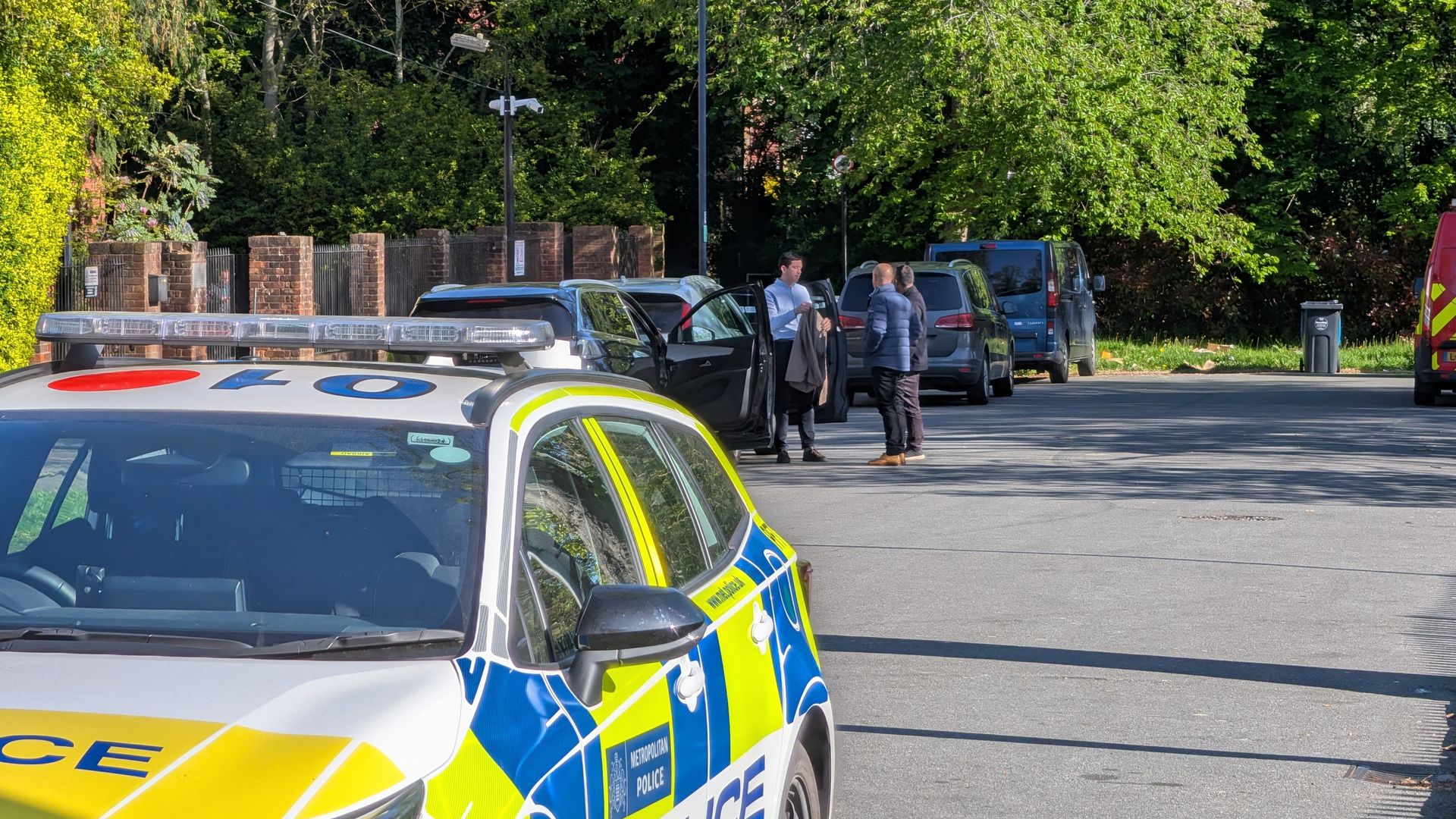
Panic is a poor substitute for a strategy. When news broke about the firebombing attempt at a London synagogue, the media cycle defaulted to its factory settings: condemnation, calls for increased patrols, and the usual hand-wringing over "rising tensions." It is a script we have read a thousand times. It is also a script that ensures the next attack will be just as easy to attempt as the last one.
The standard response to targeted violence is to treat the incident as an isolated security breach. We look at the gates, the guards, and the cameras. We ask why the perimeter failed. But the perimeter is a lie. If you are relying on a reinforced door to stop a radicalized individual with a bottle of gasoline, you have already lost the war of attrition. You are playing a reactive game against an opponent who only needs to be lucky once.
The Security Theater Fallacy
Most religious institutions operate under the "Fortress Illusion." They invest in high-definition CCTV that records their own demise in 4K and hire private security guards who are often underpaid, undertrained, and primarily there to lower insurance premiums rather than intercept a threat. This is security theater. It provides a psychological blanket of safety while offering zero tactical resistance.
Real security isn't about looking tough. It is about friction.
The competitor narrative focuses on the "horrific nature" of the act. While morally true, focusing on the horror is a tactical dead end. It obscures the reality that these attacks succeed because they are low-cost, high-yield operations. A petrol bomb costs three pounds to make. If your defense requires a million-pound surveillance suite and a twenty-four-hour police presence, the economics of terror are heavily weighted in the attacker’s favor.
We need to stop talking about "protecting" buildings and start talking about Hardened Decentralization.
The Failure of "Visibility"
The loudest voices always demand more police on the streets. This is the "lazy consensus" of public safety. Visible policing is a deterrent for shoplifters and rowdy teenagers. It is practically useless against a motivated extremist.
In my years analyzing urban risk profiles, I’ve seen communities pour millions into "visible deterrents" only to find that an attacker simply moved their operation two blocks over or waited for the shift change. A police officer standing outside a synagogue is a target, not a shield. They represent a static variable in a dynamic environment.
True security is invisible. It is the friction an attacker encounters before they even reach the sidewalk. It is the data-driven monitoring of radicalization pipelines and the physical layout of urban spaces that makes a quick approach and escape impossible. If an attacker can reach the front door with a lit fuse, the system didn't just fail; it never existed.
Technology is Not a Savior
There is a growing obsession with AI-powered threat detection. Silicon Valley types love to pitch "smart cameras" that supposedly recognize a weapon or a "suspicious gait."
Let’s be clear: these systems are snake oil.
A camera cannot detect intent. In a crowded city like London, "suspicious behavior" is the baseline. The more we rely on automated systems, the more we desensitize the human elements—the neighbors, the congregants, and the local shopkeepers—who are actually positioned to notice when something is wrong. We are outsourcing our survival to algorithms that can't distinguish between a protestor and a perpetrator.
The Counter-Intuitive Truth: Openness as Defense
It sounds like a paradox. How can being more open make a target safer?
When you turn a religious site into a bunker, you create a "dead zone" in the neighborhood. You remove the "eyes on the street" that Jane Jacobs famously identified as the primary source of safety in any city. A fortress is a lonely place. It signals to the attacker that the community inside is isolated and vulnerable.
Hardening a site should be internal and structural, not external and aesthetic.
- Structural Fire Suppression: Stop worrying about the "bomb" and start worrying about the fire. Most modern synagogues are fire traps disguised as sanctuaries.
- Rapid Evacuation Protocols: We spend 90% of the budget trying to keep people out and 0% on getting people out.
- Community Intelligence Networks: This isn't about snitching; it's about radical transparency.
The Myth of the "Lone Wolf"
The media loves the "lone wolf" label. It’s convenient. It suggests that these incidents are unpredictable lightning strikes. They aren't. No one wakes up and decides to firebomb a synagogue in a vacuum. There is always a digital trail, a social circle, and a series of "soft tests" before the actual event.
The competitor article treats the incident as a mystery for the counter-terror police to solve. In reality, the solution starts months before the police are even called. The failure is one of social infrastructure. We have allowed radicalization to become a private hobby, shielded by the very privacy laws that were meant to protect us.
Stop Asking for "Peace"
People always ask, "How do we stop the hate?"
That is the wrong question. You cannot legislate away hatred. You cannot "educate" a fanatic who believes they are on a divine mission. The goal shouldn't be to fix the attacker’s heart; it should be to make their task physically and logistically impossible.
We need to move away from the emotionality of these events. Yes, it is an attack on a community. Yes, it is a hate crime. But more importantly, it is a tactical problem. When you treat it as a moral crisis, you get candlelight vigils. When you treat it as a tactical problem, you get results.
The downside to my approach? It requires a level of vigilance that most people find exhausting. It requires admitting that the government cannot—and will not—keep you safe. It requires the community to take an active, sometimes uncomfortable role in their own defense.
If you are waiting for the Metropolitan Police to solve the problem of global antisemitism or domestic extremism, you are going to be waiting a very long time. They are investigators, not bodyguards. Their job is to pick up the pieces after the "firebomb" goes off.
Your job is to make sure the fire never has a chance to catch.
Stop building fences. Start building systems that can absorb a hit and keep functioning. Stop looking for "peace" and start looking for resilience. The world isn't getting any safer, and your "Keep Out" sign is doing exactly nothing.
Protect the people, not the property. Everything else is just expensive wallpaper.
Security is not a product you buy. It is a discipline you practice. If you aren't willing to disrupt your own comfort to achieve it, you are just waiting for your turn in the headlines.