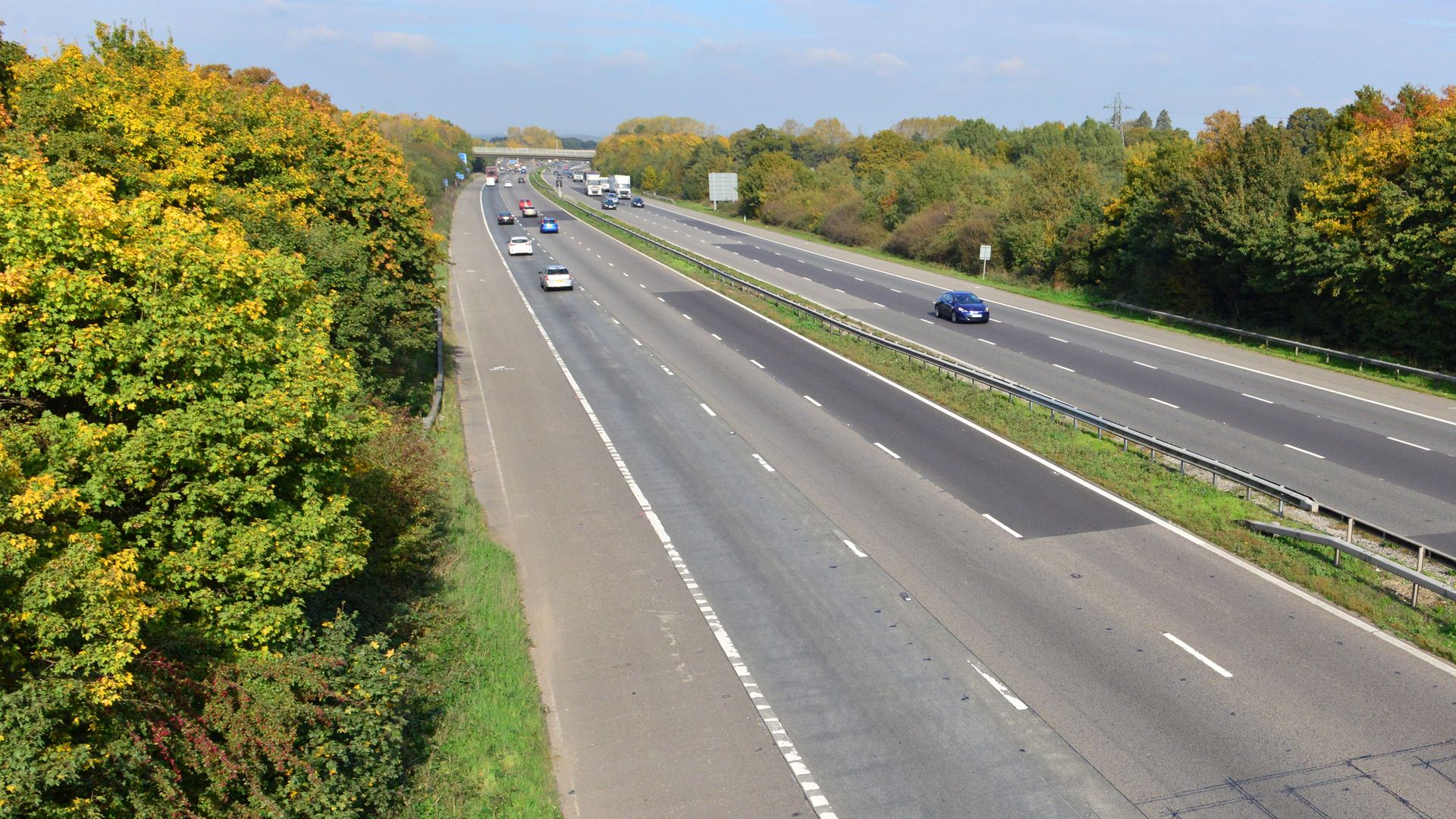
A woman in her 80s is dead following a multi-vehicle collision on the M23 near Gatwick Airport. This is the grim reality of a transport network operating at its absolute limit. The crash occurred on a Wednesday morning, involving a Nissan Qashqai, a Lexus, and a heavy goods vehicle. Emergency services rushed to the scene between Junction 8 and Junction 9, but they could not save the victim. Beyond the immediate tragedy of a life lost, the incident triggered a total closure of the southbound carriageway that lasted over ten hours. This wasn't just a traffic jam. It was a systemic collapse of one of the UK’s most critical economic arteries, stranding thousands of travelers and highlighting the terrifying fragility of the roads surrounding our major aviation hubs.
The M23 serves as the primary umbilical cord between London and the South Coast, feeding Gatwick Airport's relentless demand for logistics and passenger transit. When this specific stretch of asphalt fails, the ripple effect is felt across the entire national infrastructure.
The Anatomy of a High Speed Collision
Witnesses described a scene of chaotic wreckage. The physical dynamics of a collision involving a heavy goods vehicle (HGV) and smaller passenger cars are rarely survivable at motorway speeds. While modern vehicle safety ratings have improved, they often fail to account for the sheer kinetic energy of a forty-tonne haulier.
Investigators from the Surrey and Sussex Major Crime Team and the Roads Policing Unit spent the better part of the day conducting "collision forensics." This process is painstaking. They must map every skid mark, analyze every shard of debris, and download data from the vehicles' onboard computers. The goal is to determine whether the cause was mechanical failure, driver error, or a lapse in road maintenance.
However, focusing solely on the drivers ignores the environmental factors at play. The M23 near Gatwick is a high-pressure environment. Drivers are often rushing to catch flights or are fatigued after long-haul journeys. This creates a volatile mix of erratic lane changes and fluctuating speeds.
The Gatwick Bottleneck
Gatwick Airport is a powerhouse of commerce, but its success rests on a 1970s road layout that is struggling to cope with 21st-century volume. When the M23 shuts down, the surrounding A-roads—the A23 and A217—immediately choke.
Why Diverts Fail
The National Highways agency often triggers "strategic diversions" during these incidents. In practice, these diversions send thousands of cars through narrow village roads and residential areas.
- Weight Limits: Many local bridges cannot handle the weight of the HGVs being diverted off the M23.
- Signal Timing: Local traffic light systems are calibrated for suburban flow, not the sudden influx of ten thousand vehicles an hour.
- Information Lag: By the time overhead gantries warn drivers of a closure, the queue has often already backed up past the previous exit, trapping motorists for hours without access to food, water, or facilities.
During this recent closure, the disruption to Gatwick was profound. Travelers reported abandoning taxis on the hard shoulder and attempting to walk to the terminal with suitcases in hand. This is a desperate, dangerous response to a breakdown in transit reliability. It turns a tragic accident into a public safety crisis.
Smart Motorway Scrutiny
While this specific stretch of the M23 has seen significant investment, the "Smart Motorway" branding continues to haunt the Department for Transport. The removal of the permanent hard shoulder in favor of "All Lane Running" remains a point of intense public anxiety.
Critics argue that when a vehicle breaks down or a minor shunt occurs, the absence of a dedicated refuge strip turns a small problem into a fatal one. On a traditional motorway, a driver might have pulled to the left. On a smart motorway, they are a sitting duck in live traffic. Although the government has paused the rollout of new smart motorways, the existing ones—including parts of the M23—require a level of technological surveillance that is not always foolproof.
A camera system known as Stopped Vehicle Detection (SVD) is supposed to alert control rooms within seconds. But if that system lags, or if a human operator fails to close the lane quickly enough, the results are catastrophic. The investigation into this latest death will undoubtedly look at whether lane management played any role in the escalation of the crash.
The Human Impact of Long Term Closures
We must talk about the ten-hour closure. To the casual observer, ten hours seems excessive for clearing three vehicles. To a forensic investigator, ten hours is barely enough.
The police are tasked with a dual responsibility: clearing the road and securing justice. If a criminal prosecution for "causing death by dangerous driving" is to succeed, the evidence must be pristine. Every millisecond of the crash must be reconstructed. This involves:
- 3D Laser Scanning: Creating a digital twin of the crash site.
- Tachograph Analysis: Checking the HGV driver’s hours to ensure they weren't driving while exhausted.
- Toxicology and Phone Records: Ensuring no driver was distracted or under the influence.
While the public fumes about missed flights and lost revenue, the authorities are looking for the truth behind a woman’s final moments. The tension between the need for speed and the need for accuracy is the primary conflict of modern road policing.
A Failure of Redundancy
The M23 crisis reveals a deeper truth about British infrastructure: we have no Plan B. When a major motorway closes, there is no high-capacity alternative. The rail links to Gatwick are frequently plagued by industrial action or engineering works, leaving the road as the only viable option for millions.
Investment has focused on "squeezing" more capacity out of existing roads rather than building new ones. We have added lanes by narrowing them. We have increased speed limits while reducing the margin for error. We have automated safety while underfunding the humans who monitor the screens.
The death of a woman in her 80s on a Wednesday morning is a tragedy for her family. For the rest of us, it is a warning. Our transport network is a house of cards, and we are one "minor" collision away from total gridlock.
Moving Toward a Solution
Improving safety on the M23 requires more than just new tarmac. It requires a fundamental shift in how we manage the intersection of road and air travel.
- Integrated Real-Time Data: Airlines and National Highways must share live data to warn passengers of road closures before they leave their homes.
- Increased HGV Rest Areas: Providing more spaces for hauliers to rest would reduce the number of fatigued drivers on the Gatwick corridor.
- Enhanced SVD Technology: The accuracy of stopped vehicle detection must be 100%. Anything less is a gamble with human lives.
The police are still appealing for witnesses and dashcam footage. They are looking for anyone who saw the silver Nissan Qashqai or the HGV in the moments leading up to the impact. This plea for help is a reminder that despite all our technology, we are still reliant on the eyes and ears of fellow citizens to piece together the wreckage of a broken system.
The M23 has reopened, the glass has been swept away, and the queues have dissipated. But the underlying issues—the congestion, the risk, and the lack of a safety net—remain exactly where they were before the crash. We are simply waiting for the next failure.
Demand that National Highways releases the full safety audit of the M23's Gatwick stretch. Until the public sees the data on near-misses and response times, we are driving in the dark.