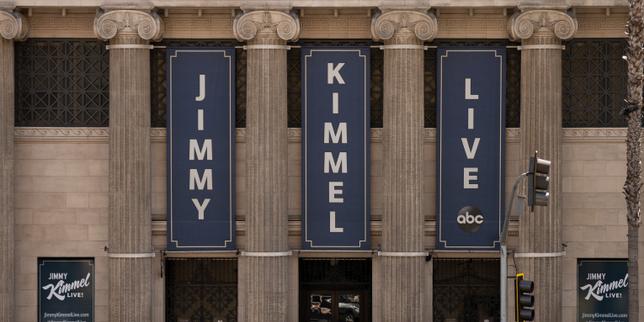
The headlines are screaming that ABC is on the verge of losing its broadcast licenses because of Jimmy Kimmel’s late-night antics. They want you to believe that the Federal Communications Commission (FCC) is a hair-trigger away from pulling the plug on a multi-billion-dollar network over "indecency" or "public interest" violations.
It is a lie. A comfortable, click-driving lie. Meanwhile, you can explore similar stories here: The Industrialization of Political Exclusion The Mechanics of the Modern State Dinner.
If you have spent ten minutes inside a network legal department or navigating the labyrinth of Title 47 of the U.S. Code, you know the truth. The threat of non-renewal for a major network O&O (Owned and Operated) station is the regulatory equivalent of a nuclear deterrent: it exists only to ensure it is never used.
Broadcasting is not a fragile privilege. It is a fortified legal fortress. To understand the complete picture, check out the excellent analysis by The Guardian.
The Myth of the Vulnerable License
Most people think a broadcast license is like a driver’s license—get too many tickets, and the state takes it away. In reality, a broadcast license is more like a land deed in a disputed territory where the lawyers have bigger guns than the sheriffs.
Under the 1996 Telecommunications Act, the FCC must renew a license if the station has served the public interest, has not committed "serious violations," and hasn't shown a "pattern of abuse." The bar for "serious" is so high it’s practically in orbit. We aren’t talking about a comedian making a crass joke about a politician. We are talking about systematic, multi-year fraud or technical interference that shuts down emergency services.
The FCC hasn't effectively stripped a major station of its license for content-based issues in decades. Why? Because the First Amendment is a brick wall that the FCC's "indecency" mandates constantly crash into.
Why Jimmy Kimmel is Untouchable
The current noise centers on the idea that Kimmel’s show violates the "public interest" requirement. This is a fundamental misunderstanding of how the FCC operates.
- Safe Harbor Rules: Most of what the pearl-clutchers complain about happens during "safe harbor" hours (10:00 PM to 6:00 AM). During this window, the FCC’s indecency rules essentially go into hibernation. You can be as edgy, political, or crude as you want because the law assumes children are asleep.
- Political Speech vs. Obscenity: The FCC is explicitly prohibited from censoring speech. They can only regulate "obscenity," which has a very specific, nearly impossible-to-meet legal definition (the Miller Test). Political satire, no matter how much it irritates a specific demographic, is the most protected form of speech in the American legal system.
- The Corporate Shield: ABC isn't a singular entity. It is a subsidiary of Disney. Disney has more lawyers than some small countries have soldiers. Any attempt to revoke a license based on a late-night comedy bit would result in a decade of litigation that would likely end with the FCC’s regulatory powers being further neutered by the Supreme Court.
The Regulatory Theater Factor
So, if the threat is empty, why is it happening? Follow the money and the optics.
Regulators love to look tough. Politicians love to use the FCC as a boogeyman to signal to their base that they are "fighting back" against the media. It’s a symbiotic performance. The politician gets a campaign clip, the FCC gets to justify its budget, and the network gets a massive spike in "hate-watching" and social media engagement.
I have seen this play out in boardrooms for years. A "threat" to a license usually results in a strongly worded letter, a minor fine that amounts to a rounding error on a Tuesday morning, and absolutely zero change in programming.
The Real Danger (It’s Not Content)
If you want to know what actually scares network executives, look at spectrum allocation, not scripts.
The only way a station actually loses its "licensing" power in 2026 is through the slow, agonizing migration of audiences to streaming. The FCC doesn’t even have jurisdiction over Disney+, Hulu, or YouTube. While the public argues about what Kimmel said on a broadcast signal that fewer people watch every year, the real power shift is happening in the unregulated digital space.
The "threat" to ABC's license is a distraction from the fact that the broadcast license itself is becoming an antique. It’s like arguing over who gets to keep the deed to a livery stable while everyone else is driving a Tesla.
The Cost of the "Public Interest" Lie
The term "public interest, convenience, and necessity" is the most flexible phrase in the English language. It means whatever the current administration wants it to mean.
In the 1950s, it meant not being a communist.
In the 1970s, it meant local news quotas.
Today, it is being weaponized as a tool for partisan harassment.
But weaponizing it and successfully firing it are two different things. To actually revoke a license, the FCC has to prove that the station's presence on the airwaves is a net negative for society. How do you prove that in a world of fragmented media? You can't. If you don't like ABC, you change the channel or, more likely, you never turned it on in the first place.
The Irony of the "Censorship" Cry
The people calling for the revocation of ABC's license are often the same ones screaming about "free speech" and "cancel culture." The irony is thick enough to choke on. Using a government regulatory body to de-platform a broadcaster because you dislike their editorial stance is the ultimate form of cancel culture.
It is also a tactical error. If the precedent is set that a license can be revoked because of a comedian's monologue, then every local news station, every conservative talk radio host, and every religious broadcaster is suddenly on the chopping block the moment the political winds shift.
Stop Falling for the Script
The next time you see a headline about a "threatened" broadcast license, do yourself a favor: ignore it.
- The FCC isn't going to do it.
- ABC isn't worried about it.
- Jimmy Kimmel is probably writing a joke about it right now.
The legal framework of the United States is designed to protect these institutions from exactly this kind of political interference. It takes more than a few thousand angry emails and a grandstanding commissioner to dismantle a legacy media empire.
We are living in an era of manufactured outrage where the process is the punishment. The goal isn't to actually take the license; the goal is to keep you talking about the possibility of taking the license. It's a grift. It's a ratings play. And by taking it seriously, you're just playing your part in the ensemble cast.
The broadcast tower isn't falling. The lawyers have already made sure of that.
Go watch something else. Or don't. It doesn't matter to the license.