The Deadly Theater of the Naive
A tourist dies in Egypt after a cobra strike during a street performance. The headlines write themselves. They drip with predictable sympathy and shallow warnings about "safety protocols" and "unregulated excursions."
The media wants you to believe this is a tragedy of a lack of oversight. They are wrong. This is a tragedy of a lack of honesty.
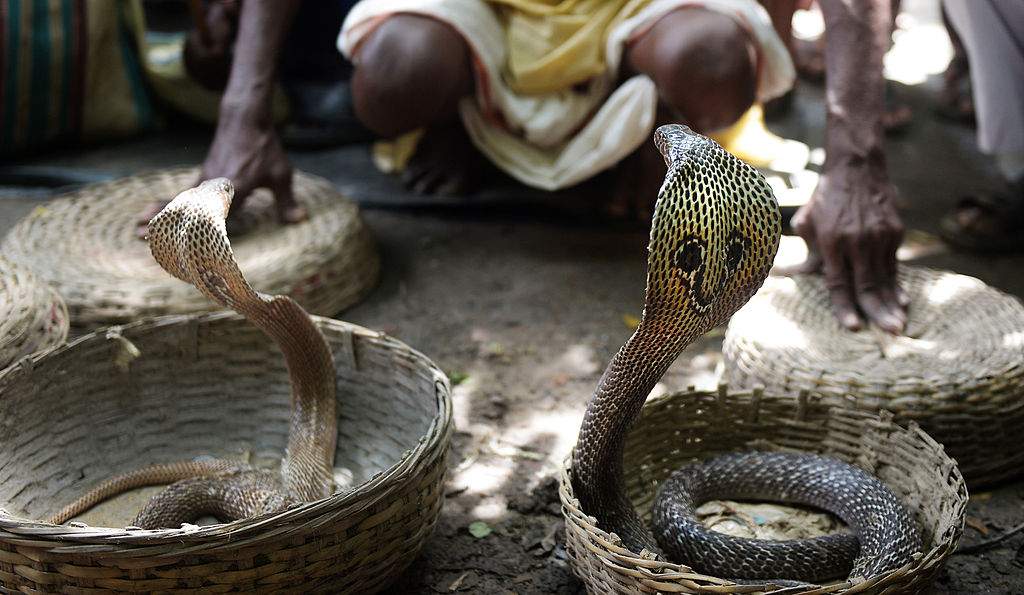
The "lazy consensus" suggests that we need better safety barriers, more antivenom on-site, or licensed performers. That is a fantasy built for people who want to consume exoticism without the risk. The reality is far more jagged. When you pay five dollars to watch a man provoke a King Cobra in a dusty Cairo alley, you aren't a victim of a lapse in safety. You are a participant in a high-stakes blood sport where the animal is almost always the first to die.
The bite that killed the tourist was a statistical inevitability. The true scandal isn't the death of the traveler—it’s the systemic cruelty and ecological illiteracy that keeps these shows running for the "authentic" Instagram feed.
The Myth of the Charming Flute
Let’s dismantle the first lie: the music.
Snakes do not have external ears. They are functionally deaf to the airy notes of a pungi. They aren't swaying to the melody; they are tracking the movement of the instrument, which they perceive as a threat. The snake is in a state of perpetual defensive "hooding." It is terrified.
I have spent a decade navigating the backstreets of North Africa and Southeast Asia. I have seen the "backstage" of these operations. If you think the snake is "tame," you are delusional. Most of these animals are victims of one of two brutal procedures:
- The Stitch: Their mouths are literally sewn shut with fishing line, leaving just enough of a gap for the tongue to flick out. They die of starvation within weeks.
- The Gouge: Their venom glands are crudely hacked out or their fangs are snapped off with pliers.
The snake that killed the tourist in Egypt? It was likely a "fresh" catch. Its glands were full, and its instincts were sharp. The performer took a shortcut, and the tourist paid for the spectacle with their life.
Why Safety Regulations Are a Polite Lie
People ask: "Why doesn't the Egyptian government regulate these performers?"
This question is fundamentally flawed. You cannot regulate an industry built on the illegal poaching of CITES-protected species. You cannot make "safe" an encounter with an animal whose primary evolutionary drive is to kill you the moment it feels cornered.
When you demand "safer" snake charming, you are asking for a more sterilized version of animal abuse. You are asking for the fangs to be pulled more efficiently.
If you want to stay alive on vacation, stop looking for "authentic" experiences that involve captive predators. The danger isn't a bug; it's the feature. The thrill the tourist felt right before the strike was the primitive realization that they were in the presence of something lethal. You cannot buy that thrill and then complain when the predator acts like a predator.
The Antivenom Fallacy
The "People Also Ask" section of your favorite travel blog probably tells you to check for the nearest hospital before booking a tour.
Here is the brutal truth from the ground: In most regions where street charming is popular, the local clinics don't carry high-quality polyvalent antivenom. And even if they do, the dosage required to neutralize a full-load strike from a Naja haje (Egyptian Cobra) is massive. We are talking about a neurotoxin that shuts down your respiratory system in minutes.
Imagine a scenario where you are bitten in a crowded marketplace. The "charmer" disappears instantly to avoid arrest. You don't know the species. The doctor has three vials of expired serum. You are dead before your travel insurance agent picks up the phone.
Stop relying on the "safety net" of modern medicine in places where the infrastructure is held together by duct tape and hope. The only "safety protocol" that works is non-participation.
The Tourism Industry’s Blood Stained Hands
Travel agencies and "influencer" guides are the silent partners in these deaths. They list these markets as "must-see" spots. They frame the exploitation of wildlife as "cultural heritage."
It isn't culture; it's a poverty trap. The performers do it because tourists pay. The tourists pay because they want a photo that looks like an Indiana Jones outtake.
I have watched travelers complain about a $50 "tourist tax" at a museum, then turn around and hand $20 to a man holding a stressed, dehydrated reptile. You are funding the depletion of local ecosystems. Every cobra taken from the wild to die in a wooden box is a spike in the local rodent population and a tear in the local food web.
The Uncomfortable Truth About Your Vacation
You aren't a "traveler" if you are consuming these spectacles. You are a consumer of a dying, desperate industry.
The death of a tourist is a PR nightmare for the Egyptian Ministry of Tourism, but the daily death of the animals is just business as usual. If you want to honor the person who died, don't ask for better fences. Don't ask for "licensed" charmers.
Demand the total abolition of wildlife street performances.
The industry is a relic of a colonial mindset where the "exotic" is something to be poked, prodded, and photographed. The snake didn't "malfunction." It did exactly what a million years of evolution told it to do when faced with a loud, sweaty crowd and a waving stick.
If you find yourself in a circle of people watching a hooded snake, don't reach for your camera. Walk away. Your boredom is the only thing that will actually save lives—both human and reptilian.
The next time you see a "charmed" snake, look at the base of its jaw. Look for the scars. Look for the lethargy of a creature that is slowly rotting from the inside out. Then ask yourself if your vacation memory is worth the price of a life.
The cobra didn't murder that tourist. The tourist’s demand for a "dangerous" thrill murdered the cobra's dignity, and the cobra simply took the tourist down with it.
Stop being a spectator to the end of the world.