The gravel driveway of a suburban cul-de-sac is supposed to be a neutral zone. It is the mundane transition space between the safety of the living room and the predictability of the morning commute. You expect to find stray leaves there, maybe a dropped set of keys, or a puddle reflecting the morning sky. You do not expect to find a prehistoric ghost waiting to claim the territory.
When an eighty-three-year-old woman stepped outside her home on a crisp Tuesday morning, the air smelled of damp earth and coming rain. She was doing what millions of us do every day, moving through a routine polished by decades of repetition. But the quiet rhythm of her morning was shattered by a sound that belongs more to the Pleistocene epoch than a modern residential neighborhood—a guttural, rattling gobble that vibrated right through the soles of her shoes.
Before she could turn back toward her porch, thirty pounds of muscle, spurs, and iridescent feathers charged.
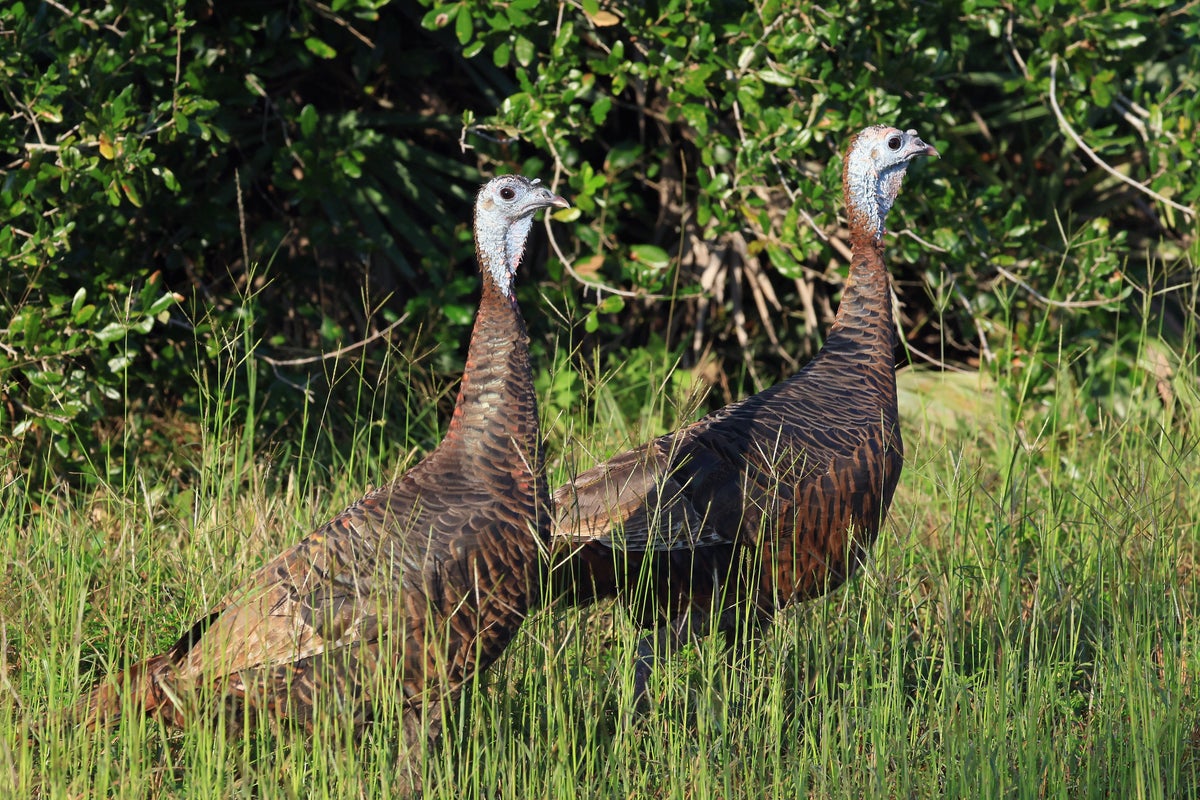
Wild turkeys are not the bumbling, docile caricatures pasted onto elementary school windows every November. They are survivalists. For decades, conservationists fought a long, grueling battle to bring these birds back from the brink of extinction. It was a triumph of wildlife management. We built greenways, protected wetlands, and curbed hunting. We invited them back.
But we forgot to ask what happens when the wilderness decides to accept the invitation and move indoors.
The Illusion of the Backyard Eden
We live in an era of engineered nature. We plant clover to attract pollinators, hang cedar boxes for bluebirds, and buy premium seed to watch the drama of the avian world unfold over our morning coffee. It feels benevolent. It feels safe. We treat the wildlife outside our windows like a curated gallery exhibition, operating under the unspoken assumption that the glass pane is a permanent contract of non-aggression.
That contract is entirely one-sided.
Consider what happens when a species as socially complex and fiercely territorial as the wild turkey thrives in a landscape devoid of apex predators. In the deep woods, a turkey is constantly looking over its shoulder for bobcats, coyotes, and foxes. Survival requires vigilance and a healthy dose of fear.
Suburbia changes the math completely.
When a flock—known formally as a rafter—settles into a neighborhood, they encounter manicured lawns full of high-protein grub, overflowing bird feeders, and humans who either throw breadcrumbs or retreat in confusion when challenged. To a dominant male turkey, a human who backs away isn't showing kindness.
A human who backs away is a subordinate losing ground.
The attack on the elderly woman wasn't an isolated incident of animal madness. It was a calculated demonstration of flock politics. Witnesses described the bird flanking her, using its heavy wings to off-balance her before striking with its sharp, bony leg spurs. A fall for an octogenarian isn't just an inconvenience; it is a trajectory-altering medical event. By the time neighbors intervened and local police arrived, the boundary between the wild and the domestic had been thoroughly bloodied.
Just forty-eight hours later, less than a mile down the same road, a man walking his golden retriever found himself in a similar standoff. Dogs, usually the undisputed rulers of the suburban sidewalk, find themselves utterly baffled by an adversary that refuses to run. The turkey didn't flee from the canine predator. It advanced, fan tail spread wide, wings dragging the asphalt with a rhythmic hiss.
The police department was forced to issue a public warning, a document that read less like standard municipal copy and more like a tactical briefing for an occupying force. Do not turn your back. Do not run. Fight back with umbrellas, broomsticks, and loud noises. It sounds absurd until you are the one standing on the asphalt, realizing your morning walk has turned into a dispute over sovereign territory.
The Language of Dominance
To understand why these encounters are escalating, you have to look at the world through the black, unblinking eye of the bird.
Turkeys operate within a rigid, ruthless hierarchy. From the moment they hatch, they fight for position within the rafter. Pecking orders are established through physical intimidation, endurance, and sheer aggression. Once a turkey secures its rank, it expects every other creature in its orbit to acknowledge that status.
When we encounter them on our driveways, we often make a critical, empathetic mistake. We try to de-escalate using human logic. We soften our posture, we speak in soothing tones, and we slowly back away to show we mean no harm.
To a turkey, you have just signed a declaration of surrender.
Suburban Action vs. Turkey Interpretation
┌──────────────────────────────┬──────────────────────────────┐
│ Human Behavior               │ Turkey Interpretation        │
├──────────────────────────────┼──────────────────────────────┤
│ Backing away slowly          │ Submissive retreat           │
│ Soft, soothing speech        │ Lack of threat / Weakness    │
│ Leaving food out             │ Tribute / Resource dominance │
│ Making eye contact & moving  │ Challenge to hierarchy       │
└──────────────────────────────┴──────────────────────────────┘
The real problem lies in the seasonal calendar. Spring and early summer are the peak of the breeding season. Testosterone levels in male toms spike to volatile levels. They are highly sensitive to anything they perceive as a rival or an obstacle to their genetic legacy.
This includes their own reflections.
During these months, wildlife biologists are flooded with calls about turkeys relentlessly attacking the shiny chrome bumpers of pickup trucks or throwing themselves against low-hanging basement windows. They aren't trying to break into the house. They are locked in a furious, exhausting battle with the "other" bird in the glass, refusing to back down from an opponent that matches them blow for blow.
When an eighty-three-year-old woman walks into that field of heightened tension, carrying nothing but a newspaper or a cardigan, she isn't seen as a grandmother. She is seen as an intruder crossing an invisible border drawn in the dirt by a bird that weighs as much as a visual arts portfolio and possesses the temperament of a cornered badger.
The Cost of Kindness
It is easy to blame the wildlife, to brand the birds as "rogue" or "aggressive" as the headlines so frequently do. But a deeper, more uncomfortable truth sits on the porch swing.
We created this friction through our own selective generosity.
Wild turkeys are opportunistic foragers. They are designed to spend their days scratching through leaf litter for acorns, beech nuts, and small insects. It is hard, caloric work. But a suburban backyard offer a buffet that requires zero energy expenditure.
A single poorly maintained bird feeder drops pounds of high-calorie seed onto the turf every week. To a rafter of turkeys, this isn't a temporary snack; it is a permanent resource worth defending. When humans routinely feed turkeys directly—treating them like oversized pigeons in a public park—the birds lose their instinctual aversion to our species.
They begin to associate humans exclusively with food.
When the food stops, or when a human walks by without offering a handout, the bird's frustration manifests as aggression. They don't understand the concept of a closed kitchen. They only understand that the provider is suddenly withholding resources, and in the avian world, you take what is withheld.
The police warnings issued this week weren't just about physical safety; they were a plea for a cultural shift. We have to learn to be unkind to the things we wish to protect.
Hazing is a harsh word, but it is the only language that works. Wildlife officials now regularly instruct suburban residents to use loud, unpleasant methods to keep turkeys wild. Air horns, motion-activated sprinklers, and open umbrellas popped open suddenly like a defensive shield are all part of the arsenal required to rebuild the wall between our world and theirs.
It feels cruel to shout at a bird from your back deck, to throw tennis balls near their feet to scare them away from the flowerbeds. It feels like a betrayal of the pastoral ideal we bought into when we moved away from the concrete cities.
But true conservation isn't a Disney film. It is the maintenance of a respectful, fearful distance.
The Unclaimed Acre
The sun sets over the cul-de-sac now with a slightly different tension than it did a week ago. The residents still check the mail, still walk their dogs, and still drink their coffee by the window. But their eyes linger longer on the tree line where the oaks meet the lawn.
The rafter is still out there. They are roosting high in the branches of the white pines, their massive silhouettes dark against the twilight sky. They are waiting for the morning, when the fog rises off the grass and the human world wakes up to reclaim its blacktop.
We like to think we own our neighborhoods because we hold the deeds and pay the property taxes. We believe the fences we build define the limits of the world. But as the elderly woman recovers and the neighborhood adjusts to its new, wary reality, the lesson remains written in the scratched paint of the driveways and the quiet caution of every opened front door.
Nature doesn't recognize our titles. It only recognizes strength, space, and the willingness to defend it. When we step outside tomorrow, we aren't just walking into our yards. We are stepping onto a frontier that was never truly conquered, merely paused, waiting to see who will blink first when the shadows in the brush begin to move.