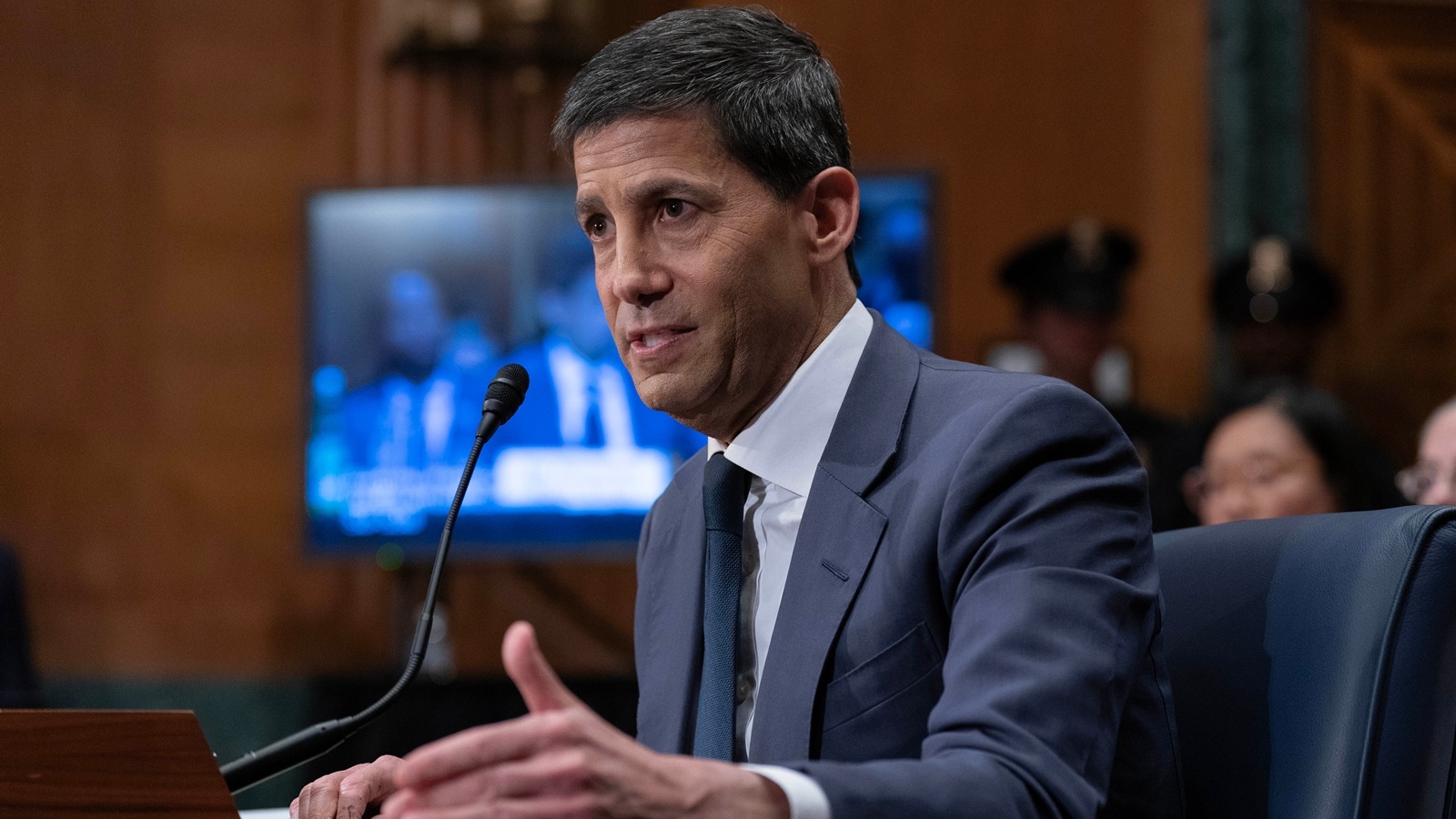
The era of the "Powell Pivot" has officially been smothered. In a 54-45 vote on Wednesday, the Senate confirmed Kevin Warsh as the 17th chair of the Federal Reserve, a move that does more than just swap a chairman. It detonates the institutional consensus that has governed American monetary policy for a generation.
While the headlines focus on Warsh as a Trump loyalist, that narrative is dangerously incomplete. The reality is far more complex. Warsh is not arriving at the Eccles Building to simply follow orders from the White House; he is arriving to dismantle the very way the Fed operates. By confirming a man who has openly called for "regime change" at the central bank, the Senate has greenlit an overhaul of the world’s most powerful financial institution at a moment when inflation is creeping back toward 4% and the global economy is fracturing.
The Powell Shadow Cabinet
Jerome Powell is not going quietly. In a move without modern precedent, the outgoing chair has signaled his intent to remain on the Fed’s Board of Governors even after his term as chair expires on May 15. This creates a volatile "two-king" scenario.
Warsh will hold the gavel, but Powell will hold a seat, a vote, and a decades-deep well of institutional loyalty from the Fed’s staff. Imagine a corporate boardroom where the former CEO stays on as a director specifically to critique his successor’s every move. This isn't just awkward; it’s a recipe for gridlock. The Federal Open Market Committee (FOMC) is already more divided than it has been in thirty years. Last month saw a record number of dissenting votes. Now, with Warsh pushing for aggressive changes and Powell acting as a guardian of the old guard, the Fed risks becoming as polarized as the Congress that just confirmed its new leader.
Beyond the Interest Rate Obsession
Wall Street is obsessed with whether Warsh will cut rates to appease the White House. That is the wrong question. The real war will be fought over the Fed’s balance sheet.
Under Powell and Bernanke, the Fed became the "buyer of last resort," ballooning its holdings to over $6 trillion in government debt and mortgage-backed securities. Warsh views this as a poison. During his confirmation hearings, he argued that the balance sheet has played an "unhelpful role" in the economy. He wants the Fed out of the business of managing long-term bond yields.
If Warsh succeeds in aggressively shrinking the balance sheet, the results will be felt far beyond DC.
- Bond Markets: A massive sell-off of Fed-held securities would likely send long-term interest rates north, regardless of what the "official" Fed funds rate is.
- Mortgages: If the Fed stops supporting the mortgage-backed security market, the days of "affordable" borrowing for home buyers are likely over for the foreseeable face of the decade.
- Stock Volatility: The "Fed Put"—the idea that the central bank will always step in to save the markets—is effectively dead.
The Transparency Trap
For years, the Fed has moved toward "forward guidance"—telling the markets exactly what it plans to do months in advance. Warsh thinks this is a mistake. He has ridiculed the "dot plot" and questioned the necessity of the post-meeting press conference.
He prefers a Fed that is less predictable and more nimble. In his view, the current level of transparency has boxed the Fed into a corner, making it impossible to react to sudden economic shifts without causing a market tantrum. By retreating into a more "black box" style of communication, Warsh aims to reclaim the element of surprise. For a trader, this is a nightmare. For a central banker who believes the Fed has become a slave to market expectations, it is a necessary correction.
The Independence Myth
The debate over "Fed independence" is largely a distraction from the structural reality. The Fed has always been political; the difference now is that the mask has been stripped away. The Justice Department’s recent investigation into Jerome Powell—only dropped in April to clear the path for Warsh—was a shot across the bow. It proved that the executive branch is willing to use the legal apparatus of the state to pressure the central bank.
Warsh enters the office with a mandate to be a "team player," yet his history suggests he is an intellectual hawk who values his own economic theories above political convenience. He famously resigned from the Fed in 2011 because he thought the bank was being too loose with money. If inflation remains sticky at 3.8% or climbs higher due to energy shocks, Warsh will face a brutal choice: satisfy the President’s demand for cheap money or honor his own hawkish instincts. He cannot do both.
The Senate’s vote was largely a party-line affair, with Senator John Fetterman providing the lone Democratic "aye." This lack of broad-based support means Warsh has no political honeymoon. He is taking over an institution that is internally fractured, externally pressured, and facing an inflationary environment that refuses to surrender.
The transition on May 14 isn't just a change in leadership. It is the beginning of an experiment to see if the Federal Reserve can be fundamentally reconstructed without crashing the global financial system in the process. We are about to find out if "regime change" is a viable strategy for a central bank, or if the ghost of the old Fed will haunt Warsh’s tenure until the next crisis forces his hand.
Prepare for a Fed that speaks less, acts more abruptly, and no longer views the stock market's health as its primary metric of success.