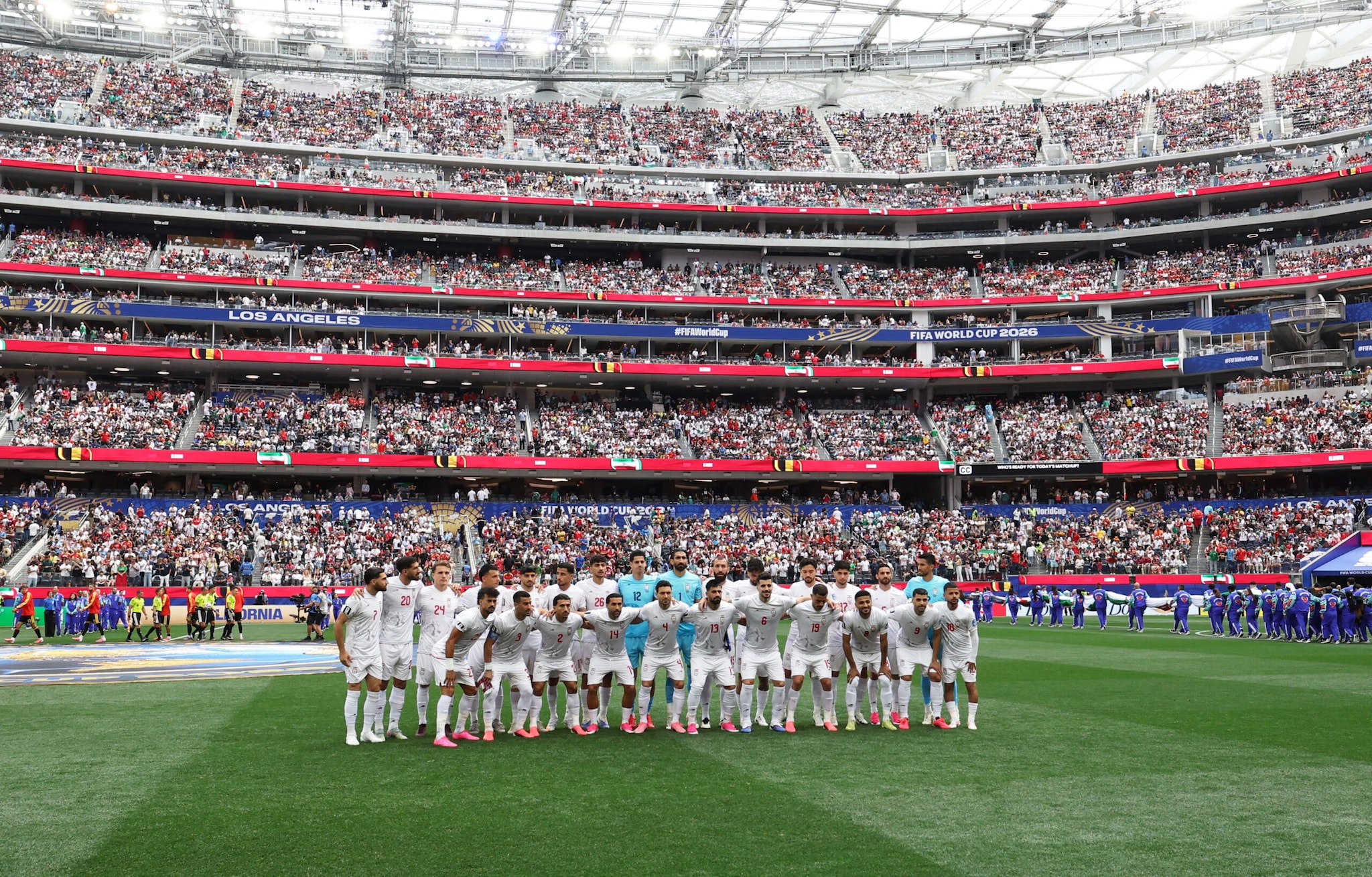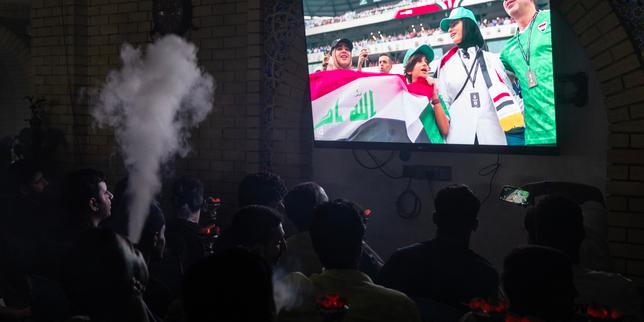
The sirens in Baghdad did not wail for airstrikes or militia convoys during the ninety minutes Iraq faced France on the pitch. Instead, a heavy, suffocating silence gripped the capital, broken only by the synchronized groans of millions watching a ball deflect off a post. Iraq’s appearance at the 2026 World Cup, culminating in a hard-fought defeat to the French squad, has been widely framed as a miraculous catalyst for national reconciliation. This narrative is comforting, beautiful, and profoundly incomplete. While soccer temporarily bridges the deep sectarian and regional divides that decades of war carved into the country, it also serves as a convenient smokescreen for a political class desperate to distract from systemic collapse.
To understand the weight of this tournament, one must look past the flags waving from the windows of cars stuck in gridlocked traffic on Saadoon Street. For a month, the Lions of Mesopotamia achieved what no politician, cleric, or foreign diplomat could manage since 2003. They forced a fractured nation to speak a single language. In Basra, Erbil, and Najaf, the screens set up in public squares drew crowds that defied the demographic segregation governing daily life. Sunnis, Shiites, and Kurds stood shoulder to shoulder, sharing cigarettes and collective anxiety.
But sports do not rewrite structural reality. The euphoria generated by a national team is an emotion with a notoriously short shelf life, especially when the final whistle blows and the electricity cuts out.
The Mirage of the Ninety Minute Nation
The match against France was always going to be an uphill battle on paper. France arrived with their usual tactical discipline and depth, while the Iraqi squad carried the psychological burden of an entire population demanding a miracle. When France scored their second goal, sealing the match, a collective sigh deflated the viewing zones across Baghdad. Yet, the expected anger did not materialize. People wept, hugged, and walked home in an orderly fashion that surprised even local security forces.
Western observers quickly seized on these scenes to proclaim a new era of Iraqi cohesion. This interpretation misunderstands how national identity functions in a traumatized society. The unity displayed during the World Cup is real, but it exists in a vacuum. It is a temporary suspension of disbelief, an agreement to ignore the crumbling infrastructure and the factional gridlock just long enough to enjoy a fleeting sense of normalcy.
The government was quick to capitalizes on this sentiment. Prime Minister Mohammed Shia al-Sudani’s administration spent months preparing for this tournament, not by fixing the electrical grid or addressing the water crisis in the south, but by financing massive public viewing zones and distribution networks for national team merchandise. It was a classic display of state-sponsored distraction. By associating the ruling coalition with the symbols of national pride, the political elite attempted to buy themselves a brief respite from public anger.
Bread and Circuses in the Shadow of Corruption
The financial machinery behind Iraq’s World Cup run reveals the same patterns of patronage that plague the rest of the country’s economy. Millions of dollars were funneled into the Iraqi Football Association over the last four years, a sum that critics point out dwarfs the budgets allocated to public health initiatives in provinces like Dhi Qar and Missan.
Large-scale corruption scandals have long dogged Iraqi sports administration. Funds intended for youth academies and grassroots pitches frequently vanish into the bank accounts of politically connected brokers. The success of the current national team happened despite this system, not because of it. Most of the standout players on the squad were developed abroad, drawing from the vast Iraqi diaspora in Europe, where they received the training, nutrition, and stability that domestic leagues simply cannot provide.
Consider the contrast between the gleaming new stadiums built to host regional tournaments and the reality of the surrounding neighborhoods. In Basra, the International Stadium sits like a spaceship dropped into a swamp of open sewage and unpaved roads. The local youth play on dirt lots littered with wartime debris, watching their European-born heroes on smartphones powered by expensive private generators. The state has mastered the art of building monuments while letting the foundations rot.
The Diaspora Disconnect
The reliance on diaspora talent creates its own silent friction within the national football identity. Players born or raised in Sweden, the Netherlands, and Germany bring technical excellence, but they also highlight the harsh truth that talent can only thrive when it escapes Iraq.
- Domestic players face crumbling facilities, unpaid salaries, and the constant threat of security disruptions during league matches.
- Diaspora players face scrutiny from conservative domestic commentators who question their dedication to the flag or their cultural integration.
- The coaching staff must constantly balance these two distinct groups, managing locker room dynamics that mirror the complex negotiations of Iraqi governance.
This internal dynamic complicates the neat narrative of total harmony. The team is a patchwork creation, held together by shared heritage and the brilliant management of a coaching staff that spent more time acting as diplomats than tacticians.
The Youth Who Refuse to Keep Quiet
While older generations might find solace in the nostalgic dream of a unified Iraq projected on a stadium screen, the country’s youth are far more cynical. Iraq is one of the youngest countries in the world, with over sixty percent of its population under the age of twenty-five. These are the children of the post-2003 chaos, the generation that took to the streets during the Tishreen protests to demand the total overthrow of the political system.
For these young people, the World Cup was a welcome escape, but not a cure. Interviews with young activists in Tahrir Square during the tournament revealed a sophisticated understanding of how sports are weaponized by the state. They watched the matches, cheered the goals, and then immediately went back to discussing unemployment, the devaluation of the dinar, and the overreach of regional militias.
The political establishment hoped that a successful World Cup run would dull the edge of youth discontent. It did the opposite. The tournament gave young Iraqis a taste of what a normal, functioning society looks like on the global stage. It showed them that Iraqi talent can compete with the best in the world when given a fair chance. Instead of pacifying the population, the sporting spectacle has highlighted the massive gap between the potential of the Iraqi people and the incompetence of their rulers.
The Morning After the Final Whistle
The true test of national unity does not happen when the cameras are rolling and the stadiums are packed. It happens on the hot, dusty morning after the tournament ends, when the flags are packed away and the daily grind resumes.
As the squad prepares for the long flight back from North America, the political reality in Baghdad remains unchanged. The provincial councils are still deadlocked along sectarian lines. The oil revenues that form the lifeblood of the state budget continue to disappear into a bureaucratic black hole. The summer heat is rising, and with it, the inevitability of protests over power shortages and water scarcity.
The 2026 World Cup will be remembered as a historic moment for Iraqi sports, a testament to the resilience and talent of a group of young men who carried the hopes of forty million people on their shoulders. But treating this tournament as a turning point for national stability is a dangerous mistake. It mistakes anesthetization for healing. The Lions of Mesopotamia proved that Iraq can unite for ninety minutes under a single flag, but until the structural rot at the heart of the state is addressed, that unity will remain nothing more than a beautiful ghost, vanishing the moment the lights go out on the pitch.