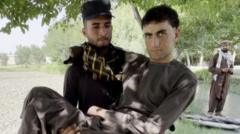
You leave everything behind because staying means death. You walk for weeks across the jagged terrain of Pakistan and Iran. Your hands are raw, your boots are falling apart, but you keep moving because the Turkish border represents safety. Then, you arrive at Van province, and the dream of safety shatters against an iron rod.
A recent BBC Afghan Forensic investigation exposed a harrowing pattern of abuse inflicted on Afghan asylum seekers along the eastern border of Turkey. Based on extensive interviews with survivors aged 13 to 25, the investigation details how a group of about 50 migrants was detained by Turkish security forces in sub-zero conditions. The testimonies aren't just unsettling; they point to a systematic breakdown of basic human rights.
Survivors claim they weren't just turned back. They were stripped of their shoes, their socks, and their meager belongings. Then came the beatings with iron rods. Bruised, broken, and completely unprotected against a biting winter, they were forced backward into a snowstorm toward the Iranian border. The temperature was minus 15 degrees Celsius. For 11 people, the frostbite was so severe it resulted in amputations. At least 20 others didn't make it out of the snow alive.
The Reality of Systematic Pushbacks
What happened in Van is not an isolated tragedy. It fits cleanly into a documented playbook of border enforcement. Organizations like Human Rights Watch and Amnesty International have tracked these "pushbacks" for years. The routine is brutally efficient. Migrants cross, border guards detain them, strip them of communication tools, and use physical violence to ensure they don't try to cross again.
The numbers tell a story that diplomatic statements try to hide.
- The Van Incident: 50 people detained, 11 amputations from frostbite, at least 20 confirmed dead in the January snow.
- Historical Precedent: Reports spanning back years document broken limbs from rifle butts, heavy hoses used as whips, and clothes burned to leave migrants vulnerable to the elements.
International law is crystal clear on this point. The principle of non-refoulement, cemented in the 1951 Refugee Convention, strictly prohibits countries from returning asylum seekers to a territory where they face a verified threat of persecution or torture. Turning people away at the border without examining their asylum claims violates this framework. Yet, the practice continues because the border has become a geopolitical bargaining chip.
Geopolitics Over Human Lives
Why is the enforcement so unforgiving? Turkey currently hosts the largest refugee population in the world, including millions of Syrians and hundreds of thousands of Afghans. The domestic political pressure on Ankara is immense. Economic strain and shifting public sentiment have turned the refugee crisis into a volatile political issue.
But the blame doesn't stop at Turkey's borders. The European Union plays a massive role in this dynamic. By funding border infrastructure and treating Turkey as a buffer zone to keep migrants out of Europe, Western policies have effectively outsourced border enforcement to regions willing to use heavy-handed tactics. When the EU prioritizes fortified borders over safe passage, it creates an environment where guards feel emboldened to use iron rods and freezing mountain passes as deterrence strategies.
What Needs to Change Immediately
Fixing a broken border policy requires moving past diplomatic expressions of concern. Independent oversight bodies must get immediate, unhindered access to the Van province border regions and detention centers to monitor compliance with international law. Governments funding Turkish border security, particularly the EU, need to tie financial aid directly to verified human rights metrics.
If you want to support accountability, follow the reporting of local legal groups like the Van Bar Association, who track these abuses on the ground, and pressure international policymakers to demand transparent investigations into the actions of gendarmerie units. The border shouldn't be a zone of lawlessness where winter weather is weaponized against the vulnerable.