G7 trade ministers gathered in Paris to pat themselves on the back for "de-risking" from China. They talked about economic coercion and supply chain resilience like they were discovering fire for the first time. The prevailing narrative is simple: China is a threat, dependency is a weakness, and the solution is a cozy, Western-centric trade bloc.
That narrative is a fantasy. It is a slow-motion car crash of protectionism dressed up as national security.
The reality? The G7 isn't de-risking. It’s de-coupling from reality while handing the competitive edge to the very rivals it fears. By trying to build a fortress around their economies, Western leaders are actually suffocating the innovation and price efficiencies that made them global leaders in the first place.
The China Dependency Trap is a Mathematical Certainty
Every time a politician uses the word "resilience," what they actually mean is "more expensive."
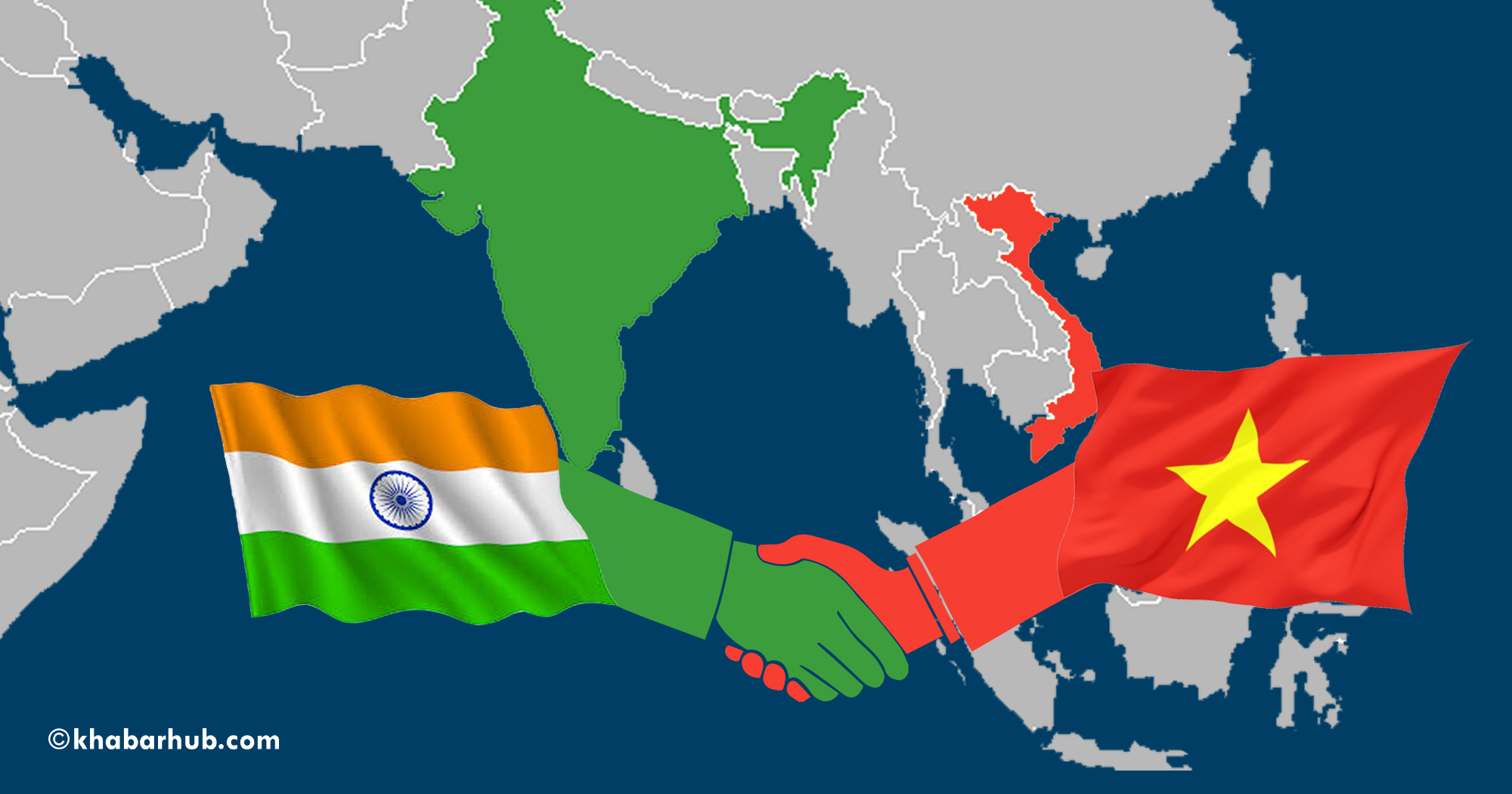
The push to move supply chains out of China isn't a masterstroke of strategy; it’s an admission of failure. Decades of globalization weren't a mistake—they were an optimization. When you move a factory from Suzhou to Ohio or even to Hanoi, you aren't just shifting a pin on a map. You are re-introducing friction, labor shortages, and logistical nightmares that were solved twenty years ago.
Western ministers talk about "over-reliance" as if it’s an addiction. It isn't. It is the result of a ruthless, global Darwinian struggle for efficiency. China didn't win the manufacturing war by accident or just by being cheap. They won it by building the most sophisticated, interconnected industrial ecosystem in human history.
Attempting to replicate that ecosystem in "friendly" nations—a concept now called "friend-shoring"—is a pipe dream. Many of these so-called friends lack the infrastructure, the specialized labor pool, and the raw materials to compete. You aren't diversifying; you’re just paying a premium for a lower-quality insurance policy.
The Resilience Tax You Didn't Vote For
Let’s talk about the cost. In the business world, I have watched boards of directors authorize "de-risking" initiatives that effectively doubled their COGS (Cost of Goods Sold) over three years. They tell their shareholders it’s about "long-term stability." In reality, it’s a tax on the consumer that no one agreed to pay.
- Solar Energy: If the G7 moves away from Chinese silicon and wafers, the green transition slows to a crawl. You can have cheap carbon-neutral energy, or you can have "secure" trade. You cannot have both.
- EV Batteries: China controls roughly 80% of the world’s battery cell manufacturing. Pretending we can spin up a domestic alternative in five years without catastrophic price hikes for the middle class is a lie.
- Semiconductors: The scramble for "sovereignty" in chips is leading to a massive oversupply of trailing-edge nodes while the cutting-edge remains concentrated in the exact geopolitical hotspots the G7 is terrified of.
The G7's strategy is essentially asking the public to subsidize mediocrity in the name of security. We are building "just-in-case" supply chains that are bloated, inefficient, and prone to the same shocks they claim to mitigate—just from different directions.
The Myth of Economic Coercion
The Paris meetings focused heavily on "economic coercion." The irony is thick. The G7 is the historical champion of economic coercion through sanctions, dollar hegemony, and trade barriers.
When China restricts exports of gallium or germanium, it isn't "unprecedented aggression." It is a predictable response to the G7's own technology bans. We are in a feedback loop of retaliation where every "defensive" move by the West triggers an "offensive" move by the East.
The logic being used in Paris assumes that the West can dictate the terms of engagement while China sits quietly and accepts its managed decline. It won't. By weaponizing trade, the G7 has ensured that every major economy is now looking for a way to bypass the Western financial and trade system.
We are witnessing the birth of a bifurcated global economy. One side is the G7, increasingly insular and focused on "security." The other is the rest of the world, led by China, focused on growth, infrastructure, and raw volume. If you think the "secure" side wins in the long run, you haven't been paying attention to how capital actually moves.
Why Friend-Shoring is a Strategic Dead End
"Friend-shoring" is the most dangerous buzzword in modern economics. It assumes that political alliances are permanent and that economic interests are secondary to shared values.
I’ve seen how this plays out. A company moves production to a "friendly" nation in Southeast Asia or Eastern Europe, only to find that the local government’s interests shift, or that the "friend" is actually just a conduit for Chinese components.
The G7 is essentially trying to pick winners in the global market based on ideology rather than competence. History is littered with the corpses of industries that were propped up by government mandates and shielded from competition. By insulating Western companies from the hyper-competitive Chinese market, we are making them weaker, slower, and less likely to survive the next genuine technological shift.
The Real Risk is Irrelevance
The Paris communique talked about "leveling the playing field." That is code for "we can't compete, so we’re changing the rules."
The real danger to the G7 isn't that China will stop selling us stuff. It’s that the G7 will become an irrelevant, high-cost island while the rest of the world continues to integrate. While we focus on de-risking, China is busy building the Belt and Road Initiative, securing lithium mines in Africa, and signing trade deals with the Middle East.
We are so obsessed with the "security" of our supply chains that we are ignoring the "vitality" of our economies. A secure, stagnant economy is just a polite way of describing a funeral.
Stop Trying to "Fix" the Trade Deficit
The obsession with trade security often masks a deeper, more primal fear of the trade deficit. Politicians love to point at the deficit as evidence of "cheating." It isn't. It’s evidence that Western consumers want high-quality goods at the lowest possible price.
By forcing a move away from the most efficient producer, G7 governments are effectively enacting a massive, invisible tariff. This isn't just bad for consumers; it's bad for the corporations they claim to protect. Those companies now have to spend billions on redundant infrastructure instead of R&D. They are being forced to play defense when the only way to win is to play offense.
If the G7 actually wanted to win, they wouldn't be talking about trade security. They would be talking about why their own regulatory environments make it impossible to build anything at scale. They would be talking about how to out-innovate, not out-sanction.
The Path Forward is Radical Integration
The only way to actually secure a supply chain is to make it so integrated that any disruption is mutually assured destruction. "De-risking" creates silos. Silos are easy to target. Integration creates a web. Webs are resilient.
Instead of retreating into a defensive crouch in Paris, the G7 should be leaning into the complexity. The goal shouldn't be to depend less on China; it should be to make China so dependent on Western markets and technology that any "coercion" becomes an act of national suicide for them as well.
But that requires a level of economic sophistication and political bravery that is currently absent from the ministerial halls of Paris. It’s easier to wave the flag and talk about "security" than it is to admit that the era of Western dominance through isolation is over.
The G7 is building a wall. They just haven't realized yet that they are the ones being fenced in.
The meeting in Paris wasn't a show of strength. It was a formal declaration of anxiety. If the G7 continues on this path of managed trade and strategic retreat, they won't find security. They will find a future where the world’s most important economic decisions are made somewhere else.
Stop looking for the exit. Start figuring out how to dominate the room.