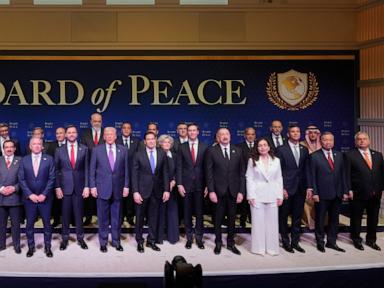
Everyone knew the plan for a 20,000-strong International Stabilization Force in Gaza was ambitious. When it was announced at the inaugural meeting of the Board of Peace in Washington, the rhetoric was predictably grand. An American general was tapped to lead it, promises of "enduring peace" were thrown around, and a multi-nation coalition stepped up to supply the boots on the ground.
Three months later, that general has nobody to command. The entire plan is frozen.
If you want to know why the peacekeeping force hasn't materialized, you have to look beyond the borders of Gaza. The real culprit is the sudden, violent escalation between the United States, Israel, and Iran. The outbreak of open warfare with Tehran has completely scrambled the diplomatic math, leaving the Gaza stabilization plan dead in the water.
The Shockwave of the Iran War
The strategy for post-war Gaza relied on a delicate assumption. The thinking went that Muslim-majority nations would provide the bulk of the peacekeeping troops to avoid the look of an Western occupation.
That assumption shattered when the US and Israel launched major strikes against Iran.
Suddenly, Arab and Muslim leaders found themselves in a political vice. Standing shoulder-to-shoulder with a US-led military command in Gaza became a domestic liability. For a leader in Jakarta or Rabat, sending troops to work under an American general while US bombs fell on an Islamic Republic looked like open collaboration with the enemy.
Look at Indonesia. They were the backbone of the entire operation, pledging a massive contingent of 8,000 troops. About 1,000 soldiers were supposed to land in Gaza to secure the humanitarian corridors. Instead, Jakarta put the entire commitment on indefinite hold.
It isn't just about optics. The war with Iran sparked a massive global energy crisis, driving up prices and battering emerging economies. Jakarta is facing severe domestic blowback over rising costs, and the public has zero appetite for expensive, risky foreign interventions.
Local sentiment soured completely after Indonesia lost four UN peacekeepers in Lebanon during the crossfire between Israel and Hezbollah. For the average voter on the streets of Jakarta, sending more troops into a boiling Middle East looks like a suicide mission.
Without Indonesia, the remaining coalition partners—Morocco, Kazakhstan, Kosovo, and Albania—don't have the numbers to make the force viable. The math simply doesn't work.
The Deadlock on the Ground
While regional geopolitics are paralyzing the troop contributors, the situation inside Gaza is equally stuck. The original roadmap under United Nations Security Council Resolution 2803 was built on a strict sequence of events.
- Phase One: A fragile ceasefire and the return of hostages (which did happen).
- Phase Two: The full disarmament of Hamas, an Israeli military withdrawal, and the deployment of the International Stabilization Force.
We are stuck at the transition point, and neither side is budging.
The Board of Peace insists that the peacekeeping force cannot deploy until Hamas hands over its weapons. They argue that you can't rebuild a society or protect aid convoys while armed militias are still running the streets and digging tunnels.
Hamas refuses to disarm. Their position is straightforward: they aren't giving up their guns while Israeli troops still occupy more than half of the Gaza Strip. They point to the hundreds of Palestinians killed in skirmishes and airstrikes since the ceasefire began as proof that giving up their weapons means total surrender.
Instead of a smooth transition to an international force, we have a dangerous security vacuum. The National Committee for the Administration of Gaza—the technocratic Palestinian body meant to run daily life—is currently stranded in Egypt, unable to even enter the territory they are supposed to govern.
What Needs to Happen Next
The current blueprint is broken, and pretending otherwise is just wasting time. If international policymakers want to salvage any semblance of order in Gaza, they need to pivot immediately.
First, the United States needs to stop treating the Gaza peacekeeping force as an extension of its own regional military architecture. Command of the stabilization force must be handed over to a neutral, non-Western entity—perhaps a joint command under the League of Arab States and the UN—to give remaining troop contributors the political cover they need to deploy.
Second, the sequencing of the disarmament plan must be renegotiated. Expecting Hamas to fully decommission its weapons before a single foreign peacekeeper arrives is a non-starter. A realistic plan requires a synchronized, block-by-block handover: as international troops secure a specific district, Israeli forces pull back, and local security responsibilities shift to the transitional committee.
The window to act is closing fast. If the international community can't field a force to secure the streets and distribute aid, the ceasefire will disintegrate entirely, and Gaza will slide back into absolute chaos.