The media loves a good spooky twin story. You have undoubtedly seen the headlines or the viral videos profile-sharing octogenarian identical twins who wore the same outfits, married similar people, worked the same jobs, and lived what the internet calls "identical lives" for 82 years. The narrative is always wrapped in a bow of genetic determinism. It implies that your DNA is a hardcoded script, an unchangeable blueprint that dictates your health, your quirks, and your expiration date.
It is a heartwarming story. It is also completely wrong.
As a molecular biologist who has spent fifteen years looking at cellular degradation, I am tired of the lazy consensus surrounding twin studies. The mainstream press looks at two elderly people wearing matching cardigans and concludes that genetics is destiny. They miss the actual science entirely.
Two people cannot live identical lives for eight decades because biology does not allow it. What looks like genetic replication is actually a masterclass in epigenetic divergence and environmental luck. The obsession with their similarities blinds us to the real, actionable truth about human longevity: your genes are not a blueprint. They are a volume knob. And you have a lot more control over the dial than you think.
The Epigenetic Split Why 100 Percent DNA Match is a Lie
Let us dismantle the core premise immediately. Identical twins start with the same genetic sequence, yes. But by the time they reach age 82, their functional biology is drastically different.
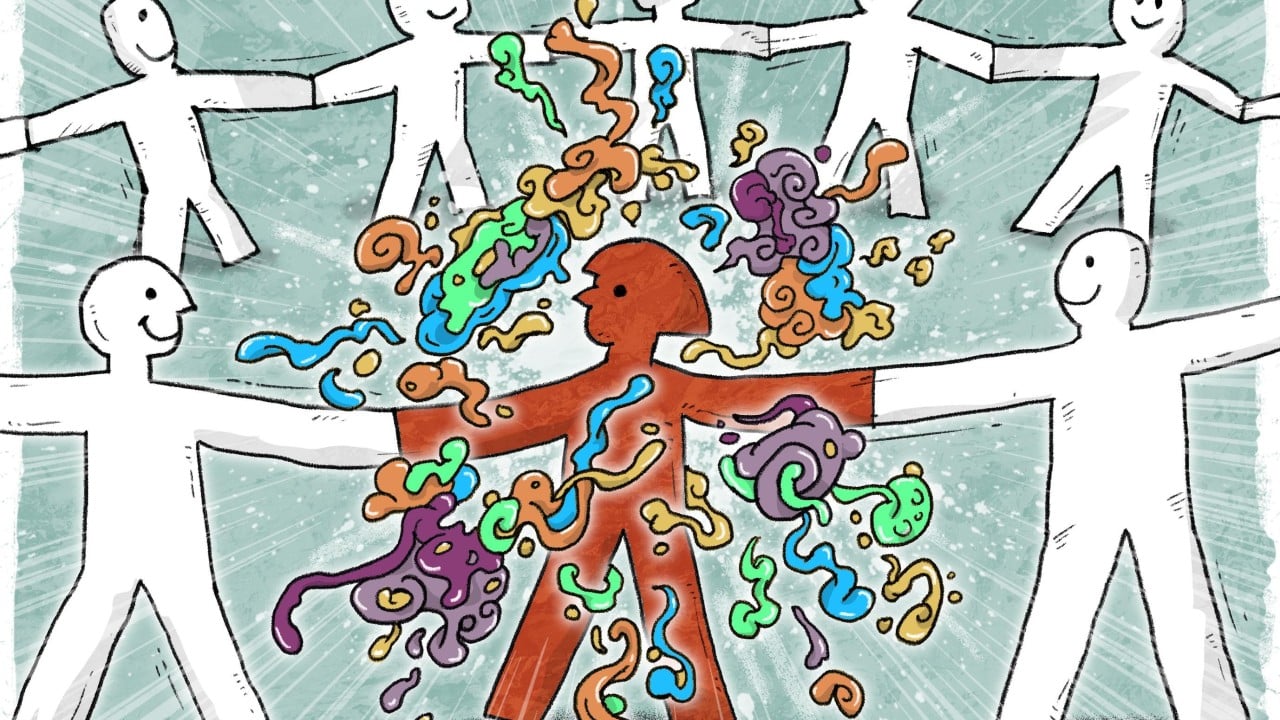
To understand why, we need to talk about the epigenome. If your DNA is a script, the epigenome is the director. It decides which scenes get cut, which lines are yelled, and which characters are completely ignored. This happens through two primary mechanisms: DNA methylation and histone modification.
- DNA Methylation: Small chemical tags (methyl groups) attach to your DNA, acting like a cellular "off" switch. If a gene is heavily methylated, the cell cannot read it.
- Histone Modification: DNA wraps around proteins called histones. If the wrap is tight, the gene stays hidden. If it loosens, the gene is expressed.
When identical twins are born, their methylation patterns are nearly indistinguishable. But as they age, a phenomenon known as epigenetic drift takes over. Every time a cell divides, every time one twin breathes in traffic exhaust while the other walks through a park, every time one twin handles a high-stress meeting while the other takes a nap, the chemical tags change.
A landmark study by Dr. Manel Esteller at the Spanish National Cancer Research Centre proved this explicitly. The researchers looked at identical twins ranging from age 3 to 74. The young twins had almost identical epigenetic profiles. The older twins? Their methylation patterns were four times more divergent than the youngsters. They were, on a molecular level, completely different people.
So when a reporter marvels that 82-year-old twins both developed gray hair at the same time, they are looking at the bare-minimum baseline of genetic programming. They ignore the fact that one twin likely has sub-clinical cardiovascular inflammation while the other has early-stage joint degeneration, driven entirely by different epigenetic switches.
Dismantling the Habitual Consensus
People love to ask: If their lives were different, why did they end up with the same diseases?
The question itself is flawed because it assumes a one-to-one correlation that rarely exists in real medicine. Outside of single-gene disorders like Huntington’s disease, genetics deals in probabilities, not certainties.
Consider a thought experiment. Imagine two identical cars rolling off the exact same assembly line in Detroit. They have the same engine, the same chassis, the same braking system.
- Car A is driven on smooth highways in sunny California.
- Car B is driven on salted winter roads in Maine, hauling heavy loads through stop-and-go traffic.
If both cars experience transmission failure at 150,000 miles, a lazy observer might say, "See? They were identical cars, so they failed the same way."
But a mechanic looking under the hood will see that Car B’s transmission is scarred by heat stress and rust, while Car A’s transmission suffered from a minor manufacturing defect that took longer to manifest. The end result looks the same to the untrained eye, but the path to get there was entirely distinct.
The media focuses on the shared destination (82 years of life) while completely ignoring the radically different biological tolls taken to get there. One twin might have avoided chronic illness through sheer luck or a slightly better gut microbiome, while the other survived on a robust immune system that was forced to work double-time.
The Dark Side of Genetic Determinism
Why does this matter to you? Because the "identical twin" myth breeds a dangerous form of medical fatalism.
When people believe that longevity is baked into their DNA, they fall into one of two traps. Either they assume they have "bad genes" and give up on lifestyle interventions, or they assume they have "good genes" and treat their bodies like garbage, expecting their ancestors' DNA to bail them out.
I have seen people spend thousands of dollars on consumer genetic testing kits, looking at their risk scores for Alzheimers or type 2 diabetes as if they were reading a prophecy. They see a 20% increased risk and panic, completely unaware that regular resistance training and deep sleep can alter the methylation of those exact risk genes.
The downside of acknowledging epigenetic drift is that it removes your excuses. It is terrifying to realize that your daily habits are actively rewriting the chemical tags on your DNA. It is much easier to point to an 82-year-old twin and say, "Well, it’s all in the cards anyway."
Your Epigenetic Lever How to Change Your Expression
If you want to live to 82 with your health span intact, stop looking at what your parents gave you and start looking at what you are giving your cells today. You cannot change the sequence of your ATCG bases, but you can absolutely change how your body reads them.
Based on clinical literature regarding cellular aging, three primary levers dictate epigenetic drift:
1. Chronological vs. Biological Velocity
Your chronological age is a fixed number. Your biological age is fluid. You alter your biological velocity by managing mitochondrial efficiency. Mitochondria are not just powerplants; they are environmental sensors. When they sense constant caloric surplus or chronic systemic inflammation, they signal the nucleus to alter gene expression toward survival mode, accelerating aging. Intermittent fasting and zone 2 cardiovascular exercise clear out damaged mitochondria through mitophagy, preserving younger epigenetic profiles.
2. Allostatic Load Management
Stress isn't just a feeling; it is a chemical bath. Chronic cortisol exposure alters DNA methylation across hundreds of genes associated with the immune system. When you live in a perpetual state of low-grade fight-or-flight, you are forcing your cells to express genes that promote systemic inflammation.
3. Xenohormesis
This is the principle that mild, biological stressors trigger a protective, youthful response in your cells. When you expose your body to transient heat (saunas), transient cold (cold exposure), or phytonutrients from stressed plants (like polyphenols), you are not directly fixing your body. You are sending a signal to your epigenome to turn on its internal repair mechanisms, including the production of endogenous antioxidants like glutathione.
Stop Looking for Replicas
Those 82-year-old twins did not live identical lives. They lived parallel lives that drifted apart on a cellular level every single day. Their shared longevity is a testament to the baseline resilience of human biology, not a proof that your choices do not matter.
Stop waiting for your genetic destiny to play out. Your DNA is a passive library of books. You are the one turning the pages, deciding which chapters to read, and choosing which ones to slam shut. Act accordingly.